

That is how almost every serious neck injury in a Fort Wayne car crash begins. Quiet, delayed, deceptively minor. Then it does not get better. This article is about what is actually going on inside your neck after a wreck, why insurance carriers love to undervalue these injuries, and how to protect a claim in Indiana when the damage is real but the X-ray looks clean.
Why the Neck Takes the Brunt of a Crash

The human cervical spine is built for slow, controlled motion. Looking left, looking right, nodding, turning to back out of a driveway. It is not built for the kind of forces a 4,000-pound sedan transfers in a 35 mph rear-end on Coliseum Boulevard. Your body, harnessed to the seat by the lap and shoulder belts, decelerates with the car. Your head, weighing roughly ten to eleven pounds and sitting on a stack of disc and bone, does not. It keeps moving forward, then whips back as the seat rebounds.
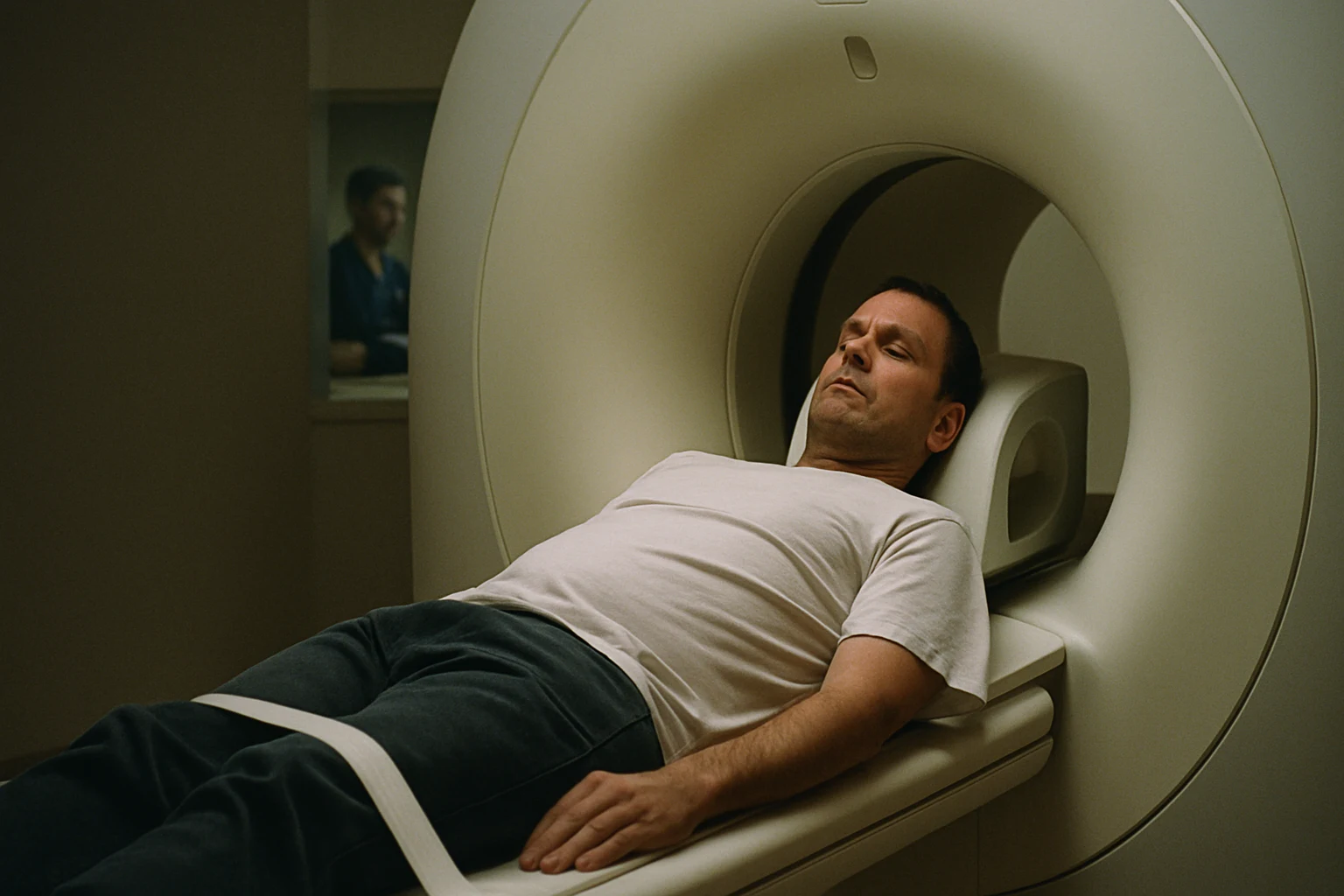
That snap is what tears soft tissue, sprains ligaments, herniates discs, and bruises the spinal cord. Most of the damage is invisible on a routine X-ray, which only shows bone. That is the first reason insurance adjusters get away with calling these cases “minor.” The film looks normal. The MRI tells a different story, but most ERs do not order one on day one unless symptoms are dramatic.
The second reason is biomechanical: low-impact crashes can produce serious neck injuries. A bumper repair quote of $800 does not predict whether your discs are torn. The carrier will argue otherwise, every time.
The Common Neck Injuries Fort Wayne Crash Victims See
Not every neck injury is whiplash, and not every case of whiplash resolves on its own. These are the diagnoses that show up in Allen County emergency rooms and orthopedic offices after a wreck.
Whiplash (cervical acceleration-deceleration injury)
The classic. Soft-tissue damage to the muscles, ligaments, and tendons that stabilize the cervical spine. Symptoms typically appear within 24 to 72 hours: stiffness, headaches that start at the base of the skull, dizziness, reduced range of motion, and pain that worsens with movement. Mild cases resolve in weeks; serious ones become chronic.
Cervical disc herniation
The shock-absorbing discs between the vertebrae can tear or bulge under crash forces. When the inner material presses on a nerve root, you get radiating pain, numbness, or weakness running down the arm and into the hand. Surgery (discectomy or fusion) is sometimes the only fix.
Facet joint injuries
The small joints that link each vertebra can be sprained or fractured. These produce deep, localized neck pain that worsens with extension (looking up) and is often missed on first imaging.
Cervical fractures
Less common in low-speed crashes but possible. A break in any of the seven cervical vertebrae can range from stable hairline fractures to unstable injuries that threaten the spinal cord. These are the cases where the ambulance and the cervical collar are not optional.
Spinal cord trauma
The catastrophic end of the spectrum. Cord injuries can produce permanent paralysis, loss of sensation, or partial neurological deficit. These cases settle in seven figures when fault is clear and insurance is available.
Why Symptoms Show Up Late (And Why It Matters)

Adrenaline is the body’s built-in painkiller. After a crash, your bloodstream is flooded with it. Cortisol follows. Together they mask the pain signals you would otherwise feel. You can stand on a fractured vertebra in the moments after impact and feel almost nothing. That feeling lies to you. Twelve hours later, when the adrenaline drains, the inflammation peaks.
The second factor is mechanical. Soft tissue swells over the first 24 to 72 hours. As fluid accumulates around torn fibers, the stiffness and pain grow. Many whiplash victims feel fine at the scene, sore the next morning, and barely able to move their head 48 hours in.
This delay matters legally, not just medically. Insurance companies routinely use the gap between crash and treatment as ammunition. If your first medical visit is a week after the accident, the adjuster will argue the injury must have happened doing something else, lifting groceries, sleeping wrong, anything but their insured’s pickup truck. The defense almost writes itself when the records show no immediate complaint. The fix is simple: get evaluated within 72 hours of any crash, even one that feels like a fender-bender. The visit creates a contemporaneous record that links the injury to the wreck.
What Treatment Looks Like, and What It Costs
Neck injury treatment in Fort Wayne usually follows a stepped path. The path depends on severity, and it often takes months before a doctor can say whether you have reached maximum medical improvement.
- Conservative care (weeks 1–6): Anti-inflammatories, muscle relaxers, short courses of physical therapy at Parkview, Lutheran, or a local PT clinic. Most mild whiplash cases resolve here.
- Imaging and specialist referral (weeks 4–12): If symptoms persist, the primary doctor orders an MRI and refers to orthopedics or neurology. This is where disc herniations and facet injuries first get identified.
- Interventional pain management (months 3–9): Epidural steroid injections, facet joint blocks, radiofrequency ablation. These are diagnostic as much as therapeutic.
- Surgical evaluation (month 6+): For confirmed herniations with neurological signs, surgeons may recommend anterior cervical discectomy and fusion (ACDF) or artificial disc replacement.
- Long-term care: Chronic pain management, maintenance physical therapy, and in some cases lifelong restrictions on work and recreation.
The bills add up fast. An MRI runs $1,200 to $3,500 in Allen County. ACDF surgery, with hospitalization, can hit $80,000 or more. Long-term physical therapy at three sessions a week for six months is a five-figure cost on its own. Every dollar should be on the claim.
Compensation Indiana Law Allows for a Neck Injury
Indiana follows a fault-based system for car crash injuries. If another driver caused the wreck, their liability insurance is the first source of recovery. A neck-injury claim in Indiana can include:
- Medical expenses: ambulance, ER, imaging, surgery, hospitalization, physical therapy, injections, medications, and reasonable future care.
- Lost wages: hours, days, or months missed from work, including overtime, shift differentials, and bonuses you would have earned.
- Lost earning capacity: if the injury permanently limits the work you can do (loading docks, factory floors, healthcare lifting), the diminished future income is recoverable.
- Pain and suffering: the physical pain and the limits the injury places on daily life. Indiana does not cap these damages in standard auto cases.
- Loss of consortium: available to a spouse for the loss of companionship, intimacy, and shared activities.
- Property damage: repair or replacement of the vehicle and personal items damaged in the crash, two-year deadline under IC § 34-11-2-7[2].
Indiana’s modified comparative fault rule under IC § 34-51-2-6[3] bars recovery if you are more than 50 percent at fault. If you are 30 percent at fault, your recovery is reduced by 30 percent. The carrier will fight to push your fault percentage as high as possible, especially on neck injury cases where damages are subjective. You can use our Indiana car accident settlement calculator to organize the factors that may affect a claim’s value; it is an educational tool, not a promise of any result.
Mistakes That Sink Neck Injury Claims

These are the patterns that cost Fort Wayne crash victims real money. None of them are subtle; all of them are common.
- Waiting to get medical care. If you delay treatment more than 72 hours, the carrier will argue your injury is unrelated to the wreck. Even a single visit creates the link.
- Giving a recorded statement to the other driver’s insurer. You are not required to. They are not on your side. Anything you say will be combed for inconsistencies later.
- Posting on social media. A photo of you holding a niece at a birthday party becomes “evidence” that your neck is fine. Set everything to private. Better yet, post nothing.
- Signing a release of liability too early. If you sign before reaching maximum medical improvement, you may sign away the right to seek compensation for future surgery, future PT, and future pain.
- Skipping physical therapy appointments. Gaps in treatment are catnip to insurance defense lawyers. They argue you must have recovered.
- Trying to negotiate without a lawyer when surgery is on the table. The carrier’s opening offer on a surgical case is routinely a third of what the case is worth.
How Delventhal Law Office Handles Neck Injury Cases
Neck-injury cases are about the records. Not the rhetoric, not the dramatic letter to the adjuster. Records. We start by getting the police report, the EMS run sheet, every set of ER notes, and we build out a treatment timeline before the carrier finishes their first review. If imaging has not been ordered, we work with the treating physicians to get the MRI on the schedule.
From there, the case turns on causation and severity. We tie the diagnosis to the mechanism of injury with the treating doctor’s own words. We get prognoses in writing, not implied. If a surgeon recommends ACDF six months out, that recommendation goes into the demand package with the cost estimate and the recovery timeline.
Most Fort Wayne firms will run a neck case to month twenty-three before filing suit, hoping the carrier blinks. We do not. Our internal target is to file or settle by month twelve to fifteen, with the case fully built. Carriers know which Allen County firms wait and which file early, and that reputation changes the opening offer.

Every case at Delventhal Law Office is handled by Chad directly. Indiana State Bar, admitted 2008. One direct line to your attorney, day or night. No paralegal funnel, no junior associate hand-off.

FAQs About Neck Injuries After an Indiana Car Accident
How long does whiplash usually last?
Mild whiplash often resolves in four to six weeks with conservative care. Moderate cases take three to six months. Roughly one in five whiplash patients develops chronic symptoms that persist beyond a year. The duration matters legally, because chronic cases involve far larger settlements than short-term sprains.
Should I go to the ER if I feel fine after a fender-bender?
If you have any neck pain, headache, numbness, or restricted motion, yes. If you feel completely fine, see your primary doctor or an urgent care within 72 hours anyway. The contemporaneous record is essential. Adrenaline masks soft-tissue and disc injuries for hours or days.
What if my MRI shows degenerative changes that were already there?
Indiana follows the eggshell-plaintiff rule. A defendant takes the victim as found. Pre-existing degeneration does not bar recovery if the crash aggravated, accelerated, or triggered symptoms in a previously asymptomatic neck. The treating doctor’s causation language is critical.
How much is a neck injury claim worth in Indiana?
It depends on severity, treatment cost, lost wages, fault percentage, and available insurance. Soft-tissue whiplash that resolves in a few months may settle in the low five figures. Disc herniation with surgery, lost work, and chronic pain can settle in six or seven figures. There is no formula, but the records drive the number.
What is the deadline to file a neck injury lawsuit in Indiana?
Two years from the date of the crash under IC § 34-11-2-4[1]. If a government vehicle was involved, you also need to serve a Notice of Tort Claim within 180 or 270 days depending on the agency. Talk to a Fort Wayne car accident lawyer within weeks of the wreck, not years.
Talk to a Fort Wayne Car Accident Attorney
A neck injury is the kind of case where the carrier’s first move is to undervalue and the second move is to wait. The longer you wait, the easier they make it on themselves. The records get older, the treatment gaps grow, and the link between the crash and the diagnosis blurs in the file.
If you were hurt in a crash in Allen County, DeKalb County, Whitley County, Adams County, or anywhere in Indiana, talk to Delventhal Law Office before the carrier locks in their narrative. The consultation is free. You will be talking to Chad directly, not a screener. Call (260) 484-6655 or contact us online to schedule a free case evaluation.