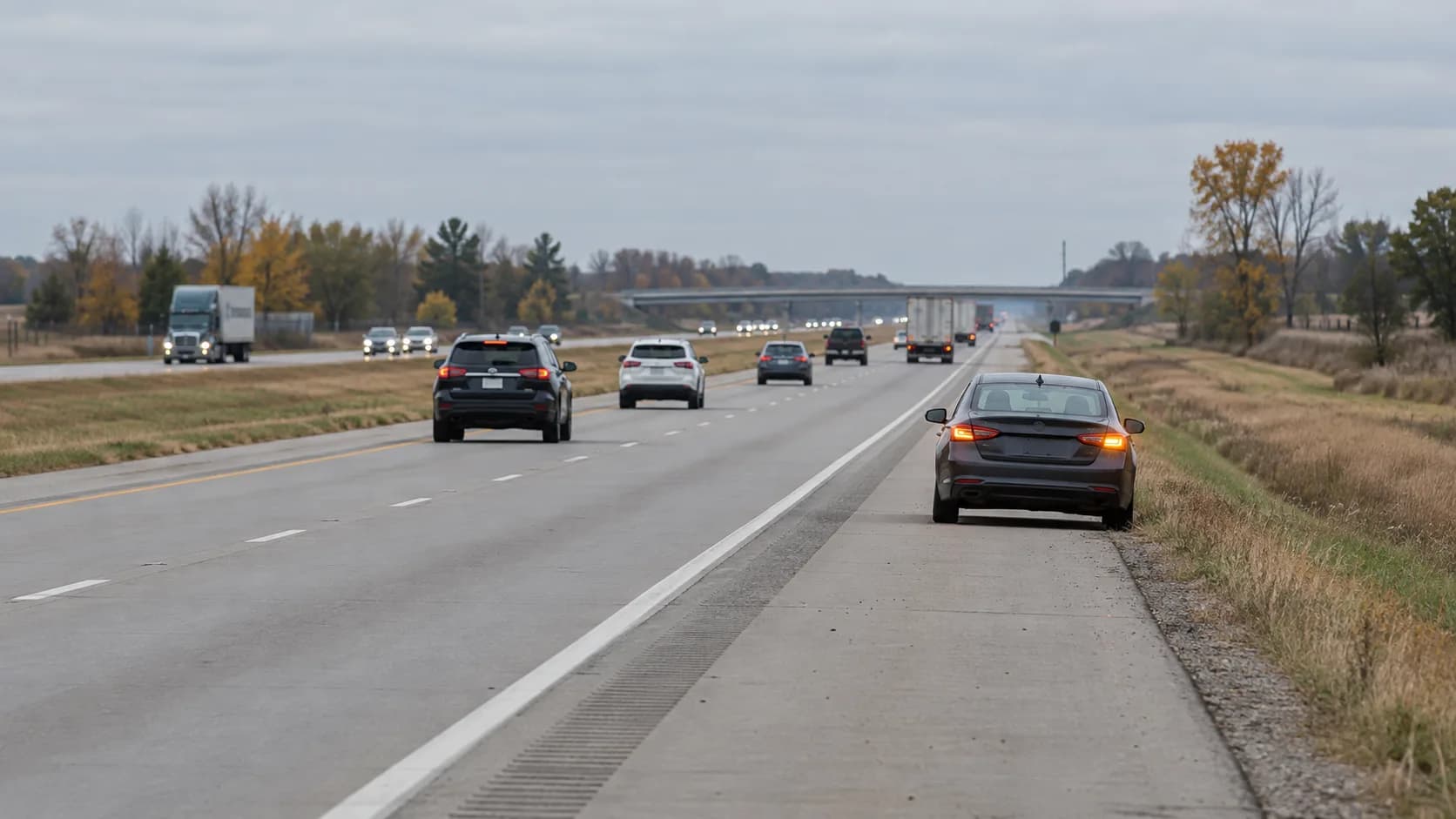
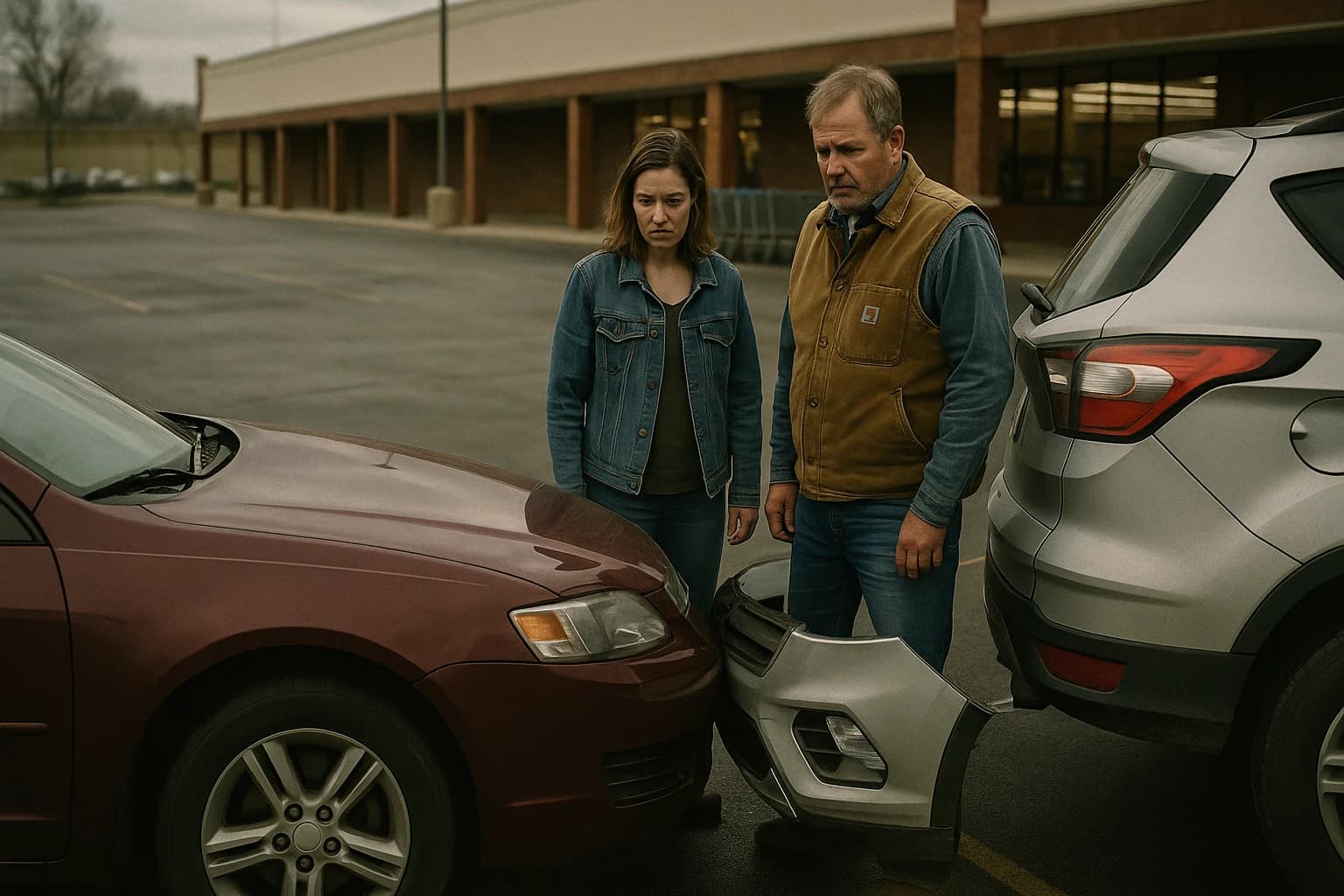
This is the moment most fender-bender claims die. Not in a courtroom, not in a denial letter, but right there in the parking lot, when the person who hit you talks you out of the police report you needed and the photos you should have taken. By the time the neck pain wakes you up at 2 a.m. on Tuesday, the other driver has already told her insurer a different story.
A “Fender Bender” in Indiana Is Still a Crash
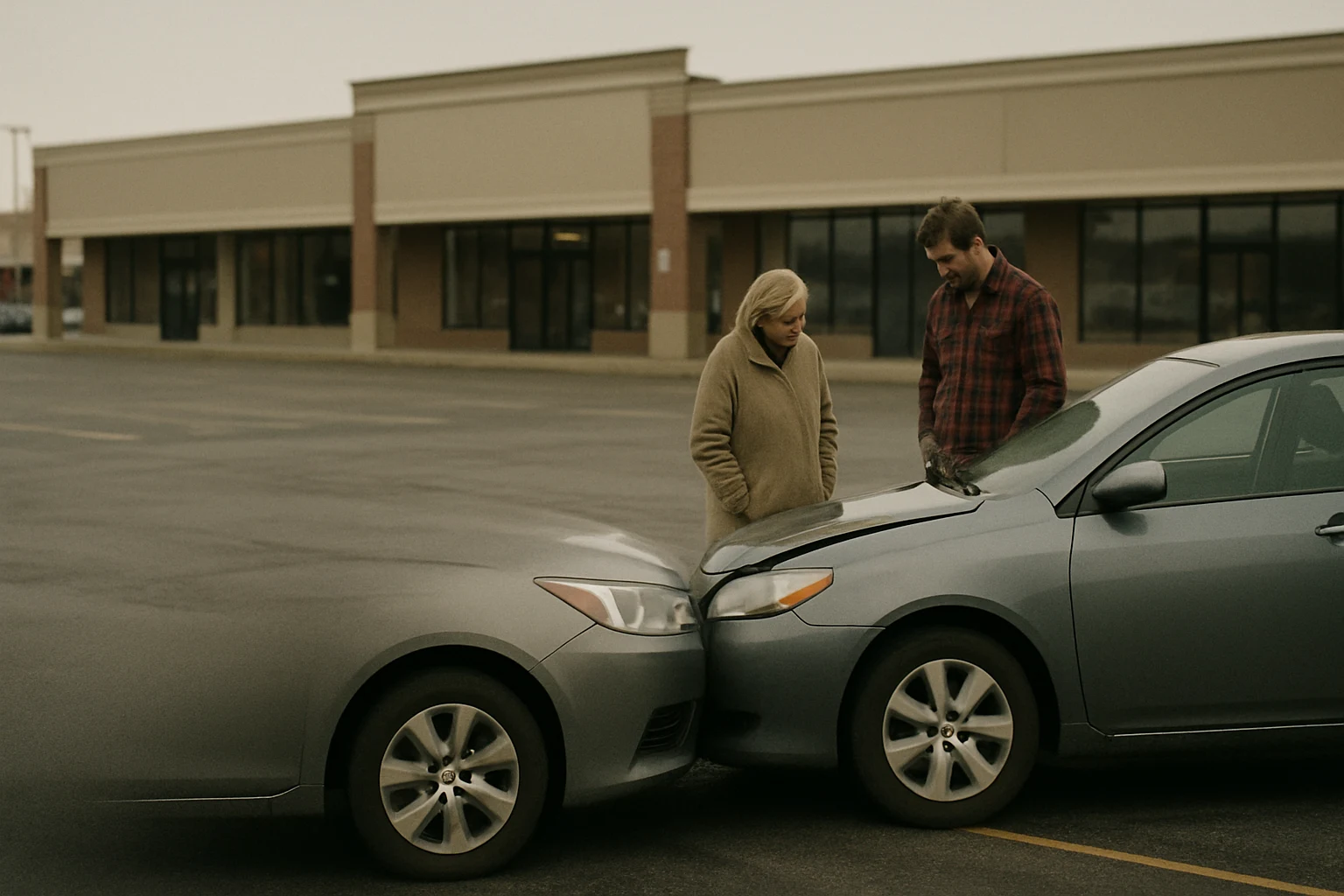
The phrase “fender bender” is doing a lot of work, and most of it is wrong. There is no legal category called a fender bender. From the perspective of Indiana law, the crash that taps your bumper at five miles an hour and the crash that crumples your hood at fifty-five are governed by the same statutes, the same fault rules, and the same statute of limitations. Two years under IC § 34-11-2-4[1] to file a personal-injury suit. Two years under IC § 34-11-2-7[2] for the property damage on your vehicle.
The reason low-speed crashes deserve serious treatment is not the dent. It is the physiology. The human neck is not built to absorb a sudden five-mph deceleration with the head braced forward, and whiplash injuries from parking-lot crashes are documented in the orthopedic literature going back decades. The vehicles often look fine. The occupants often do not, twelve to seventy-two hours later.
When Indiana law requires police involvement
Calling the police is the safest practice after a fender bender, but Indiana law distinguishes between the driver's duties and the officer's duty to investigate. A driver must stop and exchange identifying and registration information after a crash. If the crash causes injury or death, the driver must provide reasonable assistance and immediately notify the appropriate police agency under Indiana Code 9-26-1-1.1[3].
| What happened | Best next step | Why it matters |
|---|---|---|
| Anyone may be injured | Call 911 immediately and request medical help. | Indiana law requires immediate police notice when injury or death results. |
| Combined apparent damage may be $2,500 or more | Call police and request an investigation. | Indiana Code 9-26-2-1[4] directs law enforcement to investigate crashes meeting the statutory threshold. |
| Damage looks small and no one reports pain | Still call the non-emergency line, exchange information and document the scene. | Hidden damage and delayed symptoms can change the significance of a crash. |
| The other driver wants to pay cash | Do not skip identification, insurance information, photographs or reporting. | An informal payment does not preserve proof if injuries or additional damage appear later. |
If an officer does not come, record when and where you called, the agency you contacted and any incident number or instructions. Photograph both vehicles, license plates, the entire scene and the other driver's insurance information before leaving.
Step One: Check Everyone Before You Check the Car
Before you look at the bumper, look at the people. Ask everyone in your vehicle, every passenger in the other vehicle, and any pedestrian who was near the impact: are you hurt, do you need an ambulance. If anyone says yes, or anyone is unsure, call 911. If a child or older adult was a passenger, call 911 even if everyone is shaking it off.
People underreport injuries at crash scenes. The adrenaline is enormous, the social pressure to be okay is enormous, and the urge to get on with the afternoon is enormous. None of that changes what your body has actually absorbed. Common low-speed-crash injuries that surface later include:
- Whiplash and cervical strain
- Shoulder rotator-cuff injuries (from gripping the wheel at impact)
- Lower back muscle and ligament strain
- Mild traumatic brain injury and concussion (yes, at five mph, especially if your head struck the headrest awkwardly)
- Knee bruising from the dashboard
- Seatbelt-related chest and abdominal soreness
If you have any doubt at all, accept the ambulance. The transport record alone establishes a clear medical timeline that no insurance adjuster can dispute later.
Step Two: Exchange Information the Right Way
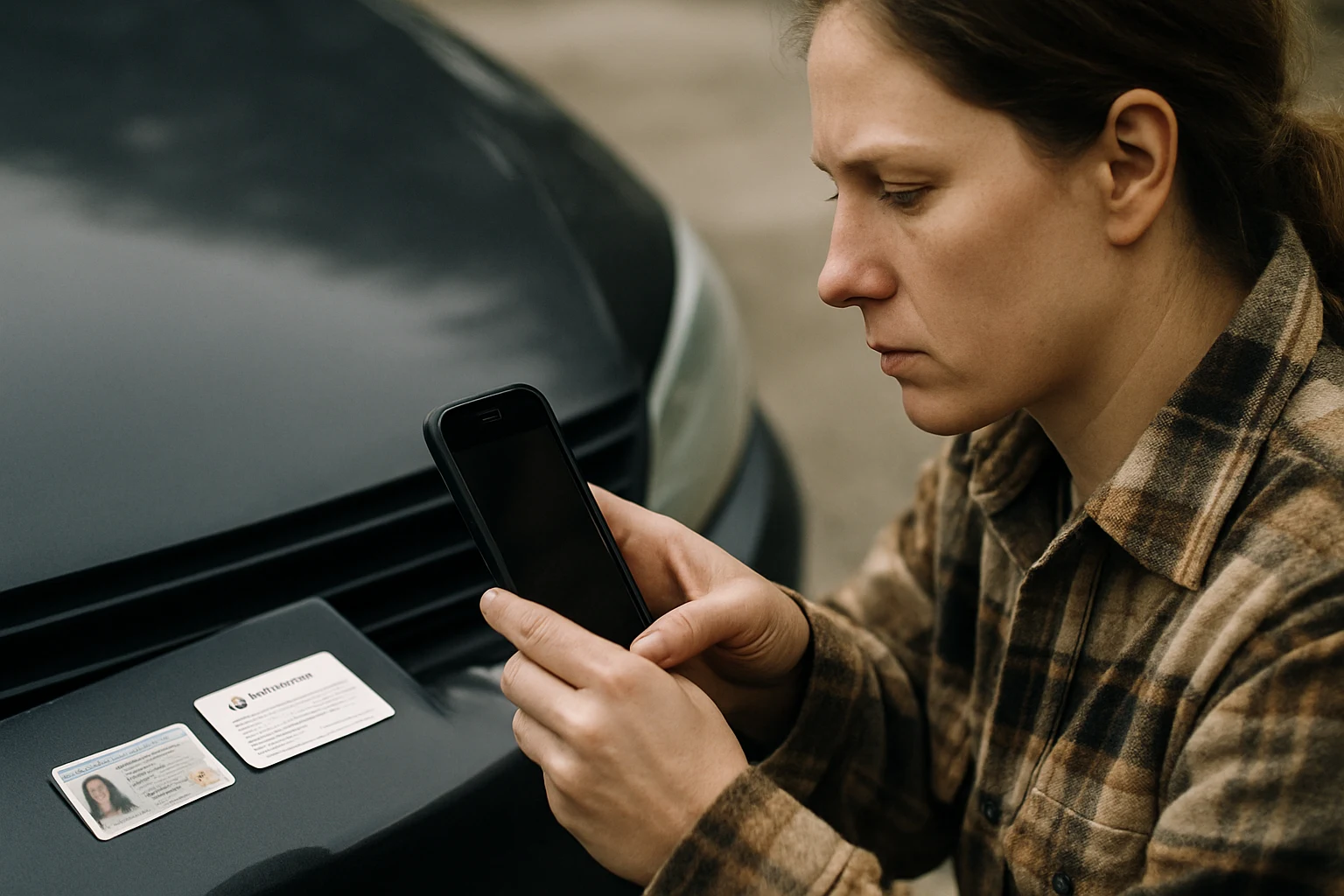
Indiana requires drivers to exchange identifying information after any reportable crash. The minimum you need from the other driver, and the minimum you should give them, is the full list, not just a name and phone number scribbled on a napkin:
- Full legal name and current address
- Phone number
- Driver's license number and state of issue
- Auto insurance carrier, policy number, and the carrier's claims phone
- License plate, make, model, year, and color of the vehicle
- Name and address of the registered vehicle owner if it is not the driver
Photograph the driver's license and the insurance card directly. Do not transcribe by hand. Handwriting errors at a crash scene cost claimants money every week. If the driver hands you a printed insurance card, check the expiration date. Carriers cancel policies for nonpayment all the time, and the card in the glove box may not be current. If you have any doubt, call the carrier's claims line that night to confirm coverage was active on the date of the crash.
Step Three: Call the Police, Even If It Looks Minor
Indiana's accident-reporting law sits in IC § 9-26-1[5]. The threshold for mandatory reporting is any crash that causes bodily injury, any crash involving a fatality, or property damage at or above a statutory threshold. Modern bumpers, headlight assemblies, and sensor-equipped fenders are expensive. Replacing a single LED headlight on a late-model SUV regularly tops the threshold by itself. The practical rule for any Allen County, DeKalb County, or Indiana crash is simple: call the police, every time.
If the crash is in Fort Wayne city limits, dispatch will route a Fort Wayne Police Department officer. In Allen County outside city limits, it routes to the Allen County Sheriff's Department. On the interstate (I-69, US-30, US-24), Indiana State Police usually responds. In any of these scenarios, the responding officer will gather statements, examine the damage, and produce a crash report through the Indiana Officers' Standard Crash Report system.
That report is the single most useful piece of evidence in a low-speed claim. It establishes time, location, weather, statements made on scene (including admissions of fault), and an officer's neutral observation of the damage. If the dispatcher tells you no officer is available, ask whether you can file a citizen crash report yourself. In Indiana, drivers can file an SR-1 form after the fact when no officer responds, and you should.
Step Four: Photograph Like You'll Need It in Court
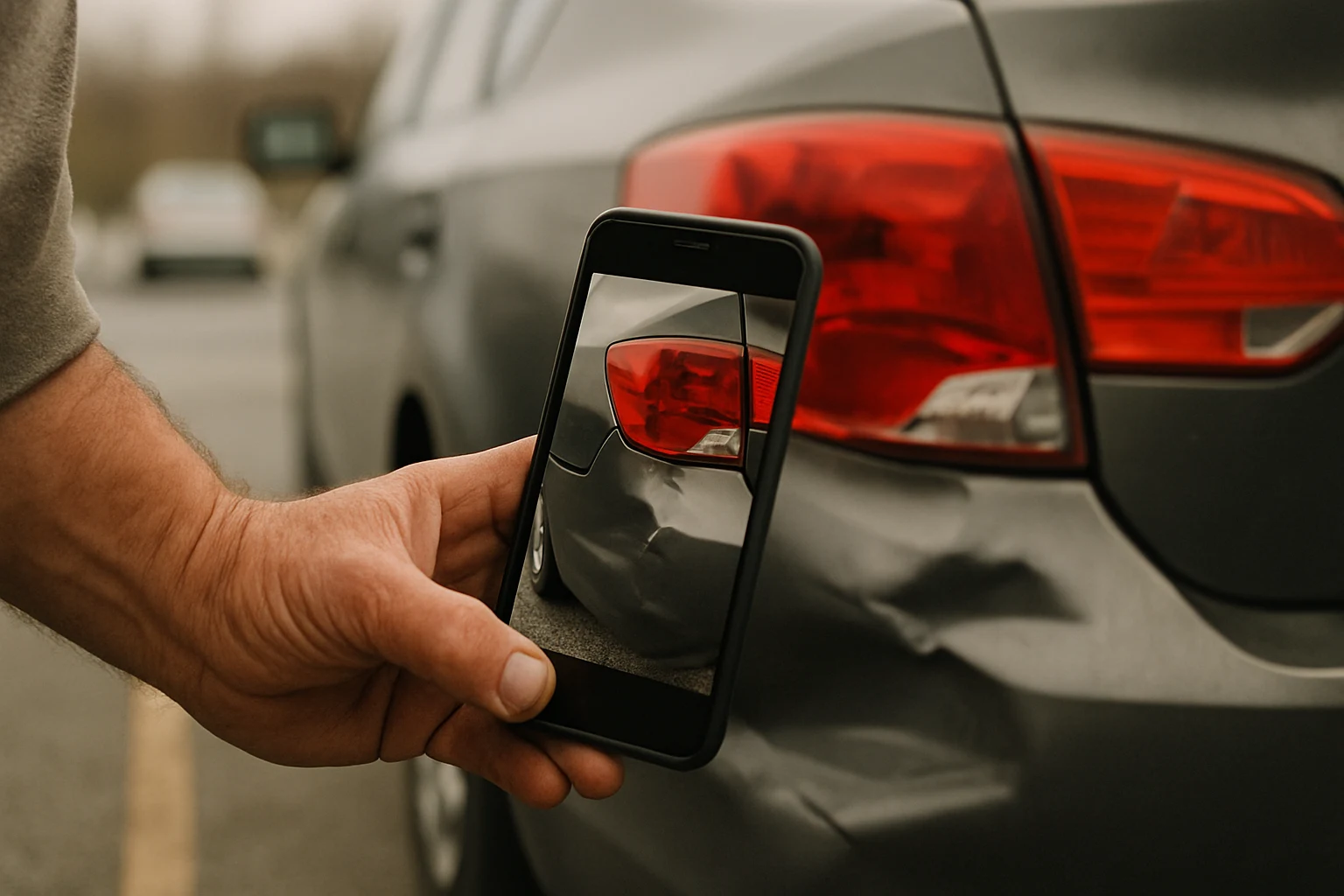
Photographs are evidence. They are also the first thing an insurance adjuster looks at when deciding whether to dispute the claim. Low-speed-crash photos are routinely the difference between a paid claim and a denied one, because the insurer's argument is almost always: the impact was too minor to have caused the injuries you are claiming.
Take these shots, in this order, before you move the vehicles:
- Wide shot of both vehicles in final-rest position, with surroundings visible
- Close-up of every point of contact, from at least two angles
- License plates of both vehicles
- Interior shots of your vehicle (deployed airbags, displaced items, anything that shifted)
- Skid marks, debris field, broken glass on the pavement
- Traffic signals or signs visible from the impact point
- Weather and road conditions, especially if wet, snow-covered, or icy
- Any visible injuries on you or your passengers
Back the photos up to cloud storage that same day. Phones get lost. Phones break. A claim that depends on photos that exist only in your camera roll is one dropped phone away from collapse.
Step Five: Talk to Witnesses Before They Leave
Witnesses are gold and they vanish fast. The person who was loading groceries three spots away may have seen the entire thing. By the time you finish exchanging insurance cards, that person is in their car heading home, and you will never find them again.
Anyone who saw the crash is a potential witness: passengers in either vehicle, pedestrians, drivers in other vehicles, store employees who heard the impact, anyone on a smoke break outside the building. Get their name, phone number, and one-sentence description of what they saw. Do not pressure them to make a statement on the spot. Just secure the way to reach them later.
Parking lots and commercial properties often have security cameras. The Glenbrook example, Jefferson Pointe, Fort Wayne grocery store lots, gas station canopies, even neighbor doorbells in residential collisions. Footage is usually overwritten within thirty days. Note the cameras you can see. An attorney can issue a preservation letter quickly, but only if you flag it early.
Step Six: Get Medically Evaluated Within Seventy-Two Hours
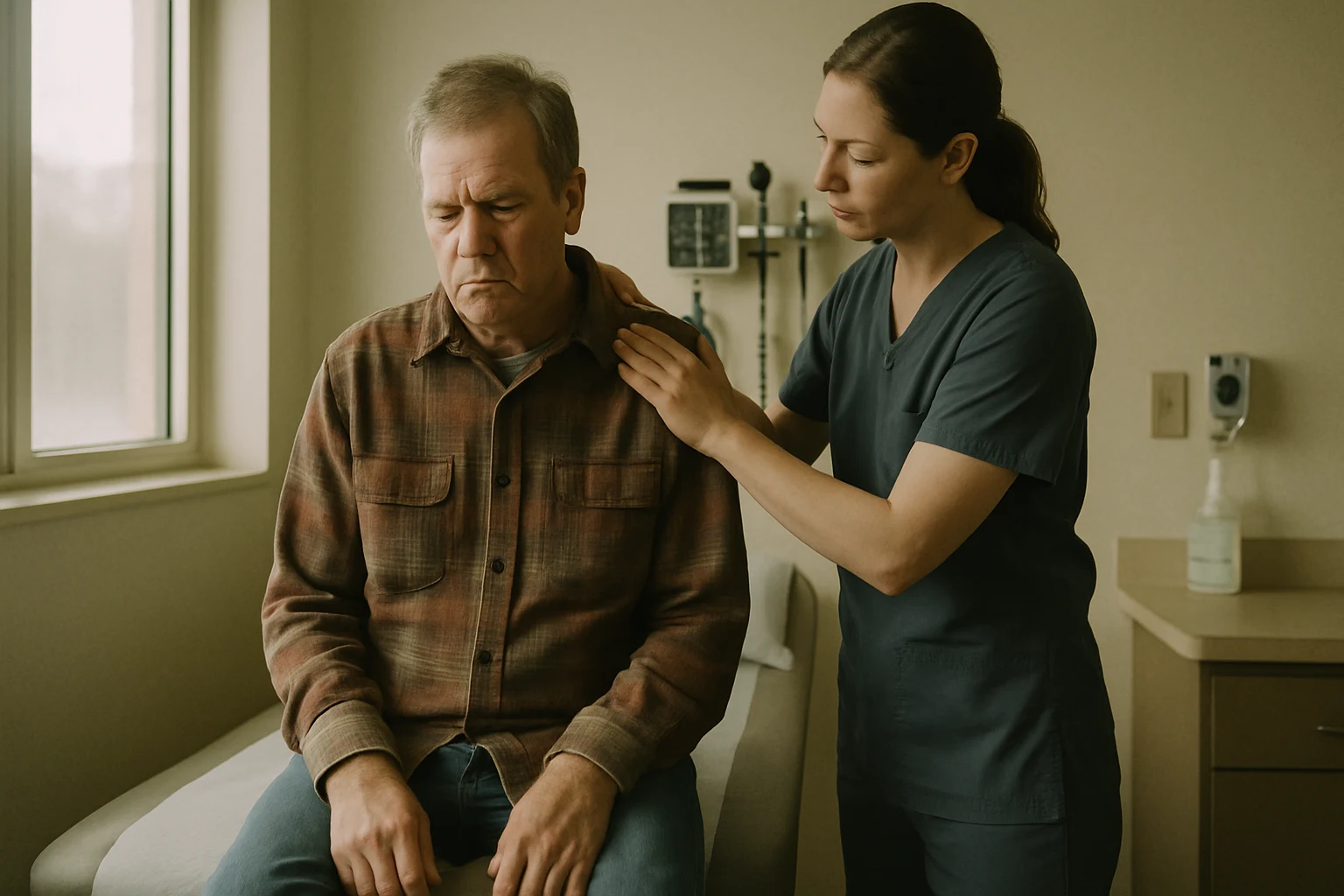
This is the step that separates a documented claim from a guessing match. Even if you feel fine, get checked. Urgent care, your primary doctor, an ER visit if anything is acute. The reason is not because you should run up medical bills. The reason is that soft-tissue injuries, concussions, and disc injuries from low-speed crashes commonly take twelve to seventy-two hours to fully present, and the longer the gap between the crash and the first medical record, the easier it is for the insurer to argue the injury came from something else. You can use our Indiana car accident settlement calculator to organize the factors that may affect a claim’s value; it is an educational tool, not a promise of any result.
Tell the provider exactly what happened: date, time, location, mechanism (rear-ended in a parking lot, sideswiped, low-speed front-end), and every symptom, even the small ones. Headache. Tingling. Mild dizziness. Trouble sleeping. Every word goes in the chart, and the chart becomes the evidence that grounds the claim.
If symptoms get worse over the following days, return to the provider, do not tough it out. A second visit confirms a worsening trajectory. Insurers respect documented trajectories. They dismiss self-reports without records behind them.
What to Avoid Saying at the Scene and on the Phone
The other driver's insurance company will call within forty-eight hours. They will sound polite. They are gathering admissions. A few things to keep in mind:
- Never say “I'm fine” or “I'm not hurt” at the scene or on a recorded call. You do not yet know what your body has absorbed. Say “I'm not sure yet, I'm going to be checked out.”
- Do not give a recorded statement to the other driver's insurer. You are not required to. Politely decline and tell them you will follow up after speaking with counsel.
- Do not accept a fast cash offer at the scene. Bumper damage that looks like $200 routinely runs four figures once the body shop opens it up.
- Do not sign a medical-records release for the other carrier. They will use it to pull years of unrelated records.
- Do not post about the crash on social media. Insurers monitor it.
How Delventhal Law Office Handles Fender-Bender Claims
Most personal-injury firms in Fort Wayne treat low-speed crashes as small cases. We do not. The injuries are often serious, the medical bills are often substantial, and the insurance carrier's playbook for fender-bender claims (deny, delay, blame pre-existing conditions) is the same playbook they use on bigger cases. The difference is they expect you to give up faster.

Every case at Delventhal Law Office is handled by Chad directly. That means the lawyer reading your crash report and reviewing your MRI is the same lawyer you reach when you call. We work with Fort Wayne, Allen County, DeKalb, Whitley, Adams, Wells, Huntington, and Noble County clients on crashes ranging from Glenbrook parking-lot taps to interstate pile-ups. The early steps you take in the first seventy-two hours shape the whole claim, and we can help guide them even before you formally hire anyone. The consultation is free, the call is direct, and the goal is to make sure no fixable mistake costs you a fair recovery.
FAQs About Fender Benders in Indiana
Do I really have to call the police for a minor parking-lot crash?
You should. Indiana law requires reporting any crash that causes injury or significant property damage, and modern bumpers and sensors mean even minor-looking damage often hits the threshold. The police report is also the single most useful piece of evidence later, so the answer in practical terms is always yes.
What if the other driver wants to settle without involving insurance?
Decline. Cash on the scene is almost always less than the actual repair cost once a body shop pulls the bumper cover, and any injury that surfaces later is now your problem. Exchange information, document everything, and let insurance handle it.
My neck started hurting three days later. Is it too late to file a claim?
No. Delayed-onset whiplash and soft-tissue injuries are common and well-documented. See a doctor today, get the symptoms in writing, tie them to the crash date, and call a Fort Wayne car accident lawyer. The Indiana statute of limitations gives you two years to file suit under IC § 34-11-2-4[1].
The other driver was a delivery driver. Does that change anything?
Yes. If a driver was on the job for an employer (Amazon, FedEx, a local delivery contractor, a rideshare app), the employer's commercial policy may be on the hook, and limits are often much higher than personal auto policies. The investigation needs to start fast, because employers preserve route data only for short windows.
Will my own insurance rates go up if I file a claim?
Generally not, if you were not at fault. Indiana carriers cannot raise rates for accidents in which the insured was not responsible, though policies and circumstances vary. The fear of a rate increase should never stop you from documenting an injury caused by someone else.
Talk to a Fort Wayne Car Accident Attorney Today
Fender benders are small until they are not. The injuries are often delayed. The evidence often disappears. The insurance carrier on the other side is rarely in a hurry to pay. If you were hit in Allen County, DeKalb, Whitley, Adams, or anywhere in Indiana, the smart move is to call now and get the right steps in motion while the scene is still fresh.
Delventhal Law Office handles fender-bender and low-speed crash claims across Fort Wayne and the surrounding counties. The consultation is free, no obligation, and you talk to Chad directly. Call (260) 484-6655 or contact us online to schedule a free case evaluation.