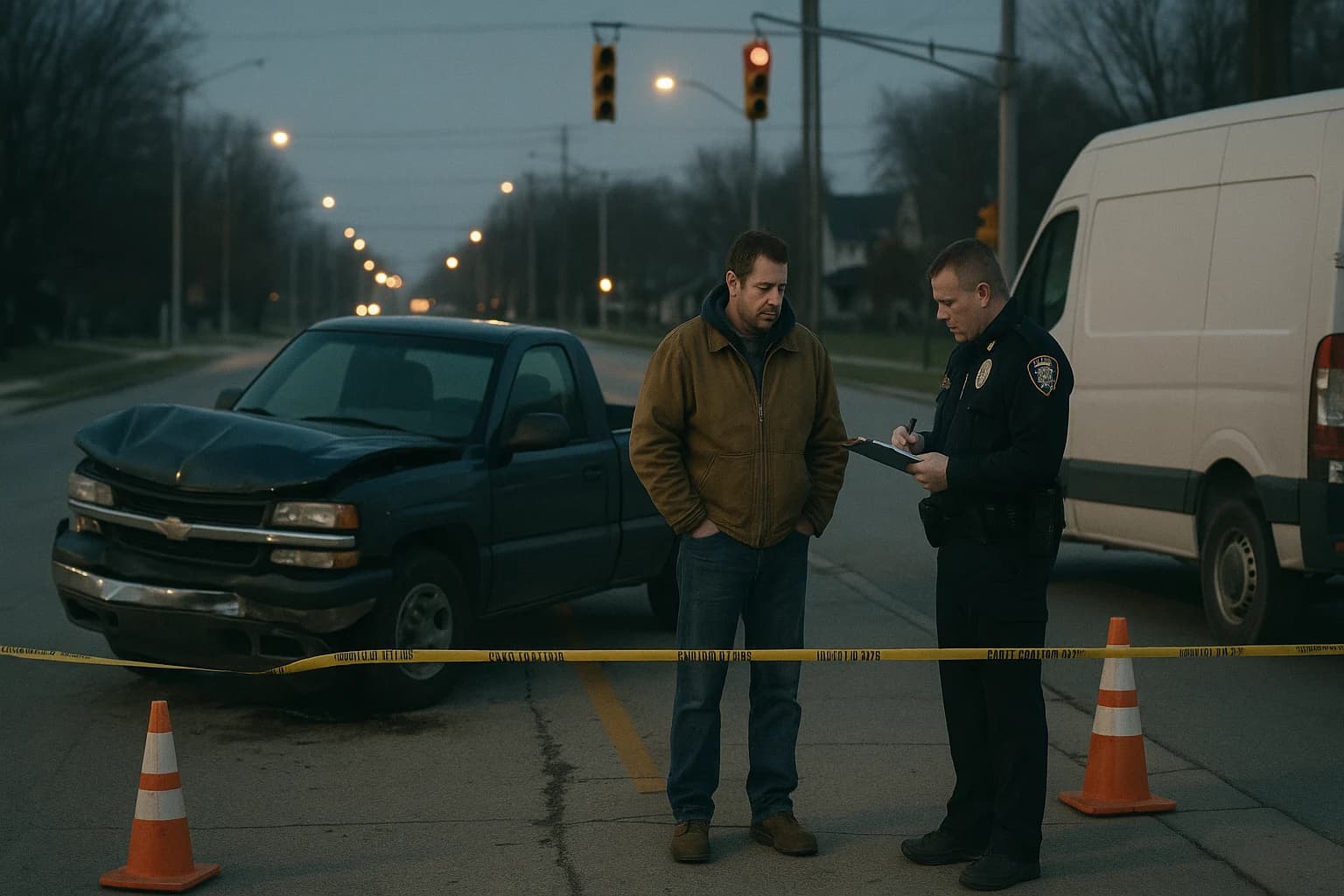
The answer is usually yes. The suspension is a serious legal problem of its own, but it does not automatically wipe out your right to recover for injuries someone else caused.
Indiana Suspends Licenses for a Long List of Reasons
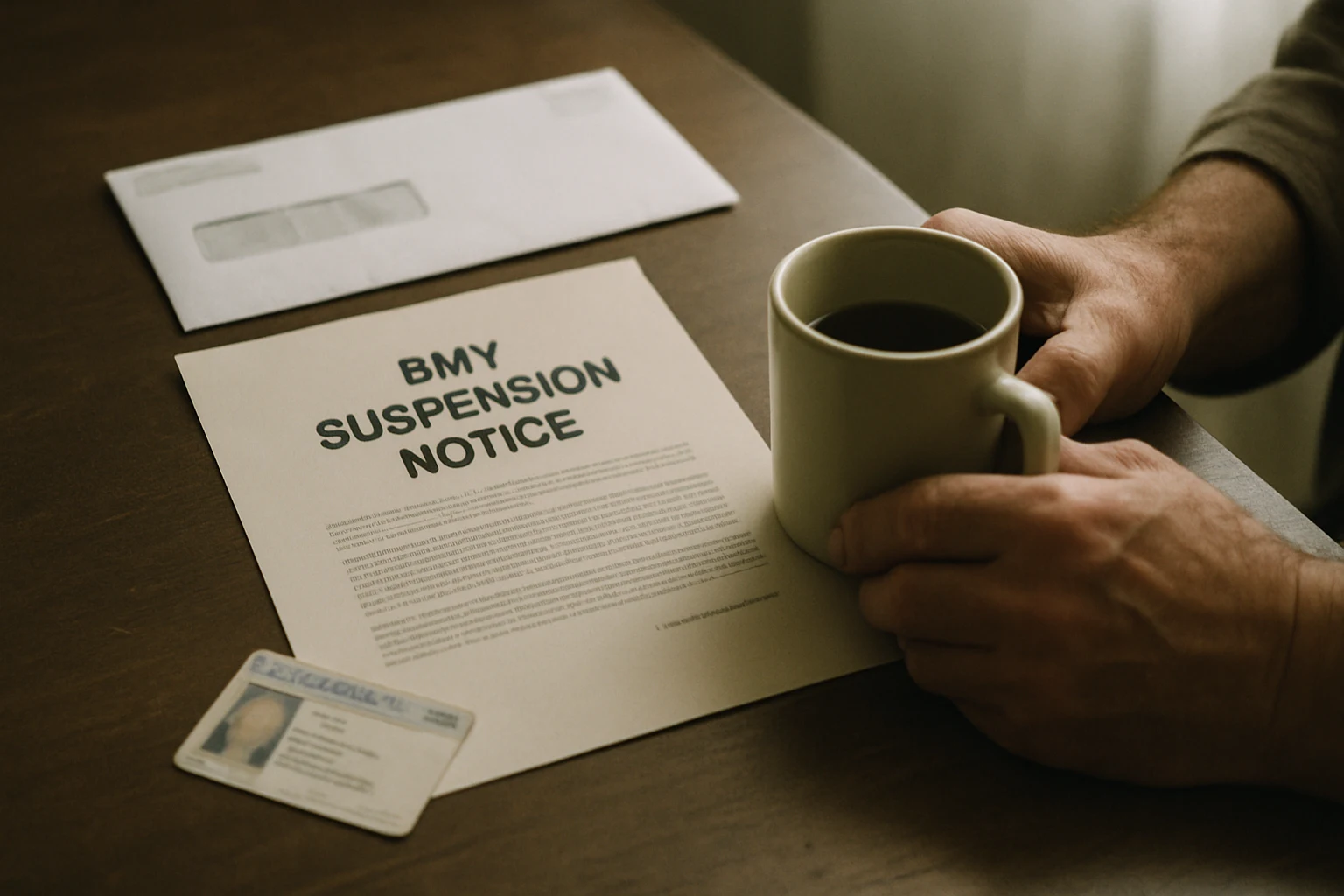
The Indiana Bureau of Motor Vehicles suspends thousands of licenses across the state every month. Common reasons include:
- Accumulation of points for moving violations
- OWI or DUI arrest or conviction
- Failure to appear at a traffic-court hearing
- Failure to pay child support
- Failure to maintain mandatory financial responsibility (insurance)
- Failure to pay BMV fees or court-ordered fines
- Medical incapacity following a reported episode
- Habitual traffic violator (HTV) status
- Refusal to submit to chemical testing under Indiana's implied-consent law
The category of suspension matters for the underlying criminal-traffic exposure, but it does not change the basic personal-injury rule. A person with a suspended license for missing a court date and a person with a suspended license for a fifth OWI both retain the right to recover compensation when someone else negligently injures them.
That right exists because Indiana law is structured around fault. If another driver's negligence caused the crash, that driver, and that driver's insurance carrier, are legally responsible for the resulting damages. The legality of the victim's presence on the road is a separate question, governed by different statutes, with different penalties.
Why Suspension Doesn't Block a Personal-Injury Claim
Indiana operates under traditional fault-based liability principles. Negligence law asks four questions:
- Did the other driver owe you a duty of reasonable care?
- Did they breach that duty?
- Did the breach cause your injury?
- What are your damages?
None of those four questions has anything to do with whether your driver's license was valid at the moment of impact. The other driver owed every person on the road a duty of reasonable care, including the unlicensed driver, the driver with a suspended license, the driver with an expired registration, and the pedestrian walking the dog. The breach (running a red light, rear-ending stopped traffic, drifting across the centerline) caused the injury. The injury produced damages. The case is straightforward.
This is also a matter of basic policy. The purpose of Indiana's negligence laws is to make careless people bear the cost of their own carelessness. Letting an at-fault driver escape liability because the victim happened to have a separate licensing problem would shift that cost to the victim and reward the wrongdoer. Indiana courts have consistently rejected that approach.
The Comparative-Fault Trap (IC § 34-51-2-6[1])
Indiana's modified comparative fault rule lives at IC § 34-51-2-6[1]. It says that if a jury finds the injured plaintiff was more than fifty percent at fault for the crash, the plaintiff recovers nothing. If the plaintiff was fifty percent or less at fault, the recovery is reduced by the plaintiff's share of fault.
How this matters for the suspended-license driver:
The suspension itself does not automatically count as fault for the crash. The suspension is a regulatory violation. Fault is about the driving conduct that caused the collision. A defense lawyer will try to argue that the suspension is evidence of generally careless driving, but the argument is usually a stretch and is regularly rejected when the suspension is unrelated to driving behavior (a missed court date, a child-support issue).
The suspension matters more when it is for a driving-conduct reason. A license suspended for a previous OWI or for habitual-violator status carries more weight in the comparative-fault analysis, because it suggests a pattern of unsafe driving. The argument is still not automatic, but it is harder to overcome.
The actual driving conduct at the crash is what matters. If you were driving the speed limit, in your lane, with your seatbelt fastened, and the other driver T-boned you running a red, your share of fault for the crash is zero. The suspension is a separate criminal-traffic problem with separate penalties, but it does not move the fault needle in the civil case.
The Criminal-Traffic Side: Don't Confuse the Two Cases
Driving on a suspended license in Indiana is a criminal offense. Depending on the type and length of the suspension, the charge ranges from a Class A infraction (suspension for failure to provide proof of insurance) to a Class A misdemeanor (driving while suspended with a prior conviction in the last ten years) to a Level 6 felony for habitual traffic violators. Penalties can include jail time, additional license suspension, fines, and required SR-22 insurance for up to three years after reinstatement.
What this means in practical terms after a crash:
- The criminal-traffic case proceeds separately from the personal-injury case.
- A criminal-defense attorney handles the suspension charge. A personal-injury attorney handles the civil claim against the at-fault driver. Some firms (including this one) coordinate, but the two cases run on different tracks.
- An admission of guilt in the criminal case is generally not usable to prove fault in the civil case, because the suspension is not the cause of the crash.
- Resolving the criminal case first sometimes makes sense; sometimes the civil case proceeds first. The strategy depends on the facts.
Tell your civil attorney about the criminal case from day one. Hiding it does not help. The defense will find out, and surprise is the worst time to deal with it.
What the Insurance Adjuster Will Try to Do With the Suspension

The at-fault driver's insurer will absolutely use the suspension to try to reduce or deny the claim. This is predictable and it is not the same thing as having a legal basis. Common adjuster tactics:
- Refusing to pay until the suspension is “resolved.” The suspension does not affect coverage. The adjuster knows this. They are stalling.
- Lowballing the offer based on alleged comparative fault. They will assign you a share of fault that the facts do not support, using the suspension as a substitute for actual driving-conduct fault.
- Pressuring a recorded statement focused on the suspension. Decline. You are not required to give a recorded statement, and any questions about the suspension are designed to fish for admissions usable against you.
- Threatening to report the suspension. The officer at the scene already reported it. The threat is empty.
- Offering a quick low settlement to “avoid complications.” The quick offer is almost always far below fair value.
The right response is to have a personal-injury attorney handle all communications with the adjuster. The suspension stops being leverage when the adjuster understands the claim is being handled by counsel who knows the law.
When the Suspension Becomes the Real Problem
There is a narrow set of cases where the suspension actually does damage the civil recovery, and they are usually cases where the driving conduct on the day of the crash was poor.
Examples where the suspension hurts:
- The suspended-license driver was speeding, weaving, or driving recklessly and contributed to the crash.
- The suspension was for prior OWI and the driver was alleged to be impaired at the time of the new crash.
- The driver was driving the wrong way on a one-way or against traffic flow at the time of the crash.
- The driver was driving without insurance in violation of IC § 9-25[2], which can affect access to certain underinsured-motorist benefits.
In those cases, the fault analysis becomes more contested. The recovery may be reduced under comparative fault. But even in these cases, the civil claim usually survives if the other driver was primarily responsible.
How Delventhal Law Office Handles Suspended-License Crash Cases
The cases that come into our office with a suspended-license issue have one thing in common: the client is worried about something that does not actually decide the case. The real questions are about driving conduct at the moment of impact, the strength of the other driver's fault, and the available insurance coverage. The suspension is real, it has consequences, but it does not block recovery in the typical case.

Our approach: we pull the BMV record, identify the reason for the suspension, document the driving conduct at the crash through the police report and any available video, and shut down the carrier's attempt to use the suspension as leverage. If the criminal-traffic case is open, we coordinate strategy with criminal-defense counsel so the civil case is not undermined. Every case is Chad's, not handed off to a paralegal funnel. The consultation is free, and we tell the client honestly whether the suspension is a real issue in the civil case or just a distraction.
FAQs About Crashes Involving Suspended Licenses
Can the at-fault driver's insurance deny my claim because my license was suspended?
No. The other driver's insurance has no legal basis to deny a third-party claim solely because the victim's license was suspended. They may try to use it for leverage in settlement, but it is not grounds for outright denial. An attorney can shut down that tactic quickly.
Will I be charged with a crime for driving on a suspended license?
Probably yes, if a police officer responded to the scene and ran your information. The charge depends on the type of suspension and your prior history. The criminal-traffic case is separate from the civil-injury case and should be handled by criminal-defense counsel.
Does the suspension affect my own insurance coverage?
It can. Driving on a suspended license can sometimes be a basis for your own insurer to deny first-party benefits (collision, MedPay) under policy exclusions. The exact result depends on the policy language and the facts. Read the policy or have an attorney read it for you before talking to your own carrier.
If I was found more than fifty percent at fault, can I still recover anything?
No. Under IC § 34-51-2-6[1], the fifty-one percent bar means a plaintiff who is more than half at fault recovers nothing. Anything fifty percent or less, the recovery is reduced by your share of fault. The suspension is one factor in that analysis but rarely the determining factor.
Should I tell my attorney about the suspension?
Always. Hiding it makes everything worse. The defense will find it through routine BMV record requests, and your attorney needs to know in advance to plan around it. There is no privilege issue with telling your own lawyer about the suspension.
Talk to a Fort Wayne Car Accident Attorney
A suspended license complicates a crash case but rarely closes it. If you were hit by another driver in Allen County, DeKalb, Whitley, Adams, Wells, Huntington, Noble, or anywhere in Indiana, and you have a licensing problem, the suspension does not automatically end your claim. The other driver's fault is what matters most.
Delventhal Law Office handles crash cases with licensing complications across Fort Wayne and the surrounding counties. The consultation is free, the conversation is direct, and you talk to Chad. Call (260) 484-6655 or contact us online to schedule a free case evaluation.
Talk to a Fort Wayne car accident attorney. If you were injured in a crash on I-69, US-30, Coliseum, or any other Allen County corridor, our Fort Wayne car accident attorneys can review your case at no cost.