The honest answer is: not entirely. Indiana law makes it more complicated than that. A driver is responsible for taking reasonable steps to avoid hitting anyone in the road, even when the pedestrian was where they should not have been. This article walks through how Indiana’s comparative fault rule actually works in pedestrian cases, what the responsibilities are on both sides, and what to do if you are the driver or the person who got hit.
Indiana’s Pedestrian Right-of-Way Rules
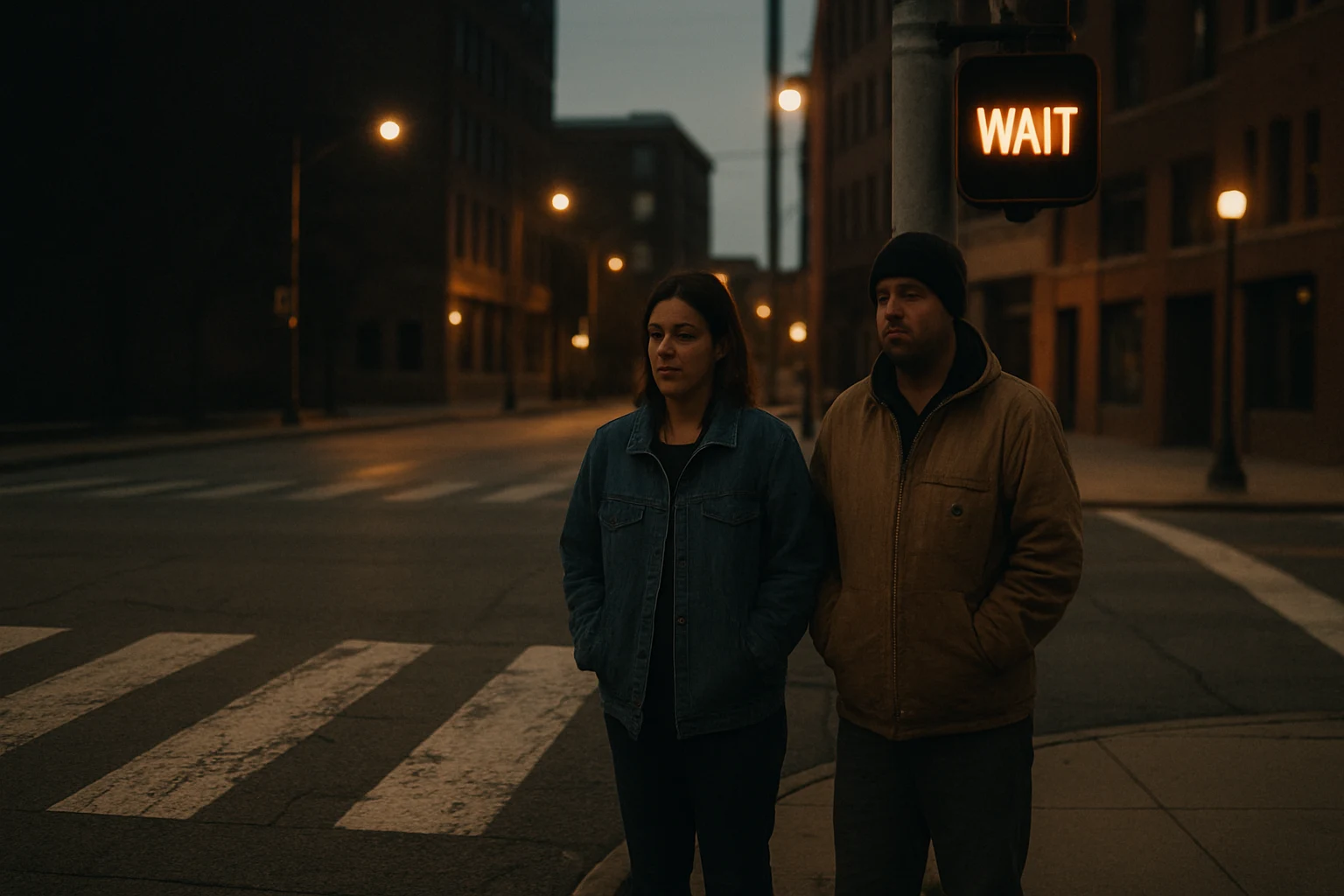
Indiana Code Title 9, Article 21, Chapter 17 sets out the right-of-way rules for pedestrians and drivers. The headline rules:
- A pedestrian in a marked crosswalk has the right of way when no traffic signal controls the intersection.
- A pedestrian crossing where there is no marked crosswalk must yield to vehicles in the road.
- A pedestrian must obey traffic-control signals (the “walk” and “don’t walk” signals).
- A pedestrian cannot suddenly leave a curb and walk or run into the path of a vehicle that is so close it constitutes an immediate hazard.
- Where a sidewalk is provided, pedestrians must use it rather than walking in the roadway.
Crossing outside a marked crosswalk, against a signal, or stepping off a curb into the path of a moving vehicle is what most people mean when they say jaywalking. In Indiana it is a traffic-law violation. It also matters for the civil case, because it gives the driver’s insurance company a basis to argue that the pedestrian bears a share of fault.
The Driver’s Duty: Reasonable Care, Even When the Pedestrian Is Wrong

The Indiana cases on this point are clear: a driver does not get a free pass just because the pedestrian was not where they should have been. Every driver owes a duty of reasonable care to anyone in the roadway. That duty includes maintaining a proper lookout, driving at a speed reasonable for conditions, and taking evasive action if a hazard appears.
The classic fact pattern: a pedestrian steps off the curb fifty feet ahead of an oncoming car. The driver sees the pedestrian, thinks “he should not be there,” and keeps going at speed. The pedestrian is struck. Even though the pedestrian was unlawfully in the road, the driver may be found at fault, or partially at fault, for failing to slow or stop the way a reasonable driver would have.
The opposite fact pattern: a pedestrian darts from between two parked cars onto a roadway, with no time for an alert driver to react. There, the pedestrian’s fault is likely to be substantial, possibly above the 51% bar, and recovery may be barred.
Most real-world cases are somewhere in between. The work of the case is establishing where on that spectrum it falls.
How Indiana’s Modified Comparative Fault Rule Splits the Bill
Indiana follows modified comparative fault under IC § 34-51-2-6[1]. Two rules drive the analysis:
- If the injured pedestrian is 50% or less at fault, they can recover damages from the driver, reduced by their own percentage of fault. A pedestrian found 30% at fault who has $100,000 in damages recovers $70,000.
- If the pedestrian is 51% or more at fault, they recover nothing. The driver’s insurance pays zero on the bodily-injury claim.
You can use our Indiana car accident settlement calculator to organize the factors that may affect a claim’s value; it is an educational tool, not a promise of any result.
In a jaywalking case, the percentage is everything. A swing from 50% pedestrian fault to 51% pedestrian fault is the difference between half a recovery and no recovery. That is why insurance carriers fight hard to push pedestrian fault over 50%, and why the injured pedestrian’s lawyer has to fight just as hard the other way.
The percentage is decided by a jury (or by an adjuster predicting what a jury would do). It turns on facts: posted speed, actual speed, lighting, visibility, distractions on both sides, sight lines, and how much time the driver had to react.
What the Investigation Actually Looks At
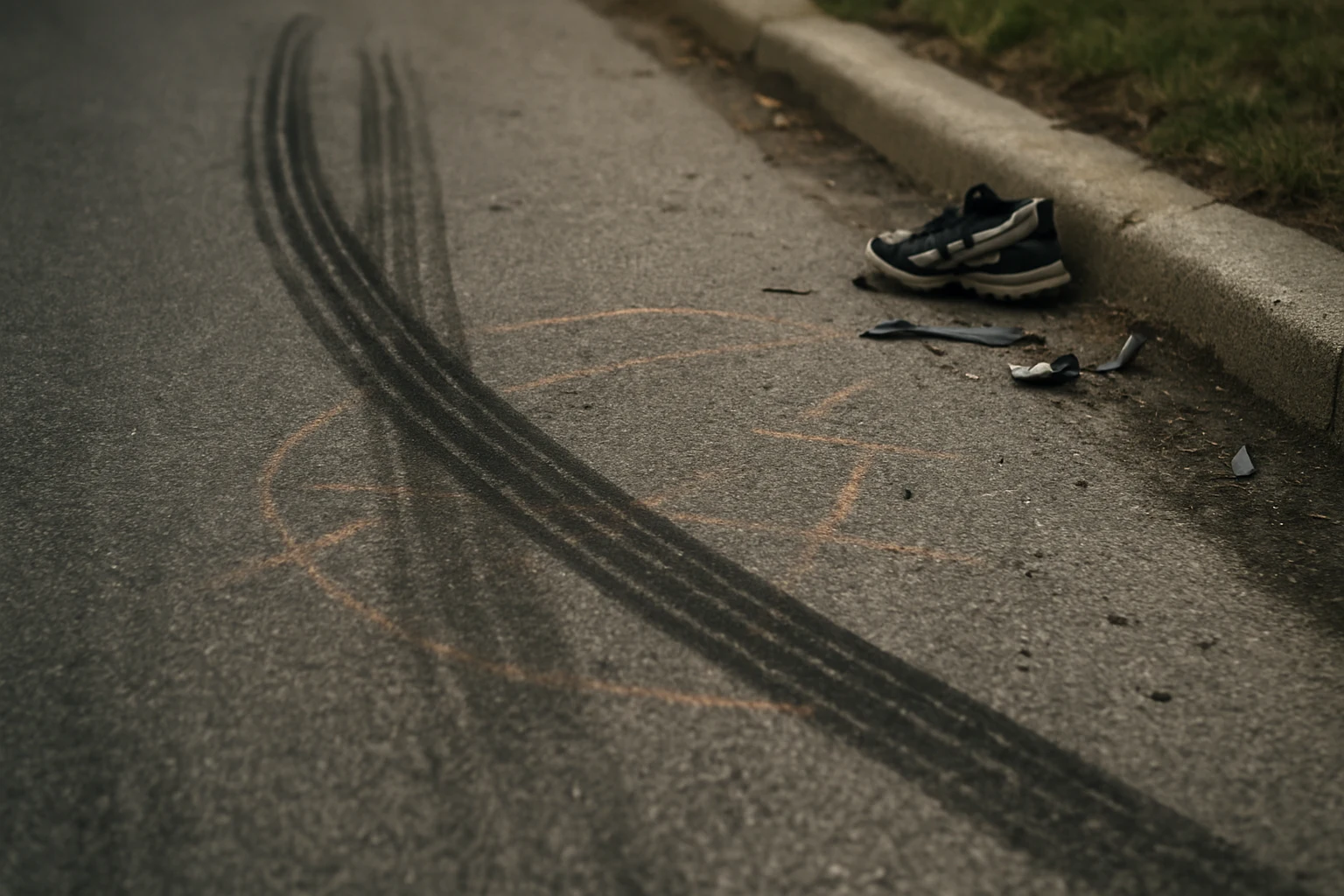
A pedestrian-versus-vehicle case is built out of small pieces of evidence:
- The police report. Diagrams, point of impact, statements, and the officer’s preliminary fault coding.
- Vehicle event data recorder (EDR) data. Most modern vehicles record pre-crash speed, brake application, throttle position, and seatbelt status. EDR data can prove how fast the driver was going and when (or whether) they hit the brakes.
- Surveillance footage. Gas stations, drive-throughs, downtown business cameras, doorbell cameras on nearby homes. Footage often overwrites in 14 to 30 days, so preservation letters have to go out fast.
- Phone records. Subpoenaed records can show whether either party was on a call or texting in the seconds before the collision.
- Lighting and sight-line analysis. Where was the streetlight? Where were the headlights pointing? Could a reasonable driver have seen the pedestrian in time to react?
- Accident reconstruction. A qualified reconstructionist can rebuild the sequence with measurements, frame-by-frame video, and physics.
The case is usually won or lost on which side puts in the work first. The pedestrian who hires a Fort Wayne pedestrian accident lawyer in the first two weeks gets the evidence preserved. The pedestrian who waits six months may find the surveillance footage gone, the witnesses moved, and the car repaired.
What Should the Driver Do Immediately After the Crash
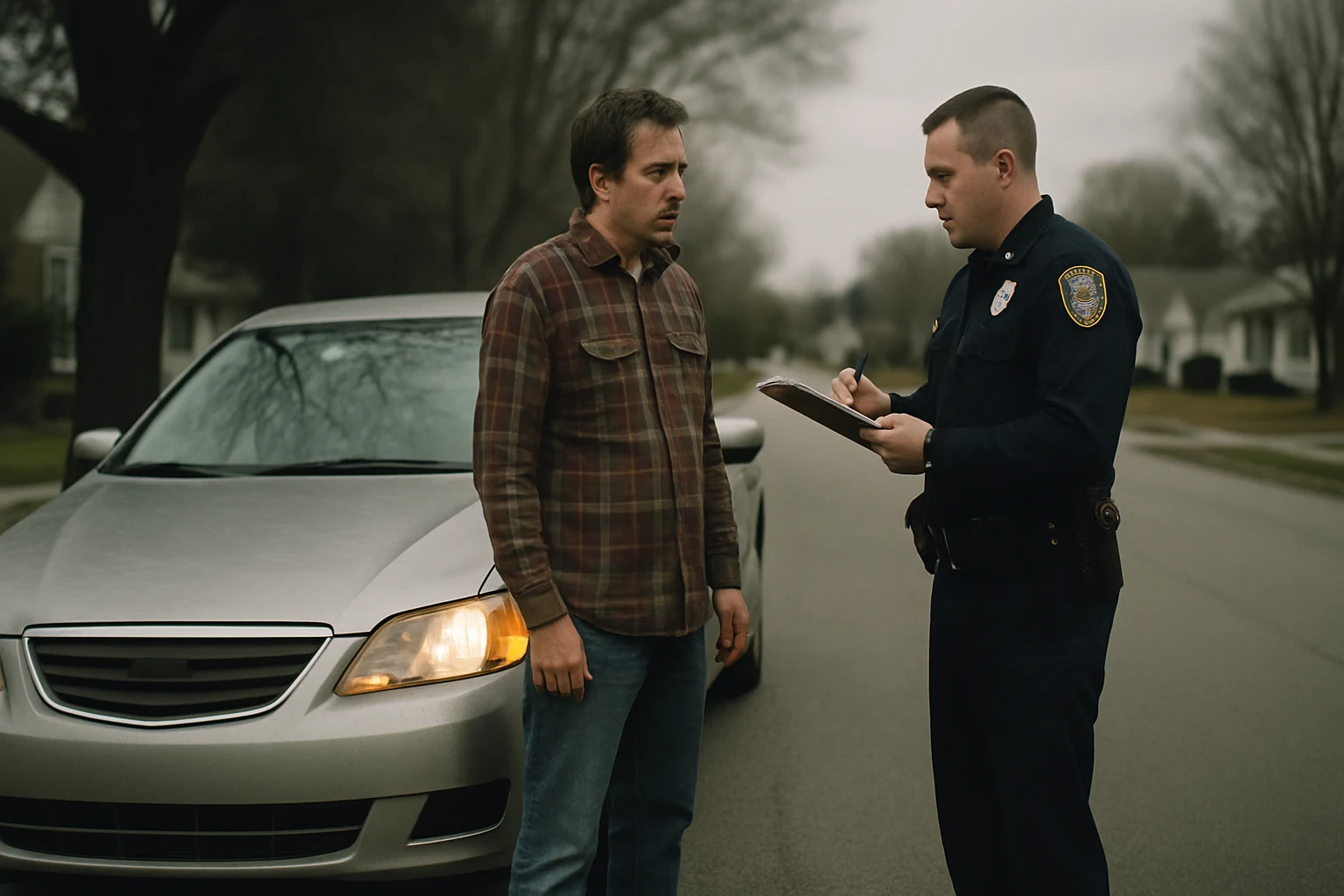
If you are the driver, do not leave the scene. Indiana law requires drivers involved in any injury crash to stop, render aid, and report the incident under IC § 9-26-1[2]. Leaving turns a civil case into a criminal one fast.
Call 911. Render aid only to the extent you are trained to do so. Do not move an injured pedestrian if there is any sign of head, neck, or back injury, unless the road environment requires it.
When the officer arrives, give a factual statement. Do not speculate. Do not apologize on the record, even if you feel terrible, because adjusters and lawyers will treat a recorded apology as an admission of fault. Identify witnesses by name and phone if you can.
Once you are home, call your insurance carrier to report the incident. Then call a lawyer. The pedestrian’s family may file a claim. Your carrier’s position will not always align with yours, especially if there is any chance the case exceeds your liability limits. A short conversation with counsel early on can make a real difference later.
What Should the Pedestrian Do
The injured pedestrian usually has the harder road, because they are also the one in the hospital. Some practical steps:
- Accept the ambulance ride. Even injuries that feel manageable in the moment can be serious. Documented medical treatment from day one is the foundation of any later claim.
- Do not give a recorded statement to the driver’s insurance company. You are not required to.
- Do not sign a medical release until you have spoken with a lawyer about its scope.
- Keep all paperwork: discharge summaries, prescription receipts, follow-up appointment cards, missed-work notes.
- Talk to a Fort Wayne pedestrian accident attorney for a free consultation. Indiana’s two-year filing deadline under IC § 34-11-2-4[3] sounds long, but in a comparative-fault case the evidence window is much shorter.
How Delventhal Law Office Handles Jaywalking Cases
Jaywalking cases are won on the margins of fault. The carrier wants to put pedestrian fault at 60% so the case dies on the 51% bar. The plaintiff’s side has to put pedestrian fault somewhere south of 50% or settle for less than it is worth. The difference is investigation.
At Delventhal Law Office, the first 30 days of a pedestrian case are evidence-driven. Preservation letters to nearby businesses with cameras. Witness interviews while memories are fresh. EDR data preserved from the at-fault vehicle. Photos of the scene at the time of day and in the lighting conditions where the crash happened, because a downtown corner that looks fine at noon can be effectively invisible at dusk.
Chad Delventhal handles every pedestrian case at the firm personally, from intake through trial if needed. Indiana State Bar since 2008. The case strategy is built around the client, not around what the insurance carrier wants to talk about.
FAQs About Pedestrian Crashes in Indiana
Can a jaywalking pedestrian still sue the driver who hit them?
Yes, as long as the pedestrian’s share of fault is 50% or less under IC § 34-51-2-6[1]. Recovery is reduced by the pedestrian’s percentage of fault. At 51% or above, the claim is barred entirely.
What if I was the driver and the pedestrian darted out?
You can still be liable if you had time to react and did not. The strongest defense is evidence: dash-cam footage, EDR data showing your speed and braking, witness statements. Talk to your insurance carrier and consider talking to a lawyer, especially if injuries are severe.
Is a pedestrian always 100% at fault for crossing outside a crosswalk?
No. Pedestrians outside a crosswalk lose the presumption of right-of-way, but they do not lose the right to recover. Drivers still owe a duty of reasonable care to anyone in the road. Most cases involve shared fault.
How long do I have to file a pedestrian injury claim in Indiana?
Two years from the date of the crash under IC § 34-11-2-4[3]. If a government vehicle was involved, the Indiana Tort Claims Act notice deadline can drop to 180 or 270 days.
What if the pedestrian was a child?
The statute of limitations is tolled for minors under IC § 34-11-6-1[4]. The clock starts at age 18. Children are also held to a different standard of care than adults; what is “reasonable” for a seven-year-old is not what is “reasonable” for an adult pedestrian.
Talk to a Fort Wayne Pedestrian Accident Attorney
Whether you are the driver who hit someone or the pedestrian who was hit, the legal exposure is bigger than it looks in the first 24 hours. The investigation window is short. Insurance carriers are already working their side of the case while you are still figuring out who to call.
Delventhal Law Office offers a free, no-obligation consultation. Call (260) 484-6655 or contact us online to schedule a free case evaluation. You talk directly to Chad, not a screener.