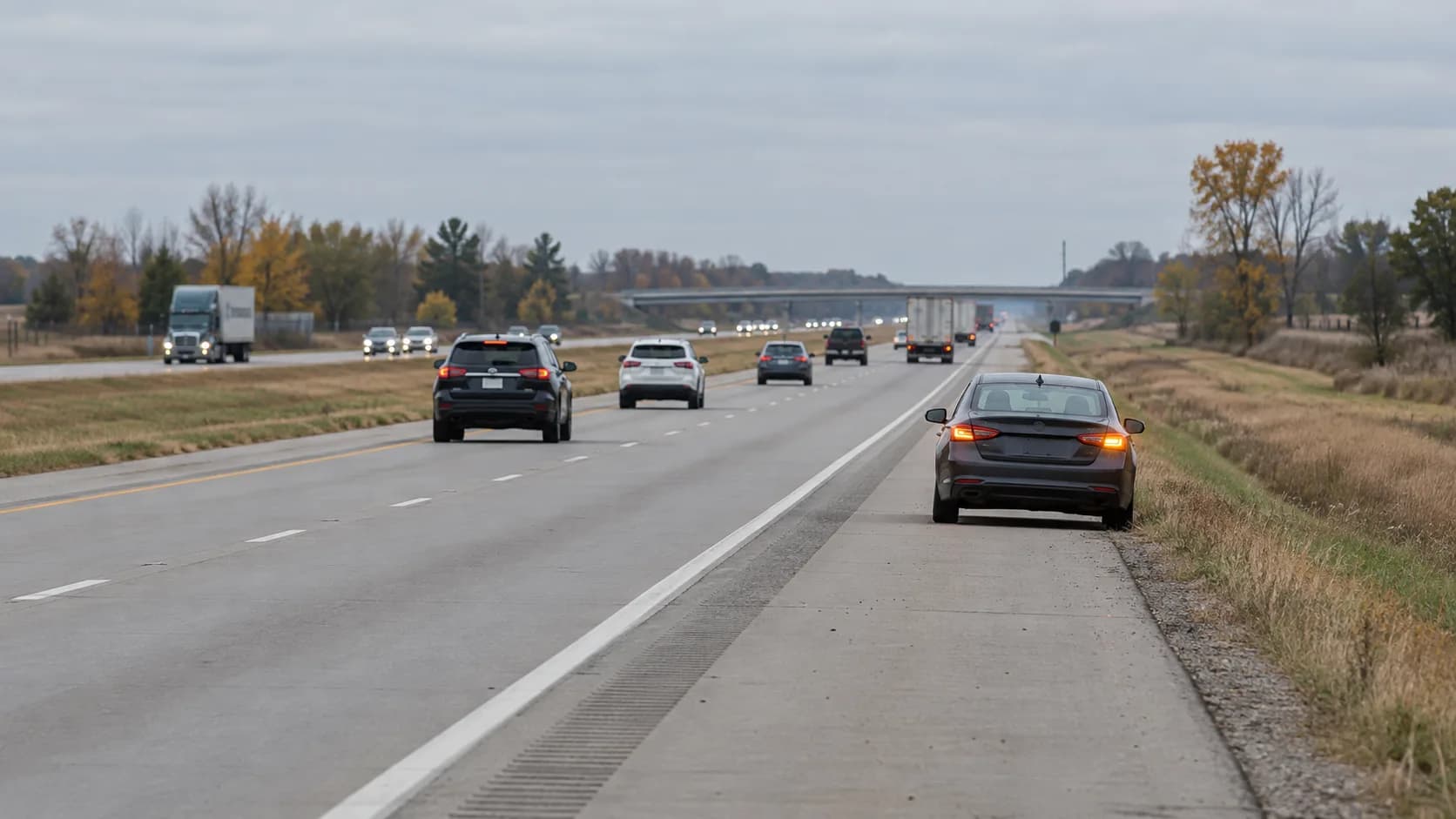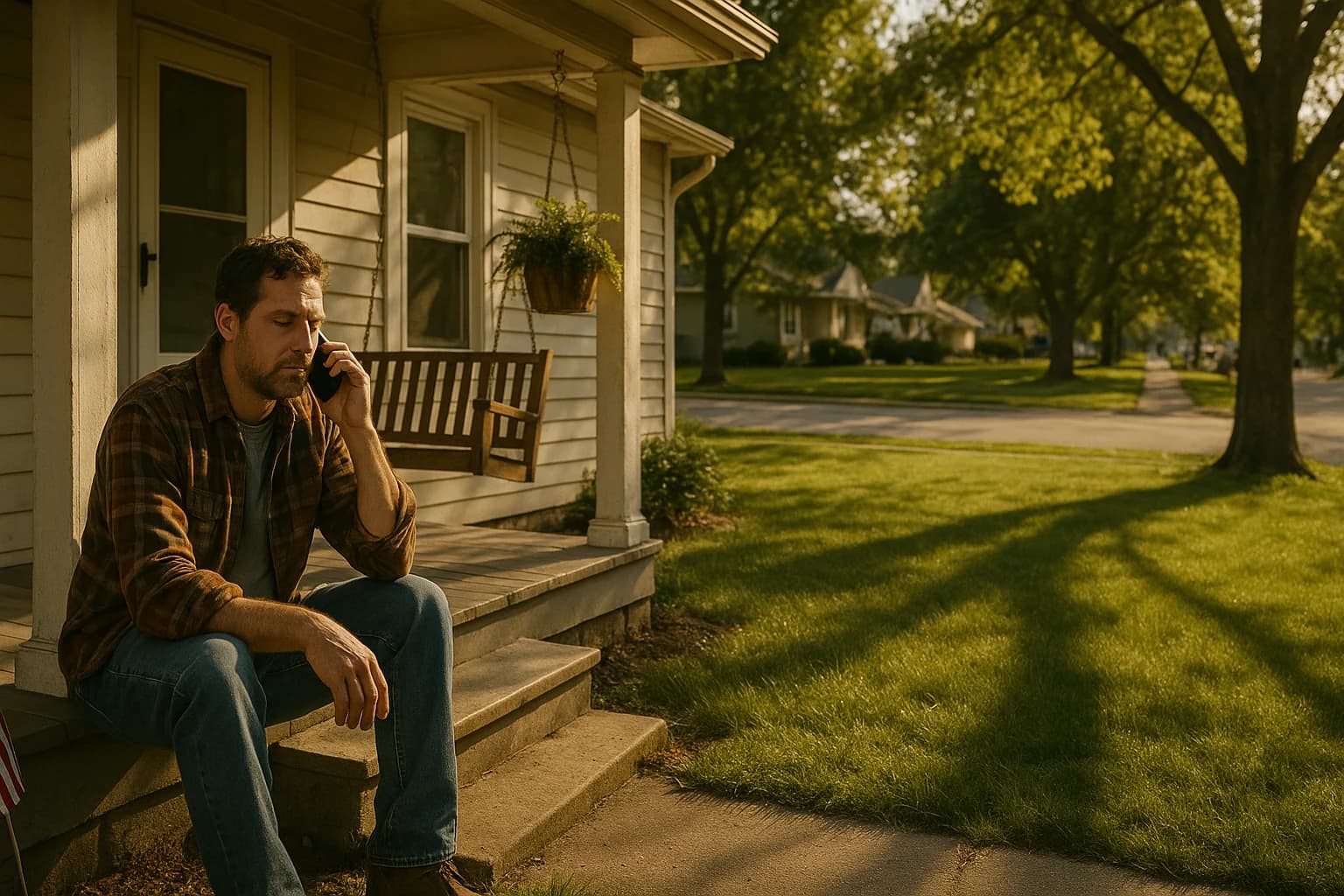
This article is for the family on the other side of that phone call. It walks through what actually happens in the days and weeks after a fatal Indiana car crash: the criminal investigation, the wrongful-death claim, who can file, what damages are recoverable, and the deadlines that quietly start running while the family is still in shock. You can use our Indiana car accident settlement calculator to organize the factors that may affect a claim’s value; it is an educational tool, not a promise of any result.
The First Hours: What Happens at the Scene and the Hospital
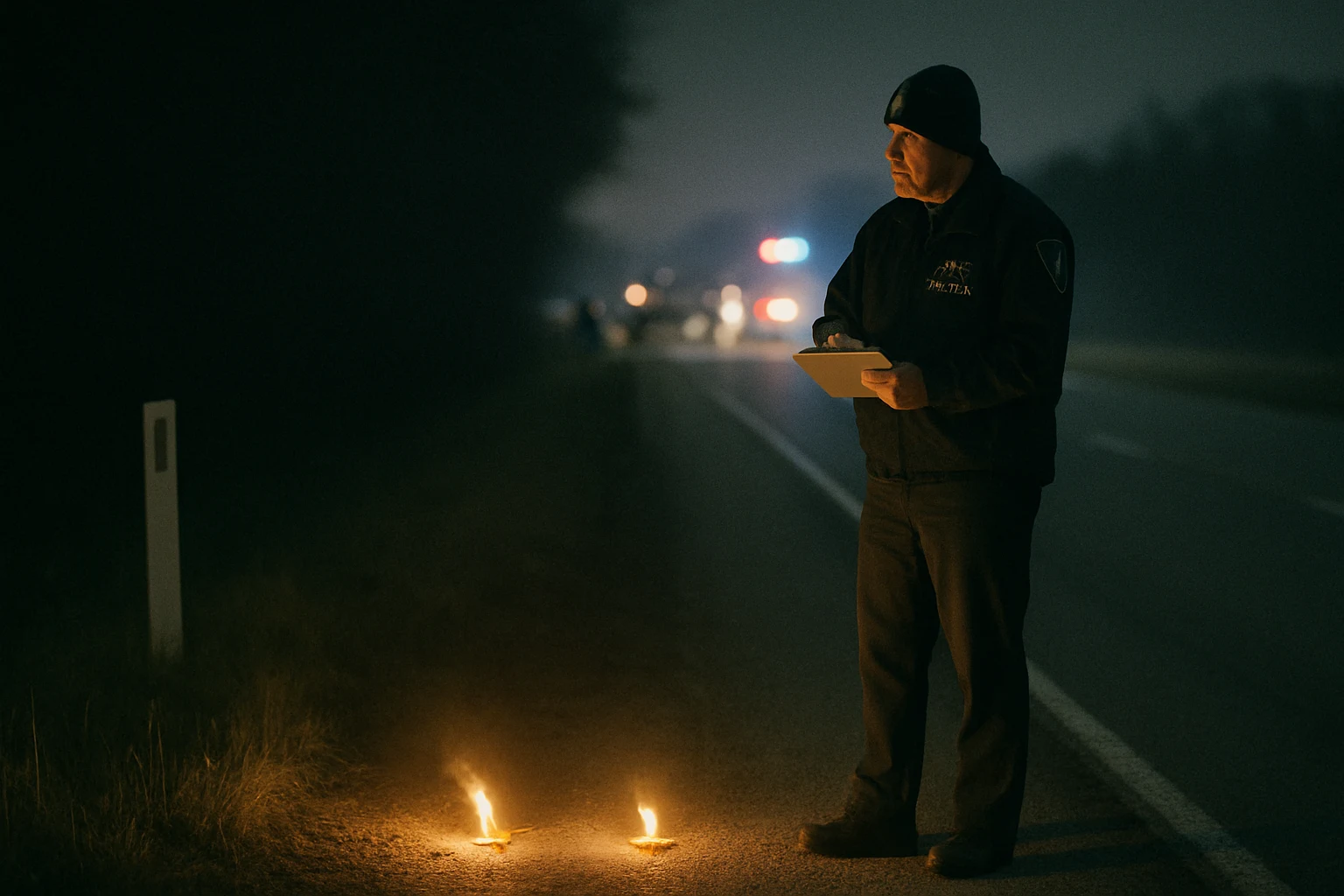
A fatal crash on US-30, US-27, US-24, I-69, or any rural Allen County road triggers a sequence of events that the family rarely sees. Within minutes of dispatch, multiple agencies are on scene: local police or sheriff's deputies, EMS, fire and rescue, and (for fatal crashes) usually an Indiana State Police accident reconstruction team. The scene is closed and treated as a forensic site.
Investigators measure skid marks, photograph debris fields, examine vehicle damage, download event-data recorder information from the involved vehicles, interview witnesses, and obtain blood samples from drivers as needed. The investigation can take hours; major fatal scenes can close a highway overnight. Everything documented in this window becomes the foundation of both the criminal investigation and any civil claim that follows.
Hospital notification of the family usually comes through law enforcement, not the hospital itself. If the victim survived briefly and was transported, the family may speak to ER physicians before being told the outcome. The coroner takes custody of the body and begins working with the funeral home of the family's choice.
Criminal Investigation vs. Civil Claim
Many families assume the criminal case and the civil case are the same. They are not.
The criminal investigation looks at whether the at-fault driver committed a crime. Common charges in fatal Indiana crashes include reckless homicide, causing death while operating a vehicle while intoxicated, and operating a vehicle while intoxicated causing death. The Allen County Prosecutor (or the prosecutor in the county where the crash happened) decides whether to file charges. Criminal cases proceed at the prosecutor's pace, with the State of Indiana as plaintiff, not the family.
The civil case is the wrongful-death claim. It is brought by the family (through the estate's personal representative) against the at-fault driver and the driver's insurance carrier. It runs on its own schedule, with its own deadline. A guilty plea in the criminal case is helpful evidence in the civil case but is not required to prove civil liability. The civil burden of proof is preponderance of the evidence (more likely than not); the criminal burden is beyond a reasonable doubt. A driver can be acquitted criminally and still be liable civilly.
The two cases do not interfere with each other. Both can be pursued at the same time.
Indiana's Wrongful Death Statute

Indiana's general wrongful-death statute is IC § 34-23-1-1[1]. It allows the personal representative of the decedent's estate to bring a claim against any person whose wrongful act or omission caused the death. The action must be filed within two years of the date of death.
Key features of the Indiana statute:
- The claim is brought by the personal representative of the estate, not directly by the surviving family members. If no estate has been opened, opening probate is the first step.
- Recoverable damages include reasonable medical, hospital, funeral, and burial expenses; lost earnings from the date of injury to the date of death; loss of the decedent's earnings, services, and companionship; reasonable attorney fees; and (in some cases) the value of lost love and companionship to surviving family members.
- Damages are distributed based on the statute's allocation rules, generally to the surviving spouse and dependent children first.
For families whose loved one had no spouse and no dependent children, Indiana has a separate Adult Wrongful Death Statute (IC § 34-23-1-2[3]). For child deaths, the Child Wrongful Death Act (IC § 34-23-2-1[2]) provides its own framework with categories specific to the loss of a child.
Who Can File a Wrongful Death Claim in Indiana
Indiana wrongful-death law channels the right to file through the estate's personal representative. The personal representative is typically appointed by the probate court after a petition by an interested party (often the surviving spouse or a parent).
Common beneficiaries under the general statute are:
- The surviving spouse
- Dependent children (biological, adopted, or stepchildren who were financially dependent)
- Dependent next of kin if there is no surviving spouse or dependent children
Under the Adult Wrongful Death Statute, the parents and non-dependent children of an unmarried adult with no dependents may recover. Recovery categories are narrower than under the general statute, but the right exists.
Under the Child Wrongful Death Act, a parent or legal guardian of a child (defined for these purposes as under 20, unmarried, without dependents, and enrolled in school if 18 or 19) may recover. Damages include loss of love and companionship, funeral and burial expenses, medical costs before death, certain debts, reasonable attorney fees, and counseling costs for the surviving parent or guardian.
The allocation among beneficiaries can be set by agreement or, when the parties cannot agree, by court order.
Recoverable Damages in a Fatal Crash

Indiana wrongful-death damages typically fall into the following categories:
Economic damages.
- Medical and hospital expenses from the crash to the date of death
- Funeral and burial expenses
- Lost earnings from the date of injury to the date of death
- Lost future earnings, often calculated by an economic expert based on the decedent's career and projected work life
- Loss of household services (lawn care, child care, home maintenance, family contributions)
- Reasonable attorney fees in many wrongful-death cases
Non-economic damages.
- Loss of love and companionship of the surviving spouse and dependent children
- Loss of parental guidance for surviving minor children
- Counseling costs for surviving family members in child-death cases
- Conscious pain and suffering of the decedent before death, if any (this can be a separate survival action)
What is generally not recoverable in an Indiana wrongful-death case is grief itself as a separate category. Indiana's statute is more economically focused than some other states' wrongful-death acts. That said, loss of love and companionship is a substantial category and is often the largest part of a wrongful-death recovery.
Deadlines That Run Even While the Family Is in Shock
The two-year wrongful-death deadline is the headline number. Several earlier deadlines matter just as much.
- Tort Claims Act notice. If a government employee or vehicle caused the crash (a city plow, an INDOT vehicle, an Allen County sheriff, a school bus), a written Notice of Tort Claim is required: 180 days to a political subdivision under IC § 34-13-3-8[4], 270 days to the State of Indiana under IC § 34-13-3-6[5].
- Evidence preservation. Vehicles get released to insurers, tow yards, or salvage. Cameras at gas stations, businesses, and intersections overwrite their footage in days. The 911 audio and dispatch logs are retained but should be requested formally early.
- Witness statements. Witnesses move. Memories fade. The investigators have their interviews; the family's attorney should obtain copies and follow up with anyone whose statement matters.
- Probate. Opening probate is a prerequisite to filing the wrongful-death case in the personal representative's name. Probate filings take time and require court approval.
None of these deadlines wait for the family to grieve. They run from day one, which is why many wrongful-death cases benefit from involving counsel early, even when no decisions about litigation have been made.
How Delventhal Law Office Handles Fatal Crash Cases
Wrongful-death cases are not the kind of case any family wants to be talking about. The right approach is quiet, methodical, and protective of the family's time. We do not ask the family to do the running around. We coordinate with the funeral home, the coroner, the investigating agencies, and the insurance carriers directly.
We send preservation letters within the first week. We obtain the accident reconstruction report, the 911 audio, the body-cam footage, and the event-data recorder downloads. For commercial-vehicle fatal crashes, we move on the driver's logs, qualifications file, and electronic logging device data before they go missing. For fatal cases involving government vehicles, we serve the Notice of Tort Claim well inside the 180/270-day windows.
Every wrongful-death file is handled by Chad directly. Indiana State Bar, admitted 2008. Fort Wayne, Allen County, DeKalb, Whitley, Adams, Wells, Huntington, Noble, Elkhart, St. Joseph, and Kosciusko County claims. The same attorney from the first call through resolution.
FAQs About Fatal Car Accidents in Indiana
How long do we have to file a wrongful-death case?
Two years from the date of death under IC § 34-23-1-1[1]. For government defendants, a Tort Claims Act notice is required within 180 or 270 days. Probate must be opened to appoint a personal representative before suit can be filed.
Can we file even if the driver was not criminally charged?
Yes. The civil and criminal cases are separate. Civil liability requires only a preponderance of evidence, not the criminal beyond-a-reasonable-doubt standard. Many valid wrongful-death cases proceed civilly when the prosecutor declines to charge or the criminal case ends in acquittal.
Who actually receives the wrongful-death recovery?
Distribution follows Indiana law and the personal representative's allocation. Typically, surviving spouses and dependent children receive the bulk; the estate covers medical, funeral, and other expenses; and remaining funds are distributed by court order or agreement among beneficiaries.
What if the at-fault driver does not have enough insurance?
The decedent's own auto policy may provide underinsured motorist coverage that applies in fatal cases. UM/UIM benefits often matter more than the at-fault driver's liability limits when the loss is catastrophic. Family members' policies may also apply in some configurations.
Do we have to give a statement to the at-fault driver's insurance company?
No. The family is not obligated to give a recorded statement to the at-fault driver's carrier. Politely decline until you have spoken with counsel. Anything said in those early calls will be used to limit the claim.
Lost a Loved One in a Fort Wayne Crash? Talk to an Attorney Before the Carriers Move
The carriers will reach out within a week. They will be polite. They will offer to help. They will ask for a statement, a release, and a quick resolution. Wait. Talk to a lawyer before anyone signs anything.
If your family has lost a loved one in a crash anywhere in Allen County, DeKalb County, Whitley County, Adams County, or Indiana, talk to Delventhal Law Office. The consultation is free, no obligation, and you are talking to Chad directly. Call (260) 484-6655 or contact us online to schedule a free case evaluation.
Talk to a Fort Wayne car accident attorney. The decisions you make in the first week after a Fort Wayne car accident set the ceiling on your case. Our Fort Wayne car accident attorneys can walk you through what to do next.