
If your heels started aching after months on a concrete warehouse floor, a hospital wing, or a factory line, you are probably wondering whether Indiana workers' compensation will pay for treatment and lost time. This guide explains, in plain language, when foot pain like plantar fasciitis may qualify, what you have to prove, the deadlines that matter, and the practical steps that protect a claim in Fort Wayne and across Indiana.
- Coverage is possible but fact-specific. Indiana pays benefits for injuries "by accident arising out of and in the course of employment" — gradual, repetitive-use conditions can qualify when the work connection is proven.
- Causation is the hard part. Plantar fasciitis has many non-work causes, so medical evidence tying it to your job duties is critical.
- Deadlines are strict. Report the injury to your employer promptly (Indiana law protects benefits when notice is given within 30 days) and file any claim within two years.
- Your employer usually directs medical care. In Indiana, the employer or its insurer generally chooses the authorized treating physician.
- Documentation wins or loses these claims. Early reporting, consistent treatment, and a doctor's opinion on work causation matter more than anything else.
The short answer: it depends on proving a work connection
Indiana workers' compensation is a no-fault system, meaning you do not have to prove your employer did anything wrong. But you do have to prove the injury is job-related. For a condition like plantar fasciitis, that is where most disputes happen. A single traumatic event (say, dropping heavy equipment on your foot) is easy to connect to work. A condition that builds up over weeks or months of standing and walking is harder — not impossible, just harder — because the insurer can point to age, weight, footwear, exercise, or an old injury as the "real" cause.
So the honest answer is: yes, plantar fasciitis can be a compensable work injury in Indiana, but only if the medical and factual record shows your job caused, aggravated, or accelerated it.
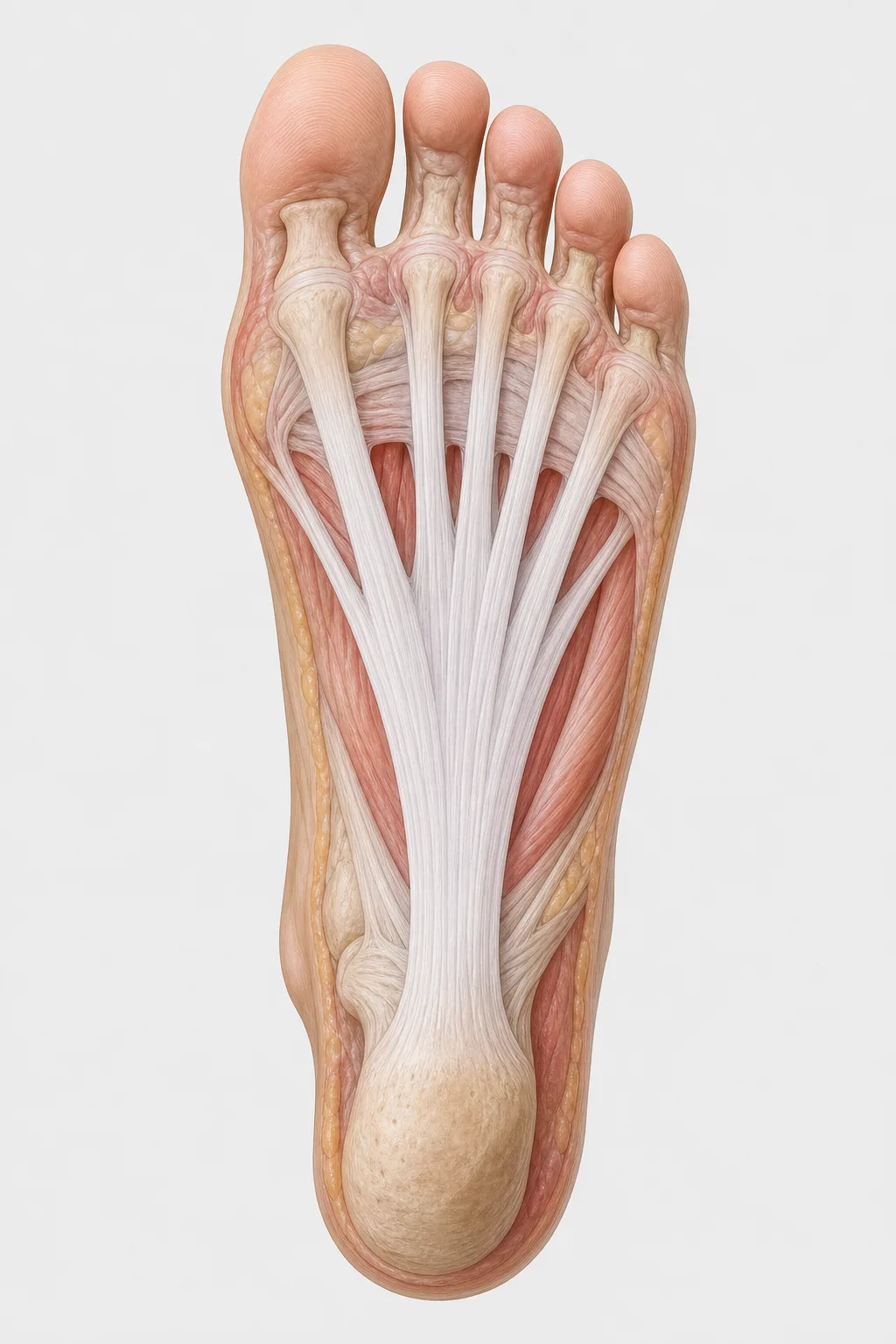
What plantar fasciitis is (and why work can trigger it)
The plantar fascia is a thick band of tissue running along the bottom of your foot from the heel to the toes. When it is overloaded, irritated, or damaged, it becomes inflamed — and that is plantar fasciitis. According to the Cleveland Clinic[1], it is the most common cause of heel pain, and the classic symptom is a sharp or stabbing pain in the heel that is worst with your first steps in the morning or after sitting.
Importantly for injured workers, the Cleveland Clinic lists among its causes "being on your feet all day for work" and exercising or working on a hard surface such as a warehouse floor. That is exactly the kind of environment many Fort Wayne factory, warehouse, healthcare, retail, and food-service workers face every shift. The physical demands that can contribute — long standing, repeated walking, and hard flooring — are common workplace conditions, which is why the work-injury question comes up so often.
Indiana's legal test: "by accident arising out of and in the course of employment"
Indiana's Worker's Compensation Act requires employers to pay compensation for a personal injury or death by accident arising out of and in the course of employment. That phrase, found in Indiana Code § 22-3-2-2[2], has two working parts:
- Arising out of employment — there is a causal connection between the work and the injury.
- In the course of employment — the injury happened while you were doing your job or something related to it.
The word "accident" once suggested a single, sudden event, but Indiana's system also reaches gradual, repetitive-use conditions when the harm is unexpected and connected to the work. That is why conditions like carpal tunnel and other cumulative-trauma injuries are regularly evaluated under the same standard. Plantar fasciitis fits this repetitive-strain pattern, so the legal door is open — the question is whether your specific facts walk through it.
If your job duties made an existing foot problem worse, that can matter too. Indiana benefits may apply when work aggravates or accelerates a pre-existing condition, which is a common insurer battleground. Our Fort Wayne aggravation of pre-existing conditions attorney page explains that issue in more detail.

Jobs and conditions that can contribute to plantar fasciitis
Occupations that commonly involve prolonged standing or walking on unforgiving floors include:
- Warehouse, distribution, and manufacturing floor workers
- Nurses, aides, and other healthcare staff on long shifts
- Retail, grocery, and cashier positions
- Restaurant, kitchen, and hospitality workers
- Delivery, mail, and route-based roles with heavy walking
- Construction and skilled-trades work on concrete
Repetitive strain on the feet works much like repetitive strain on the hands and wrists. If you want to understand how Indiana treats cumulative-trauma conditions generally, our overview of repetitive motion injuries and Indiana workers' compensation is a helpful companion, and workers with foot-specific concerns can learn more from our Fort Wayne foot injury lawyer page.

What you must prove: the causation challenge
Because plantar fasciitis has many possible causes, insurers frequently argue that your condition is not work-related. Expect questions about your age, weight, footwear, recreational running or sports, and whether you had heel pain before this job. None of those automatically defeats a claim, but each is a talking point the insurer may use.
The most important piece of evidence is a treating physician's opinion connecting your condition to your work duties. That usually means telling your doctor honestly about how much you stand and walk, on what kind of surface, and for how many hours per shift — and asking that this history be recorded. A medical note that simply says "plantar fasciitis" without any mention of your job does little to prove the work connection.
Keep in mind that the general medical information here is not a diagnosis or treatment advice for your situation. Only a qualified provider can evaluate your feet and offer an opinion on cause.
Deadlines that can make or break your claim
Two timing rules matter most in Indiana, and both are easy to miss with a gradual condition that "sneaks up" on you:
- Notice to your employer. Report the injury as soon as practicable. Under Indiana Code § 22-3-3-1[2], if notice is not given (or the employer does not otherwise have knowledge) within 30 days of the injury, no compensation is paid until notice is given. Prompt written notice protects your benefits.
- Filing a claim. Under Indiana Code § 22-3-3-3[2], the right to compensation is generally barred unless a claim is filed within two years after the occurrence of the accident. For gradually developing conditions, exactly when that clock starts can be a legal question — one worth discussing with an attorney rather than guessing.
Deadline questions in cumulative-trauma cases can be genuinely complicated. Because the rules that affect your legal rights depend on your specific facts, this is an area where getting a professional read early is wise.

Who pays and who picks the doctor
If your plantar fasciitis is accepted as work-related, Indiana workers' compensation can cover authorized medical treatment and, when a doctor takes you off work or restricts you, wage-replacement benefits. But there is a catch many workers do not expect: you usually do not get to pick your own doctor.
Under Indiana Code § 22-3-3-4[2], the employer must furnish an attending physician and necessary medical services, and in practice that means the employer or its insurer generally directs your authorized care. Going to your own doctor without authorization can leave you paying those bills yourself. Our guide on who chooses the doctor in an Indiana workers' compensation claim explains how this works and the limited situations where you may have more say.
If the insurer denies your claim outright — a common outcome with gradual conditions — you still have options. Our article on what to do if your Indiana workers' compensation claim is denied walks through the next steps.
Practical steps to protect a plantar fasciitis work claim
If you think your foot condition is job-related, these steps give your claim the best chance:
- Report it in writing. Tell your supervisor or HR promptly and keep a copy of the report with the date.
- Be specific about your duties. Note hours on your feet, the surface you work on, and any recent increase in workload or new job tasks.
- Get medical care and follow through. Attend appointments, follow the treatment plan, and avoid gaps that let an insurer argue you were not really hurt.
- Ask your doctor to document work causation. Make sure your job history is in the medical record and that the provider addresses whether work contributed.
- Keep your own file. Save pay records, work schedules, footwear the employer required, and any communications about your feet.
- Watch the deadlines. Don't let the 30-day notice window or two-year filing period slip while you "wait and see."
- Get advice before you accept a denial. A conversation with a workers' compensation attorney can clarify your options at no cost.

Frequently Asked Questions
Is plantar fasciitis automatically covered by workers' compensation in Indiana?
No. It can be covered, but coverage is not automatic. You must show the condition arose out of and in the course of your employment. Because plantar fasciitis often develops gradually and has many non-work causes, the work connection has to be supported by medical evidence.
Can standing on concrete all day at work cause a compensable injury?
Prolonged standing and hard surfaces are recognized contributors to plantar fasciitis, and Indiana can compensate repetitive-strain conditions when the work connection is proven. Still, the insurer may dispute causation, so documenting your duties and getting a doctor's opinion linking the two is important.
How long do I have to report or file a plantar fasciitis claim in Indiana?
Report the injury to your employer as soon as practicable — Indiana law protects your benefits when notice is given within 30 days. A formal claim for compensation is generally barred unless filed within two years of the accident. When the clock starts for a gradual condition can be a legal question worth discussing with an attorney.
Can I see my own foot doctor and have workers' comp pay?
Usually not without authorization. In Indiana, the employer or its insurer generally directs authorized medical care. Treating with an unauthorized provider can leave you responsible for the bills, so confirm authorization first.
What if I already had foot problems before this job?
A pre-existing condition does not necessarily bar a claim. Indiana benefits may apply when work aggravates or accelerates an existing condition. Expect the insurer to focus on your history, and be prepared to document how your job made things worse.
What should I do if my claim is denied?
A denial is not the end. You can gather stronger medical support, request records, and pursue your rights before the Worker's Compensation Board. Talking with a workers' compensation attorney early can help you understand the specific options in your case.
Talking to someone about your options
Foot pain that keeps you from doing your job is stressful, and gradual conditions like plantar fasciitis raise real questions about whether — and how — Indiana workers' compensation applies. You do not have to sort out the causation, notice, and treatment rules alone. If you were hurt and are not sure what to do next, Delventhal Law Office's Fort Wayne workers' compensation team can review what happened, explain the deadlines that may apply, and help you decide the next step. A free consultation can help you understand your options with no pressure.
This article is general information about Indiana law and is not legal or medical advice. Reading it does not create an attorney-client relationship. For advice about your specific situation, consult a licensed Indiana attorney and a qualified medical provider.