
What follows is not legal advice for that moment. There is no legal advice for that moment. What follows is the framework Indiana law sets up for the months after, so when the time comes to make decisions, you know what the rules are and who is responsible for what.
Indiana Wrongful Death: Who Files, What the Statute Says

Indiana's primary wrongful-death statute is IC § 34-23-1-1[1]. The claim is filed by the personal representative of the deceased person's estate. That is usually a surviving spouse, an adult child, or another family member named in the deceased's will. If the deceased did not have a will, the court appoints a personal representative through probate.
The personal representative does not keep the recovery. Indiana law specifies who the recovery is for: in the case of an adult with a surviving spouse and/or dependent children, it goes to those beneficiaries. Different rules apply when the deceased was an unmarried adult with no dependents, where damages are more limited under IC § 34-23-1-2[2] (the Adult Wrongful Death Statute). Separate rules apply for the death of a child under IC § 34-23-2[3], which permits the parents to recover.
The statute of limitations is two years from the date of death, not the date of the crash. In most fatal-crash cases those dates are the same, but when a person survives in critical care for days or weeks before passing, the clock starts on the date the death is pronounced.
What Damages Indiana Allows in a Fatal Crash Case
Wrongful-death damages in Indiana are different from injury-case damages in two important ways. First, the deceased person cannot recover for pain and suffering after death, only for any pain experienced before death (a separate “survival” claim within the same lawsuit). Second, the recoverable damages for the surviving family are defined by statute and tend to be more limited than people expect.
Categories the statute allows when an adult with dependents dies:
- Lost financial support. The deceased's income that would have supported the surviving spouse and dependent children. Calculated by an economist using life-expectancy tables and historic earnings.
- Lost services. The economic value of household contributions, child care, home maintenance, and other services the deceased provided. This is recoverable even when the deceased had modest formal earnings.
- Loss of love and companionship. For the surviving spouse and dependent children. Indiana courts have allowed substantial recoveries under this category in proper cases.
- Funeral and burial expenses. Reasonable and customary costs of the funeral, burial or cremation, headstone, and related expenses.
- Final medical expenses. Hospital, ambulance, and physician bills incurred between the crash and the death.
- Pre-death pain and suffering (survival claim). If the deceased was conscious and suffering between the crash and death, the estate can recover for that suffering.
Damages for the death of an unmarried adult with no dependents are capped and more narrow under the Adult Wrongful Death Statute, which is one of the reasons identifying the correct statute early matters.
Causes of Fatal Crashes on Indiana Roads

The pattern of fatal crashes in Indiana is consistent year over year. Allen County data and Indiana State Police reports for the surrounding region (DeKalb, Whitley, Adams, Wells, Huntington, Noble) point to the same set of recurring factors. Knowing the cause matters because each cause changes the investigation, the available evidence, and the universe of potentially liable parties.
Speeding and excessive speed for conditions. Particularly on rural two-lane roads where a small overcorrection becomes a head-on. SR-3 north of Fort Wayne, US-24 east toward Defiance, and the rural stretches of US-27 see this pattern annually. Speed is a primary cause in roughly a quarter to a third of Indiana fatal crashes.
Impaired driving. Alcohol, marijuana, prescription opioids, and combinations of substances continue to drive a substantial share of fatal crashes in Indiana. A BAC over the legal limit also opens the door to punitive damages and possible criminal-restitution recovery, in addition to the civil wrongful-death case.
Distracted driving. Phones are the modern primary cause, but distraction is broader: GPS, infotainment screens, eating, conversations. Cell-phone records are subpoenaable and often the most damning evidence in a fatal-crash trial.
Commercial-vehicle factors. Trucker fatigue, hours-of-service violations, improper loading, and equipment-maintenance failures. Fatal crashes involving tractor-trailers on I-69 north of Fort Wayne and on US-30 routinely trigger investigations of the trucking company's logs, ELD data, and maintenance records.
Pedestrian and motorcyclist deaths. Lower in raw count but higher in fatality rate per crash. Visibility, road design, and driver inattention dominate the causation analysis.
Evidence Disappears Fast: Why Early Investigation Matters
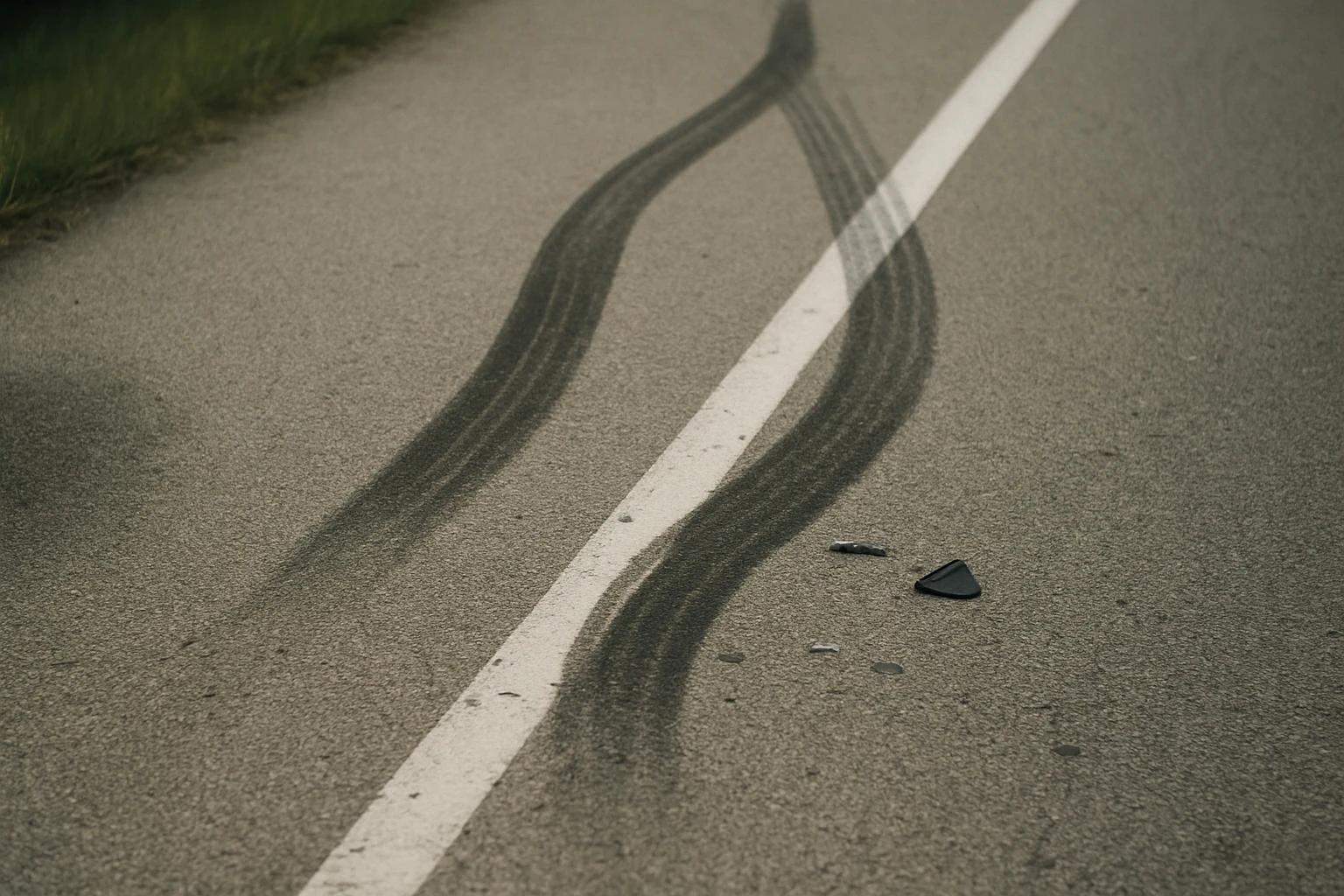
Two years sounds like a long window to file. It is not, when the evidence in a fatal-crash case is decaying from day one. The hard reality is that the case is often built or lost in the first thirty days.
- Vehicle data. Modern cars carry event-data recorders (the “black box”) that store speed, braking, throttle, and seatbelt-engagement data for the seconds before impact. Insurers move quickly to access or dispose of damaged vehicles. A preservation letter goes out within days.
- Commercial-vehicle records. Federal regulations require trucking companies to preserve hours-of-service logs and ELD data for limited windows. After that, they can be lawfully destroyed.
- Scene physical evidence. Skid marks, debris fields, and gouge patterns disappear after the first rain or snow. A reconstructionist needs to walk the scene early.
- Surveillance and traffic-cam footage. Many businesses overwrite within 7 to 30 days. State and city traffic-camera retention varies. A preservation letter has to go out before that window closes.
- Witness memory. Sharpest in the first week, fades fast after that.
- Cell-phone records. Carriers retain detailed records for limited periods. A subpoena early in the case captures the data that matters.
An experienced fatal-crash attorney issues preservation letters and engages a reconstructionist in the first week. Waiting six months because the family is grieving and not ready to deal with lawyers is human, and it is also how the strongest cases are weakened.
Criminal and Civil Cases Run on Different Tracks
When a fatal crash involves potential criminal conduct (DUI, reckless driving causing death, hit-and-run, OWI causing death under IC § 9-30-5[4]), the Allen County Prosecutor or the prosecutor in the county of occurrence will pursue criminal charges. The civil wrongful-death claim is separate and proceeds on its own timeline.
What that means in practice:
- The civil case does not have to wait for the criminal case to conclude.
- A criminal conviction is strong evidence in the civil case, but not the only evidence. The civil case can be won even if the criminal case is dismissed.
- The standard of proof is lower in civil court (preponderance of evidence) than criminal court (beyond a reasonable doubt), so a civil win is possible where a criminal conviction is not.
- Restitution ordered in the criminal case is separate from civil damages, and is usually a small fraction of full compensation.
- An attorney coordinates with the prosecutor's office so the family is informed, victim-impact statements are filed, and the civil investigation is not stepping on the criminal one.
Insurance, Underinsured Coverage, and Available Funds
The hardest financial truth in many fatal-crash cases is that the at-fault driver's liability insurance is not enough. Indiana's mandatory minimum is $25,000 per person, and a substantial number of drivers in this market carry exactly that. A fatal-crash case is routinely worth orders of magnitude more than that policy limit.
The funds available to a wrongful-death family commonly come from layered sources:
- At-fault driver's liability policy. Usually the first dollars. Often the smallest layer.
- Employer liability. If the at-fault driver was working at the time of the crash (delivery driver, commercial truck driver, on-duty employee), the employer's policy and possibly an umbrella policy come in. Commercial limits routinely run seven figures.
- Multiple defendants. A drunk driver who was overserved at a Fort Wayne bar may share liability with the bar under Indiana's Dram Shop Act (IC § 7.1-5-10-15.5[5]).
- Underinsured motorist coverage on your own policy. Frequently the largest single recovery in a fatal-crash claim. Many families do not realize they carry this coverage on their own auto policy until an attorney pulls the declarations page.
- Umbrella policies. Some at-fault drivers carry $1 million or $2 million in additional umbrella coverage that the auto policy does not disclose on first inquiry.
Finding all the coverage layers is itself a piece of the investigation. The carriers do not volunteer it.
How Delventhal Law Office Handles Fatal Crash Cases
There is no version of this work that makes the loss smaller. What we can do is take every part of the investigation, the insurance coordination, the probate filings, and the negotiation off the family's plate so they can grieve without the constant intrusion of paperwork.
That means filing the personal-representative paperwork in probate, issuing preservation letters within the first week, engaging an accident reconstructionist when the scene physics matter, pulling cell-phone records and ELD data, coordinating with the prosecutor's office on the criminal track, locating every insurance layer, and building a damages presentation that accounts for everything the family has lost. Every wrongful-death case at Delventhal Law Office is handled by Chad directly. The family always talks to the attorney, not a screener. The consultation is free, and there is no obligation to retain.
FAQs About Fatal Car Accident Claims in Indiana
How long do we have to file a wrongful-death case?
Two years from the date of death under IC § 34-23-1-1[1]. If a government vehicle was involved (city, county, INDOT, state employee), a written Notice of Tort Claim is required within 180 or 270 days, much sooner than the two-year filing deadline.
Who is allowed to file the lawsuit?
The personal representative of the deceased's estate. That is typically a surviving spouse, adult child, or named executor. If no will exists, the court appoints a personal representative through probate. The family does not file directly; the estate does, through the representative.
Can we still recover if the at-fault driver was also killed?
Yes. The deceased driver's insurance policy and their estate remain liable. The claim is filed against the estate and pursued against the policy. The fact of the at-fault driver's death does not extinguish the wrongful-death claim.
What if the at-fault driver is charged criminally?
The civil case proceeds independently. A criminal conviction is helpful evidence but not required to win the civil case. The family can also file a victim-impact statement and pursue restitution in the criminal case, separate from the civil recovery.
Will we have to go to trial?
Most wrongful-death cases settle before trial. The cases that go to trial are typically those where liability is contested or insurance limits are too low to allow a fair settlement. Trial preparation is part of every case from the start, because settlement value rises when the carrier knows the firm is ready to try the case.
Talk to a Fort Wayne Wrongful Death Attorney
If your family has lost someone in a crash in Allen County, DeKalb, Whitley, Adams, Wells, Huntington, or anywhere in Indiana, there is no rush in the first days. There is no need to make decisions before you are ready. But the evidence is decaying, the carriers are already organizing, and a preservation letter that goes out in week one is much more useful than one that goes out in month six.
When you are ready, call Delventhal Law Office at (260) 484-6655 or contact us online to schedule a free case evaluation. The conversation is direct, the consultation is free, and you talk to Chad.
Talk to a Fort Wayne car accident attorney. Carriers count on accident victims handling claims alone. Our Fort Wayne car accident attorneys level the field — locally, in Allen County courts when the carrier won't pay fairly.