
Pedestrian crashes are not regular car crashes. Our pedestrian accident lawyer guide explains the broader legal issues these cases can involve. A two-ton vehicle striking an unprotected human body produces a different injury pattern, a different recovery trajectory, and a different damages picture than a car-on-car crash. This article walks through the injuries that show up most often in Fort Wayne pedestrian cases, what each one means for recovery, and how Indiana law treats fault when the pedestrian was in (or out of) the crosswalk. You can use our Indiana car accident settlement calculator to organize the factors that may affect a claim’s value; it is an educational tool, not a promise of any result.
Why Pedestrian Injuries Are Different
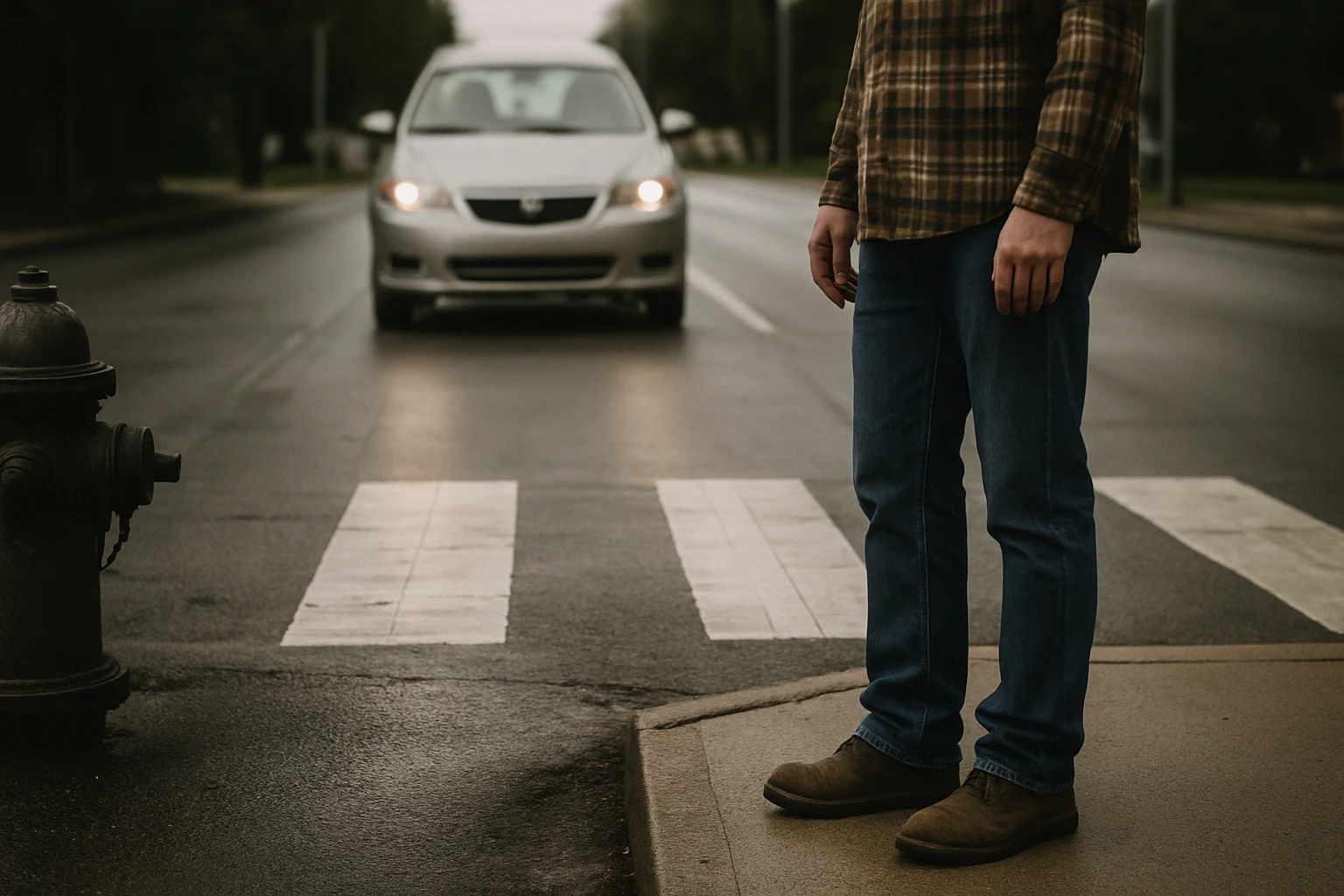
A vehicle strikes a pedestrian in two phases. The first phase is the bumper or grille making contact with the lower body, usually the knees, thighs, or hip. The second phase is the upper body rotating onto the hood, windshield, or A-pillar. A third phase often follows: the body landing on the pavement after being thrown.
Each phase produces a different injury pattern. The lower-body strike causes fractures of the tibia, fibula, femur, and pelvis. The hood strike causes head, neck, and shoulder injuries. The pavement landing causes additional fractures, road rash, and frequently a second head impact. Injury severity scales sharply with vehicle speed: at 20 mph, most struck pedestrians survive. At 40 mph, the survival rate drops dramatically.
Fort Wayne and Allen County see pedestrian crashes most often in three settings: downtown intersections (Calhoun, Wayne, Berry), high-traffic commercial corridors (Lima Road, Coliseum Boulevard, Coldwater Road), and parking lots (where low-speed strikes still produce serious injuries because pedestrians are routinely knocked down and run over rather than struck and thrown).
Traumatic Brain Injuries
Head injuries are the leading cause of death and long-term disability in pedestrian crashes. They happen because the head is rarely protected and is almost always among the contact points (hood, windshield, pavement).
Concussion
The mildest end of the TBI spectrum, but "mild" is misleading. Concussions cause headaches, light sensitivity, confusion, memory gaps, irritability, sleep disruption, and emotional changes that can last weeks to months. Post-concussive syndrome is well documented and recoverable in injury claims.
Contusion and hemorrhage
A bruise on the brain itself, often where the impact occurred and on the opposite side where the brain rebounded against the skull (the coup-contrecoup pattern). Severe contusions can cause swelling, increased intracranial pressure, and require surgical intervention.
Diffuse axonal injury
Rotational forces tear nerve fibers throughout the brain. This is one of the most severe TBIs and may not show clearly on initial CT scans. Symptoms include extended unconsciousness, coma, and permanent cognitive or motor deficits.
Penetrating and open injuries
The skull is fractured and a foreign object enters the brain tissue. This is the rarest category in pedestrian crashes but the most catastrophic when it happens.
Traumatic brain injury claims often involve lifetime care needs, including cognitive rehabilitation, vocational retraining, durable medical equipment, and home modifications. These cases are valued in the hundreds of thousands to multi-million dollar range when liability is clear.
Spinal Cord and Neck Injuries

The whip of the head and torso during impact, combined with the secondary pavement strike, frequently injures the cervical and thoracic spine. Outcomes range from soft-tissue strains to complete cord transection.
- Cervical strain and sprain (whiplash). Common, often resolves with physical therapy in three to six months, but cervical disc injuries from pedestrian crashes can be far more severe than the same diagnosis from a rear-end crash.
- Herniated disc. The shock force can push disc material against the spinal nerve, producing radiating pain, numbness, and weakness. Treatment ranges from epidural injections to discectomy or fusion.
- Vertebral fracture. Compression fractures of the thoracic or lumbar spine are common when the body lands hard. Some require bracing, some require surgical stabilization.
- Spinal cord injury. Damage to the cord itself produces partial or complete paralysis below the level of injury. Lifetime care needs for a quadriplegic or paraplegic crash victim are substantial, and claims should account for medical, equipment, attendant care, and home modification costs over a full life expectancy.
Fractures, Crush Injuries, and Amputation
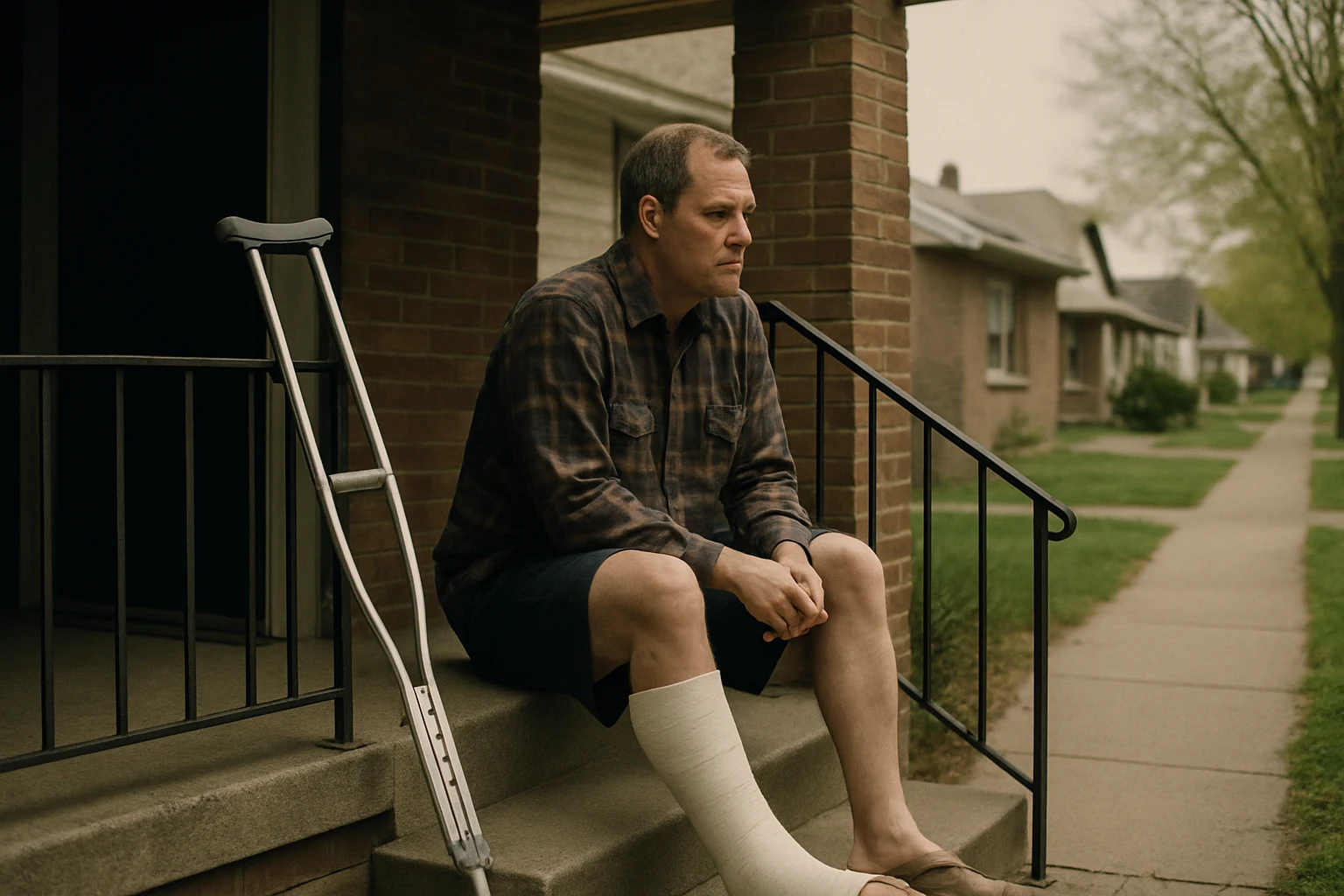
Broken bones are nearly universal in pedestrian crashes. The bumper strike at standing height fractures the lower extremities. The hood and pavement contacts fracture the arms, ribs, and skull.
The most common fractures include:
- Tibia and fibula (lower leg) from the bumper strike
- Femur (thigh) from a higher-bumper strike, often from a pickup or SUV
- Pelvis from direct impact or from the body folding over the hood
- Hip joint, frequently in older pedestrians and often surgical
- Ankle and foot, especially in glancing impacts
- Wrist and forearm, when the pedestrian raises an arm or breaks their fall
- Ribs, often multiple and sometimes flail-chest, which can puncture lungs
- Skull, with associated brain injury
Crush injuries occur when a body part is pinned or run over by a wheel. These produce compartment syndrome, severe soft-tissue damage, and sometimes amputation. Pedestrians struck and dragged or run over at low speeds in parking lots are especially at risk.
Amputation, while uncommon, happens in high-speed pedestrian strikes and in commercial-vehicle pedestrian crashes. The damages picture includes prosthetics, lifetime replacement and maintenance of prosthetics, vocational impact, and significant non-economic damages.
Internal Organ and Soft Tissue Injuries
The chest and abdomen take significant force in a pedestrian crash. Internal organ injuries are common and are sometimes initially missed because they do not show on the outside.
Common internal injuries include:
- Splenic and liver lacerations, often requiring exploratory surgery
- Kidney contusion
- Bowel perforation, which can lead to sepsis if missed
- Lung contusion and pneumothorax (collapsed lung)
- Internal bleeding from torn blood vessels
Soft-tissue injuries (lacerations, abrasions, contusions, sprains, strains) accompany almost every pedestrian crash. Road rash from the pavement slide is painful, prone to infection, and frequently requires skin grafting in severe cases. Scars from these injuries are recoverable damages in Indiana, both for the medical cost of revision and for the disfigurement itself.
Emotional and Psychological Injuries

Surviving a pedestrian crash is a near-death experience. Post-traumatic stress, anxiety, depression, and persistent fear of traffic are well documented in pedestrian-crash literature and are recoverable damages in Indiana.
Symptoms commonly reported include intrusive memories of the moment of impact, avoidance of intersections or vehicle traffic, hypervigilance when crossing streets, sleep disturbance, and depression tied to physical recovery and lifestyle limitation. Many pedestrian-crash survivors cannot return to walking commutes, cycling, or running for months or years after the event.
Insurance carriers tend to discount these damages because they do not show on imaging. Indiana law does not. Mental-health treatment records, therapist evaluations, and treating-physician documentation of the psychological component of recovery are admissible and should be part of the damages presentation.
Fault and Comparative Negligence in Indiana Pedestrian Cases
Indiana uses modified comparative fault under IC § 34-51-2-6[2]. A pedestrian who is 50% or less at fault for the crash recovers, with damages reduced by their share. A pedestrian who is 51% or more at fault recovers nothing.
Insurance carriers know this and routinely argue the pedestrian was at fault. Common defenses include:
- Jaywalking. Crossing outside a crosswalk. Indiana drivers still have a duty of reasonable care; a jaywalking pedestrian is not automatically barred.
- Distracted walking. Phone in hand at the time of crossing. Carriers love this defense; juries are generally unsympathetic to it when the driver was speeding or running a signal.
- Crossing against the signal. Walking against a Don't Walk. Often defensible when the pedestrian had already entered the intersection on a green.
- Visibility. Dark clothing at night. Drivers still have a duty to use headlights and to slow in conditions of reduced visibility.
In every one of these scenarios, the driver almost always carries some share of fault, often the majority. The case is not lost on the carrier's first phone call.
How Delventhal Law Office Handles Pedestrian Crash Cases
Pedestrian cases reward attorneys who treat them as serious-injury cases from the first call. The medical narrative is long, the comparative-fault fight is intense, and the carriers move quickly to limit exposure.
We send preservation letters to the driver's insurer, the vehicle owner, and (when applicable) the trucking company or rideshare platform within the first week. We obtain the 911 call audio, the responding officer's body cam, and any nearby business or traffic camera footage before it is overwritten. We work with treating physicians on a full damages picture, including long-term cognitive, neurological, and psychological evaluation.
Every pedestrian-crash file is handled by Chad directly. Indiana State Bar, admitted 2008. Fort Wayne, Allen County, DeKalb, Whitley, Adams, Wells, Huntington, Noble, Elkhart, and Kosciusko County claims. No paralegal funnel; the same attorney from the first call to the settlement check.
FAQs About Pedestrian Crash Injuries in Indiana
I was not in a crosswalk when I was hit. Can I still recover?
Probably yes. Indiana applies comparative fault; you can recover as long as your share of fault is 50% or less. Drivers carry a duty of reasonable care even when a pedestrian crosses outside the crosswalk, particularly if the driver was speeding, distracted, or otherwise negligent.
How long do I have to file a pedestrian-crash claim?
Two years from the date of the crash under IC § 34-11-2-4[1]. If a city or county vehicle was involved, you have only 180 days to serve a Notice of Tort Claim under IC § 34-13-3-8[3].
What if I was hit by an uninsured driver?
Your own auto policy's uninsured motorist coverage often applies to pedestrian crashes, because most Indiana UM coverage protects you whether you were driving, riding, or walking. Check the policy or have an attorney review it.
Can I recover for emotional trauma alone?
Generally, emotional trauma is recoverable when tied to a physical injury from the same event. Pure-emotional-distress claims without physical injury are narrower in Indiana, but pedestrian crashes almost always involve physical injury that anchors the psychological claim.
What if my child was hit?
Indiana tolls the statute of limitations for minors under IC § 34-11-6-1[4]. The two-year clock does not start until the child turns 18. That said, evidence decays fast; preserve it early.
Hit by a Vehicle in Fort Wayne? Talk to an Attorney Before You Talk to the Carrier

The carrier's first call after a pedestrian crash is friendly. The second call is not. Between them, they will have built a comparative-fault file using your own statement and your social media. Do not give them the material.
If you or a loved one was hit by a vehicle anywhere in Allen County, DeKalb County, Whitley County, Adams County, or Indiana, talk to Delventhal Law Office. The consultation is free, no obligation, and you are talking to Chad directly. Call (260) 484-6655 or contact us online to schedule a free case evaluation.
Talk to a Fort Wayne car accident attorney. Carriers count on accident victims handling claims alone. Our Fort Wayne car accident attorneys level the field — locally, in Allen County courts when the carrier won't pay fairly.