
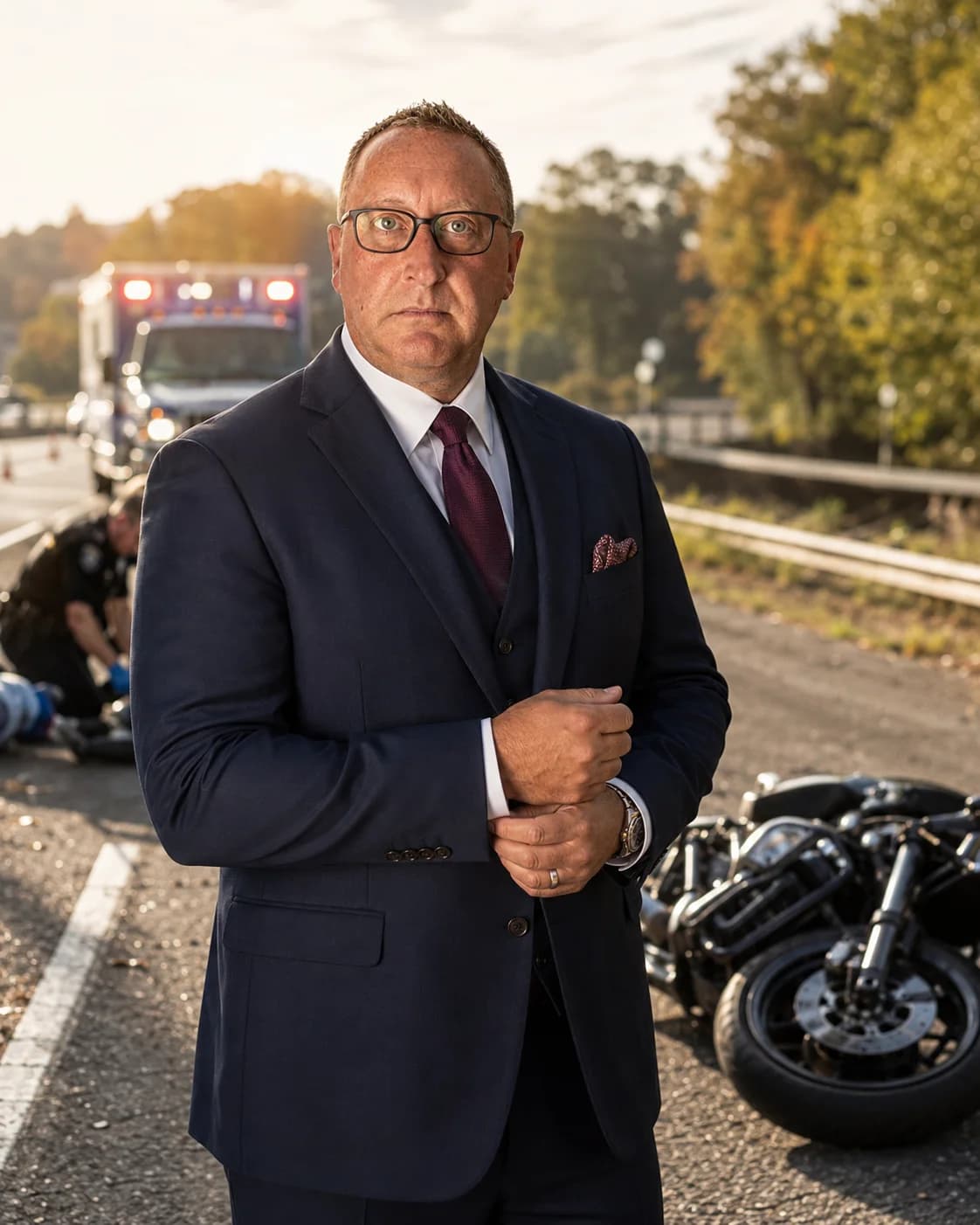
Fort Wayne Motorcycle Accident Attorneys
A motorcyclist hit by an inattentive driver does not bounce. There is no airbag, no crumple zone, no roof. The body absorbs the entire collision. That is why a motorcycle wreck that looks moderate on paper — a left-turn collision at 35 mph on Coliseum Boulevard, for example — often produces injuries that take a year to resolve and leave the rider with permanent restrictions. Delventhal Law Office represents motorcyclists in Fort Wayne, Allen County, and across Indiana. Several of us ride. We understand the dynamics of a bike on the road, and we know how juries and adjusters tend to look at the rider.
There is a built-in bias against motorcyclists. Some jurors assume that if you ride, you assumed the risk. Insurance adjusters lean on that assumption hard. Effective motorcycle representation starts with rebuilding that picture — showing the jury what really happened, why the driver, not the rider, caused the crash, and what the injuries actually mean for the rest of the rider's life.
Indiana Motorcycle Law That Affects Your Claim
Indiana Code 34-11-2-4[2] gives you two years from the date of the crash to file a personal injury lawsuit. Wrongful death claims under IC 34-23-1[3] use the same two-year deadline. If a government vehicle is involved, the Tort Claim Notice under IC 34-13-3-8[4] is due in 180 days (city/county) or 270 days (state). These deadlines do not pause while you are in the hospital or while you are negotiating with an insurer.

Indiana follows modified comparative fault under IC 34-51-2[5]. Recover if you are 50% or less at fault; recover nothing at 51% or more. Damages are reduced by your share. Insurers love to push motorcyclists past 50% on theories like "you were lane splitting" (illegal in Indiana under IC 9-21-10-6[6]), "you were speeding," or "you were riding too aggressively." Most of these arguments collapse under serious investigation, but they have to be answered with evidence — not denials.
Indiana's helmet law (IC 9-19-7-1[7]) only requires helmets for riders under 18 and for those operating with a learner's permit. Adults are free to ride without one. The defense will still try to argue your head or facial injury was made worse by not wearing a helmet. Indiana law generally limits how directly the defense can use helmet non-use to reduce damages, but the issue is fact-specific and worth talking through with a lawyer who knows this terrain.
All other rules of the road apply normally. Motorists owe motorcyclists the same duty of care they owe any other vehicle — to maintain a proper lookout, yield where required, signal lane changes, and respect the motorcyclist's full right to the lane.
How Motorcycle Crashes Happen Around Fort Wayne
The crash patterns we see most are not random. They cluster. Because riders have so little protection, the same liability facts often support a catastrophic injury claim when the injuries involve brain trauma, spinal trauma, amputation, or permanent disability:
- Left-turn collisions — a driver makes a left across the path of an oncoming motorcyclist, claiming "I never saw him." The single most common motorcycle fatality scenario nationally. Indiana law (IC 9-21-8-31[8]) places the duty to yield squarely on the turning driver.
- Lane-change sideswipes on Coliseum Boulevard, Lima Road, US-30, and the I-69/I-469 interchanges, when a driver merges into the motorcyclist's lane without checking the mirror or blind spot.
- Rear-end crashes at stoplights and merges, often by distracted drivers who simply do not register the bike ahead.
- Dooring in downtown Fort Wayne, the Three Rivers district, and parking-heavy commercial areas — a parked driver opens a door into a moving motorcycle. IC 9-21-16-9[9] requires that a vehicle door not be opened on the side of moving traffic without reasonable safety.
- Intersection T-bones from drivers running red lights or failing to yield from stop signs.
- Road-hazard crashes — gravel, potholes, edge breaks, dropped cargo, or unmarked construction zones. Premises liability or governmental liability claims may apply depending on the responsible party.
- Single-vehicle losses caused by a second vehicle — a rider goes down avoiding a car that drifted into their lane and never stopped. Witness and dashcam evidence are critical here.
- Crashes caused by impaired or distracted drivers — these often support punitive damages under IC 34-51-3[10].
Why Motorcycle Injuries Are Different
The same impact that produces a stiff neck in a passenger car produces a fractured tibia, road rash to the chest, and a concussion on a motorcycle. Energy that would have been absorbed by a steel frame and a seatbelt is absorbed by the rider's body and then by whatever the rider hits second — the pavement, a guardrail, the other vehicle.
The injuries we see most often:
- Lower extremity fractures — tibia/fibula, ankle, knee — including open fractures that require multiple surgeries.
- Upper extremity fractures — wrist, forearm, elbow, clavicle, scapula — from the rider's reflexive attempt to brace the fall.
- Road rash deep enough to require debridement, skin grafting, and permanent scarring.
- Traumatic brain injuries, ranging from concussions with months-long cognitive symptoms to severe TBI requiring inpatient rehabilitation.
- Spinal cord injuries with partial or complete paralysis.
- Internal injuries — splenic and liver lacerations, lung contusions, pelvic fractures.
- Crush injuries to the lower body when a leg is trapped between the bike and another vehicle or the road.
What These Injuries Cost
The ranges below reflect realistic medical costs and settlement outcomes for Indiana motorcycle cases when liability is clear and insurance is available.

| Injury | Typical Medical Cost | Recovery Time | Settlement Range |
|---|---|---|---|
| Road rash with debridement | $10,000 - $40,000 | 2-6 months; permanent scarring | $25,000 - $100,000 |
| Wrist or clavicle fracture (ORIF) | $25,000 - $75,000 | 3-9 months | $50,000 - $200,000 |
| Tibia/fibula fracture, surgical | $60,000 - $150,000 | 9-18 months | $150,000 - $500,000 |
| Compound leg fracture or amputation | $150,000 - $1,000,000+ | Permanent | $500,000 - policy limits |
| Spinal fusion | $100,000 - $250,000 | 1-2 years; permanent restrictions | $300,000 - $1,000,000+ |
| Moderate to severe TBI | $300,000 - $1,500,000 lifetime | Permanent cognitive deficits | $750,000 - policy limits |
| Spinal cord injury with paralysis | $1.5M - $5M+ lifetime | Permanent | Policy limits in nearly every case |
| Wrongful death | Final medical + funeral | N/A | $750,000 - several million |
What Your Compensation Should Cover
- Past and future medical expenses — including surgical revisions, hardware removal, scar revision, and long-term physical therapy.
- Lost wages — for the entire time you cannot work, including reduced hours and missed overtime.
- Diminished earning capacity — particularly important if you cannot return to a job that required physical capability.
- Pain, suffering, mental anguish, and loss of enjoyment of life — including post-traumatic effects on riding and other activities.
- Permanent scarring and disfigurement — a separate, recognizable category of damage that many adjusters try to fold into general "pain and suffering" at a discount.
- Loss of consortium — your spouse's separate claim for the loss of services, society, and intimacy.
- Property damage — bike, gear (helmet, jacket, gloves, boots), aftermarket parts, and personal items.
- Punitive damages — under IC 34-51-3[10] for drunk, drugged, or willful conduct.
Insurance and Coverage on a Motorcycle Case
Motorcycle policies in Indiana are governed by the same financial responsibility statute as cars (IC 27-7-5-2[11]) — $25,000/$50,000/$25,000 minimums. Many recreational riders carry only minimum limits on the bike but have stronger UIM coverage on their household auto policies. Whether that auto UIM applies to a motorcycle crash depends on the specific policy language. We have seen cases where another $250,000 or $500,000 of household UIM coverage was waiting to be claimed and no one had thought to ask.
Med-pay on a motorcycle policy, when present, pays medical bills regardless of fault. It is often the fastest source of money for early treatment. We pull every policy in the household and identify every layer of coverage before the case is valued. We find what others miss — and on coverage analysis that means real money.
Common Insurance Tactics in Motorcycle Cases

- Pinning fault on the rider — "he was going too fast," "he was lane splitting," "I never saw him because he was weaving."
- Pointing to the rider's lack of a helmet (legal for adults in Indiana) to argue head injuries were self-inflicted.
- Requesting a recorded statement before the rider knows the extent of the injuries.
- Demanding broad medical authorizations to dig up old MRIs and orthopedic visits as "pre-existing" conditions.
- Discounting scarring and permanent disfigurement as cosmetic.
- Stalling a final offer until the two-year statute of limitations is uncomfortably close.
We answer each of those tactics. Comparative fault is fought with reconstruction and witness work. Pre-existing condition arguments are answered by medical experts who explain the difference between an old asymptomatic disc and an acutely injured one. Scarring is documented with high-quality photography over time and presented to the jury as the lifelong injury it actually is.
Investigation: What We Do in the First Weeks
- Get to the scene before evidence disappears — skid marks, gouge marks, debris fields, and lighting all matter.
- Pull traffic camera, business surveillance, doorbell camera, and any dashcam footage in the vicinity. Many businesses overwrite footage in 14 to 30 days.
- Photograph the motorcycle in its post-crash condition before it is repaired or scrapped.
- Interview witnesses while memories are fresh and contact info is current.
- Send preservation letters for any commercial vehicle's ECM, ELD, and dashcam data.
- Pull cell phone records of the at-fault driver when distraction is suspected, with appropriate legal process.
- Coordinate with treating physicians at Lutheran, Parkview, Orthopaedic Hospital, Dupont, and local trauma surgeons to keep the medical picture complete.
Allen County and Federal Court
Motorcycle cases are filed in Allen Superior or Allen Circuit Court, or — when the defendant is out of state and damages exceed $75,000 — in the United States District Court for the Northern District of Indiana, Fort Wayne Division. We litigate in both. Defense lawyers and judges know the firms that try cases and the firms that just file them. That reputation moves settlements.
Frequently Asked Questions
How long do I have to file a motorcycle accident lawsuit in Indiana?
Two years from the date of the crash under IC 34-11-2-4[2]. Wrongful death claims (IC 34-23-1[3]) carry the same two-year deadline. If any government vehicle is involved, a Tort Claim Notice is due in 180 days for local entities and 270 days for the State under IC 34-13-3-8[4]. Insurance policy claims for UM or UIM benefits may have shorter contractual deadlines. Treat the deadline as if it is months sooner than you think and get a lawyer involved early.

Can I recover damages if I was not wearing a helmet?
Yes, in nearly all cases. Indiana only requires helmets for riders under 18 and those on learner permits under IC 9-19-7-1[7]. Adults choosing not to wear a helmet are obeying the law. Defense lawyers will still try to argue that your head or facial injury would have been less severe with a helmet. Indiana law limits how directly that argument can reduce damages, and the analysis is fact-specific. A motorcycle injury lawyer who has dealt with this argument many times can tell you how it is likely to play out in your specific case.
What if I was partly at fault for the motorcycle crash?
You can still recover under Indiana's modified comparative fault rule (IC 34-51-2[5]) as long as your share of the fault is 50% or less. Your damages are reduced by your percentage. So a $400,000 case at 25% fault becomes a $300,000 recovery. Cross the 51% line and you recover nothing. Insurance carriers know this and aggressively look for any conduct on your part — speed, lane position, gear — to push you over. Real investigation and accident reconstruction often eliminate or substantially reduce that allocation.
The other driver said "I never saw the motorcycle." Does that hurt my case?
It usually helps your case. A driver who admits they did not see a clearly visible motorcyclist is admitting failure to maintain a proper lookout. That is negligence. Indiana traffic statutes (IC 9-21[12]) require drivers to keep a careful watch and yield to vehicles already in the roadway. "I didn't see him" is not a defense — it is, in plain language, an explanation of how the driver caused the crash.
What if the at-fault driver only had minimum insurance?
Indiana minimum liability coverage is $25,000 per person, which never covers a serious motorcycle injury. Your own uninsured/underinsured motorist coverage steps in to provide additional compensation up to your UIM limits. Multiple household policies may stack depending on policy language. We pull every available policy and identify every layer of coverage — at-fault, UM, UIM, med-pay, umbrella, and employer coverage if the driver was working — to build the largest possible recovery.
How much is my motorcycle accident case worth?
It depends on the injuries, the medical bills and projected future care, lost wages, permanent restrictions or scarring, the clarity of liability, and available insurance. Soft-tissue motorcycle cases settle in the low to mid five figures. Cases involving surgery, hardware, scarring, or permanent restrictions reach six and seven figures. TBI, spinal cord injuries, and amputations almost always reach the policy limits. We will not quote a number until we have your full records and a real fault analysis.
What does it cost to hire Delventhal Law Office for a motorcycle case?
Nothing up front. We handle motorcycle cases on a contingency fee, meaning our fee is a percentage of the recovery and we are only paid if we win. The firm advances case expenses — accident reconstruction, expert witnesses, deposition costs, filing fees. If we do not recover, you owe nothing for those costs. Call us or use the free consultation form to schedule a confidential review. You can also see our other practice areas.
The Indiana law that applies to your motorcycle accident case
Motorcycle-injury cases in Indiana run on the two-year statute of limitations in IC 34-11-2-4[2] and the 51% modified comparative-fault rule in IC 34-51-2-6[13]. The case turns on the motorist's failure to see the rider at intersections, lane-change conflicts, left-turn violations, and following distance. Indiana's modified comparative-fault rule creates a hard ceiling — if a jury allocates 51% or more of the fault to the rider, recovery is zero — so the carrier's strategy in every case is to push the rider's fault percentage upward through speed, lane position, and rider-bias arguments.
How insurance carriers fight Fort Wayne motorcycle accident claims
Motorcycle insurance carriers exploit jury rider-bias aggressively. First, they argue the rider was speeding, lane-splitting, or operating outside the ordinary flow of traffic, even when objective data does not support it. Second, they argue the rider failed to wear a helmet (Indiana does not require helmets for riders 18 and older but the carrier still raises it). Third, they argue gear inadequacy — no jacket, no protective pants — to discount the road-rash and fracture damages. Fourth, they minimize injuries that look severe but are typed as soft-tissue in the records. We counter with reconstruction analysis, EDR downloads from both vehicles when available, motorcycle-fatality research from the National Highway Traffic Safety Administration[14], crashworthiness research from the Insurance Institute for Highway Safety[15], and a rider-bias jury-selection strategy built around honest disclosure during voir dire.
Evidence we preserve in the first 48 hours
Motorcycle cases live and die on reconstruction and gear preservation because juries lean toward driver-side narratives unless the evidence is overwhelming.

- The motorcycle itself, preserved in post-crash condition with all damage and lighting equipment intact, held in secure storage for inspection.
- Rider gear — helmet, jacket, pants, gloves, boots — preserved unwashed and unrepaired to document the impact pattern and abrasion trajectory.
- Police crash report, scene photographs, and reconstruction-grade measurements of skid marks, debris field, and final resting position of each vehicle.
- Surveillance video, dashcam footage, and any EDR download from the at-fault passenger vehicle establishing pre-crash speed, braking, and steering behavior.
- Complete medical records — EMS through emergency department, orthopedic surgery, neurological evaluation, plastic surgery for road rash, and physical therapy.
Damages categories in an Indiana motorcycle accident case
Motorcycle injuries skew categorically worse than passenger-vehicle injuries — open and comminuted fractures, severe road rash requiring grafting, head injuries, and lifelong limb deficits are routine. Recovery includes medical care, lost wages, lost future earning capacity, and non-economic damages for pain, suffering, and disfigurement. Per-vehicle-mile fatality and injury data published by the National Highway Traffic Safety Administration[14] documents why motorcycle injuries justify higher per-mile damages than ordinary car-crash claims at the same impact speed.
What our motorcycle accident clients ask most
Does Indiana require motorcycle riders to wear helmets?
Indiana requires helmets only for riders under 18 and for riders with learner's permits under IC 9-19-7[16]. Riders 18 and older with a valid Class M endorsement are not legally required to wear helmets. The absence of a helmet does not establish comparative fault for the crash itself, though some defense arguments attempt to use it to discount head-injury damages.
Why do insurance carriers minimize motorcycle injuries?
Carriers exploit cultural rider-bias — the assumption that motorcycle riders are inherently reckless — to push fault percentages above 50% and avoid paying full damages. We counter by addressing rider-bias directly in jury selection, by leaning on objective reconstruction evidence, and by presenting motorcycle riders as ordinary commuters and family members rather than the stereotype the carrier hopes the jury imports.
What if the driver claims they did not see me?
The "I didn't see the motorcycle" defense is an admission, not an excuse. Indiana drivers have a duty to maintain proper lookout for all road users, including motorcycles. Failure to perceive a motorcycle in the lane ahead, at an intersection, or in an adjacent lane is itself a breach of the driver's duty of care and supports liability without requiring further proof.
How does Indiana comparative fault apply to motorcycle accidents?
Indiana's 51% modified comparative-fault rule under IC 34-51-2-6[13] bars recovery if the jury finds the rider 51% or more at fault. Below that threshold, damages are reduced by the rider's percentage. The carrier's strategy is to push the rider's percentage above 50%, which is why reconstruction evidence and jury-bias work matter so much in every motorcycle case.
What if the driver who hit me does not have enough insurance?
Indiana's minimum liability limits frequently fall short in serious motorcycle cases. After exhausting the at-fault driver's policy, recovery proceeds through the rider's own underinsured-motorist coverage under IC 27-7-5[17]. Reviewing all household auto and umbrella policies for available UM/UIM stacking and resident-relative coverage is a critical early step in every motorcycle case.
What happens after you hire us
From day one, we preserve the motorcycle and rider gear in chain-of-custody storage, pull the police crash report, send preservation letters for the passenger-vehicle EDR and any surveillance video, and coordinate reconstruction. We work the driver's carrier and the rider's UM/UIM carrier in parallel, send a documented demand once medical care plateaus, and file in Allen Superior Court when needed. Every step is on a contingency-fee basis: no fee unless we recover.

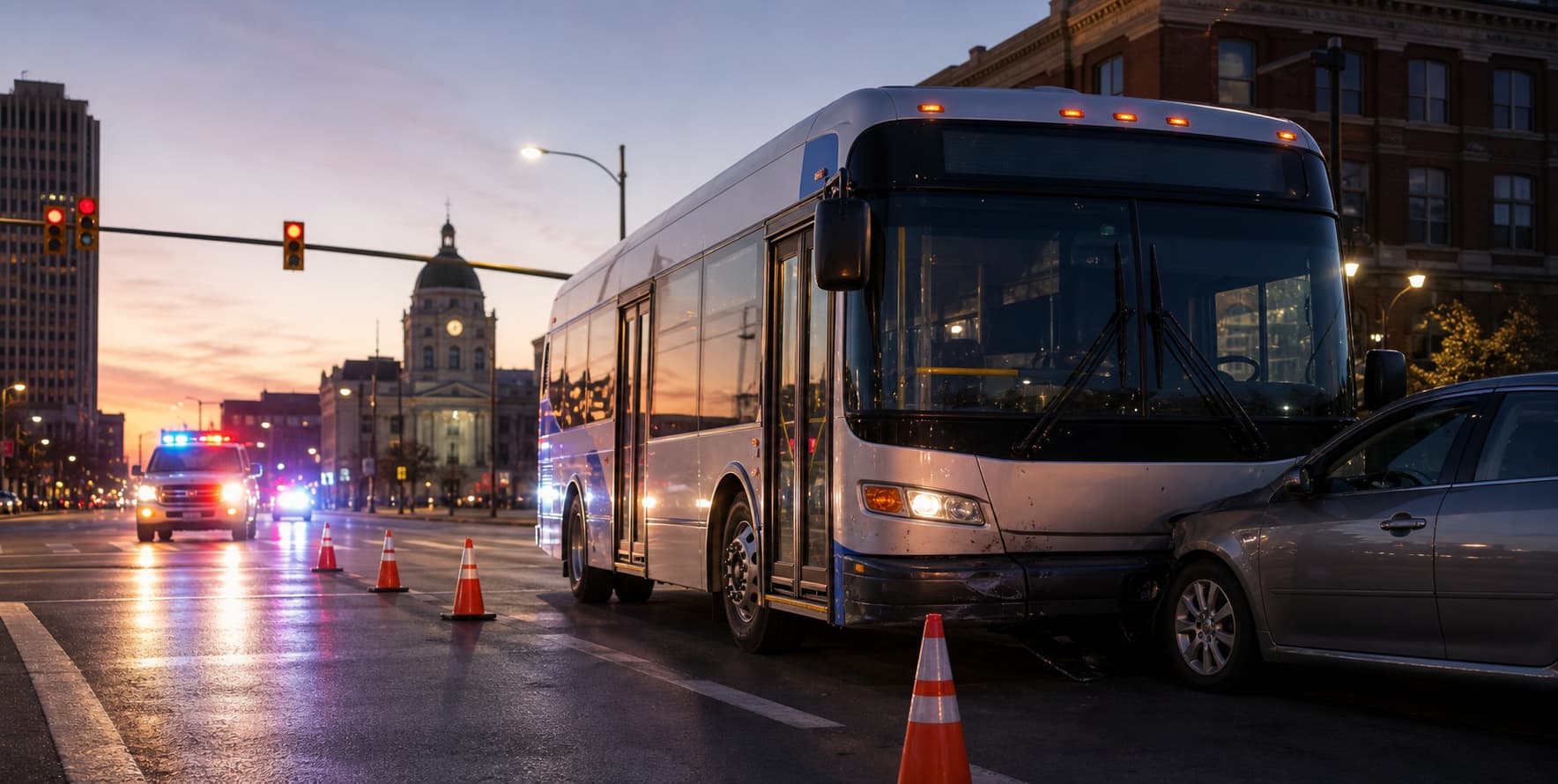
Hit by a bus while riding? Bus and transit-vehicle crashes can involve video, route data, public-entity notice rules, and multiple insurance layers. See our Fort Wayne bus accident attorney page.
Sources
- Watch this motorcycle accident video on YouTube (youtu.be) ↩
- Indiana Code 34-11-2-4 (iga.in.gov) ↩
- IC 34-23-1 (iga.in.gov) ↩
- IC 34-13-3-8 (iga.in.gov) ↩
- IC 34-51-2 (iga.in.gov) ↩
- IC 9-21-10-6 (iga.in.gov) ↩
- IC 9-19-7-1 (iga.in.gov) ↩
- IC 9-21-8-31 (iga.in.gov) ↩
- IC 9-21-16-9 (iga.in.gov) ↩
- IC 34-51-3 (iga.in.gov) ↩
- IC 27-7-5-2 (iga.in.gov) ↩
- IC 9-21 (iga.in.gov) ↩
- IC 34-51-2-6 (iga.in.gov) ↩
- National Highway Traffic Safety Administration (nhtsa.gov) ↩
- Insurance Institute for Highway Safety (iihs.org) ↩
- IC 9-19-7 (iga.in.gov) ↩
- IC 27-7-5 (iga.in.gov) ↩