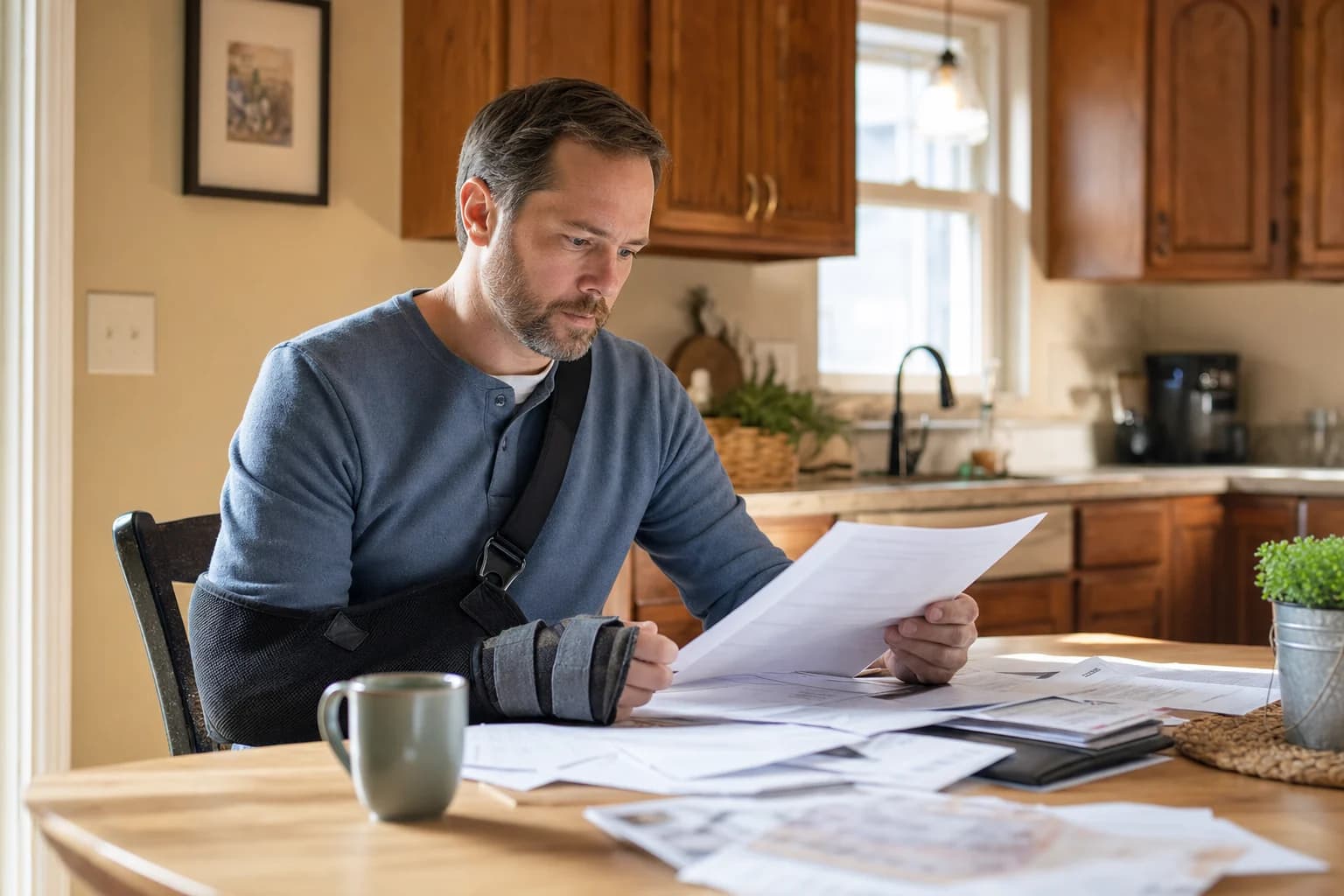
That is why we rebuilt the Delventhal Law Office website. Not to look newer for its own sake. Not to chase every design trend. We rebuilt it around a simple promise: we find what others miss. That applies to case work, and it now applies to the way our website helps people understand their next move.
Why a Personal Injury Website Has to Work Differently

Most legal websites are written for the lawyer, not the client. They lead with awards, vague promises, and long blocks of content that all sound the same. That is not useful when an injured person needs to know whether they should talk to the adjuster, how long they have to file, whether workers' compensation covers the injury, or what happens if the at-fault driver has only minimum insurance.
Indiana law gives injury clients real deadlines. A standard personal injury claim is generally governed by the two-year statute of limitations in Indiana Code § 34-11-2-4[1]. Claims involving government vehicles can require much faster notice under the Indiana Tort Claims Act, including the 180-day notice deadline for political subdivisions in Indiana Code § 34-13-3-8[2]. A website that hides those issues behind generic “call now” language is not doing its job.
So we made the site more direct. If you were hurt in a crash, the Fort Wayne car accident attorney page is built around the actual problems that come up after a wreck: liability, medical proof, uninsured and underinsured coverage, insurance tactics, deadlines, and what to do in the first week. If the crash involved a semi or commercial vehicle, the truck accident page speaks to trucking-company evidence, carrier records, and the higher stakes in commercial cases. If you were hurt at work, the workers' compensation page focuses on Indiana work-injury rules, treatment, wage benefits, and what happens when the employer or carrier pushes back.
The Principle Behind the Rebuild: We Find What Others Miss
“We find what others miss” is not just a tagline. It is the difference between a surface-level case and a case that is actually investigated. In injury law, the missed item might be a witness who was never listed in the police report, a nearby business camera that overwrites video in a week, a medical note that explains causation, a household underinsured-motorist policy, or a lien that can be negotiated so the client keeps more of the recovery.
The old way of building legal websites did not reflect that work. It treated every visitor like a generic “lead.” The new site treats every visitor like a person trying to solve a specific problem. That meant building pages that answer sharper questions, connect related topics, and show how a case is actually built.
- For crash victims: the site explains evidence, insurance coverage, comparative fault, medical treatment, and settlement pressure.
- For injured workers: it separates workers' compensation from third-party personal injury claims, because both can matter.
- For families: wrongful death and catastrophic injury pages are written with the seriousness those cases deserve.
- For local searchers: Fort Wayne and Northeast Indiana pages connect the law to the places where these cases actually happen: Allen County, DeKalb County, Whitley County, Huntington, Auburn, Columbia City, and the surrounding region.
- For AI search: pages are structured so answer engines can understand the question, the legal rule, the local context, and the attorney behind the advice.
What Changed for Clients

The first goal was speed to clarity. A client should not have to read six pages before finding the point. The new site uses stronger page introductions, direct-answer sections, FAQs, internal links, and clear calls to action so people can move from confusion to a plan.
We also made the site more honest about how personal injury cases work. Some law firm websites imply every case is simple: call, sign, get paid. That is not how good injury work happens. A strong case usually involves medical records, billing summaries, wage-loss documentation, liability evidence, coverage analysis, lien work, and sometimes litigation. The site now explains those steps instead of hiding them.
That matters because informed clients make better decisions. They know not to sign broad medical authorizations for the other driver's carrier. They understand that Indiana's comparative fault system can reduce or eliminate recovery if fault is mishandled. They know that a quick settlement check can be dangerous if the full medical picture is not known. They know why it helps to talk to an attorney before giving a recorded statement.
What Changed for Search and AI Answers

Search is changing. People still use Google, but they also ask AI systems direct questions: “Do I have to talk to the insurance adjuster after a Fort Wayne crash?” “How long do I have to file a car accident claim in Indiana?” “Can I get workers' comp if I aggravated an old injury?” A modern legal website has to be readable by people and machine-readable by answer engines.
Google's own guidance on AI features emphasizes helpful, people-first content and technically accessible pages, not tricks or hidden text. See Google's guidance on creating helpful, reliable, people-first content[3] and its explanation of AI features and website owners[4]. That lines up with what we wanted anyway: write real answers, cite the law, make pages fast, and connect related topics clearly.
We also leaned into structured content. Blog posts and practice pages now use clearer headings, direct-answer modules, FAQ-style sections, source links, author information, and internal links that make the site easier to understand. Schema.org's Article[5] and FAQPage[6] vocabulary exists for a reason: it helps search systems identify what a page is, who wrote it, what questions it answers, and how it relates to the rest of the site.
The Internal Linking Strategy: No More Dead-End Pages
A good legal website should work like a guided conversation. If someone starts on the car accident page, they may also need information about hit-and-run crashes, drunk driver accidents, back and neck injuries, or brain injuries. If someone starts on a work-injury page, they may need to understand when a construction accident or forklift injury creates both a workers' compensation claim and a third-party personal injury claim.
That is why the new site connects pages more intentionally. Internal links are not just SEO decoration. They help clients find the next relevant answer. They also help search engines and AI systems understand that Delventhal Law Office is not publishing random one-off articles. The site has topic depth around Indiana injury law, Fort Wayne car accidents, workers' compensation, truck crashes, motorcycle injuries, premises liability, and wrongful death.
The Images Matter, Too

Legal websites often use the same stock photo: a gavel, a handshake, a courthouse column. None of that tells an injured person what the firm actually does. For the new site, the visuals are meant to support the message: personal injury cases are built from facts, documents, timelines, insurance coverage, medical proof, and human conversations.
That is why the imagery on this post and throughout the site is tied to real case work: intake tools, crash evidence, coverage analysis, legal research, consultation rooms, Fort Wayne context, and the practical steps that turn a confusing claim into a plan. The goal is not decoration. The goal is trust.
What We Want People to Feel When They Land on the Site
We want the site to feel like the first calm conversation after a chaotic event. Professional, but not cold. Direct, but not pushy. Clear enough that a person can understand their problem before they ever call us.
We also want people to see the difference between a local injury practice and a volume marketing operation. Delventhal Law Office is not trying to be a national call center. Chad Delventhal founded the firm in Fort Wayne, represents injured people across Indiana, and stays personally involved in the work. You can read more about Chad on his attorney bio, review the firm's case results, see what clients say on the client reviews page, or start with a free case evaluation.
How the New Site Is Different From a Template Legal Site
A template legal site can look polished and still say almost nothing. This site is built around specific Indiana injury questions, local practice-area depth, and the way clients actually search. The difference shows up in five places:
- Specificity: pages discuss Indiana deadlines, comparative fault, insurance coverage, treatment gaps, and case-building issues.
- Local relevance: content is written for Fort Wayne and Northeast Indiana, not copied from a national legal directory.
- Attorney authority: content connects back to Chad Delventhal and the firm's personal injury experience.
- AEO structure: direct answers, FAQs, headings, schema, and source links help modern search tools understand the page.
- Client usefulness: the site answers the questions people have before they are ready to call.
Frequently Asked Questions About the New Website
Why did Delventhal Law Office rebuild its website?
We rebuilt it to make the site more useful for injured clients, easier to navigate, stronger for search and AI answer engines, and more reflective of how the firm actually handles personal injury and workers' compensation cases.
Is the new site only for car accident clients?
No. Car accidents are a major part of the site, but the rebuild also supports workers' compensation, truck crashes, motorcycle accidents, pedestrian injuries, wrongful death, premises liability, construction accidents, forklift injuries, dog bites, burn injuries, brain injuries, and other Indiana injury claims.
Why does the site include legal sources?
Sources help readers verify important rules and help search systems understand the legal basis for the answer. When a deadline or rule matters, we want the page to point to the statute, government source, or authoritative reference whenever possible.
Does better website content help injury clients?
Yes. Clear content helps clients avoid early mistakes, understand the value of evidence, ask better questions, and recognize when an insurance company is pushing them too fast. It is not a substitute for legal advice, but it makes the first conversation better.
How do I contact Delventhal Law Office after an injury?
You can call the office, use the free case evaluation form, or visit the contact page. The consultation is confidential and costs nothing up front.
Bottom Line
The new Delventhal Law Office website is not just a redesign. It is a better front door for injured people in Fort Wayne and across Indiana. It is clearer, faster, more useful, more local, and better aligned with how legal search is changing.
Most importantly, it reflects how we try to handle cases: listen carefully, investigate early, explain plainly, and find what others miss.