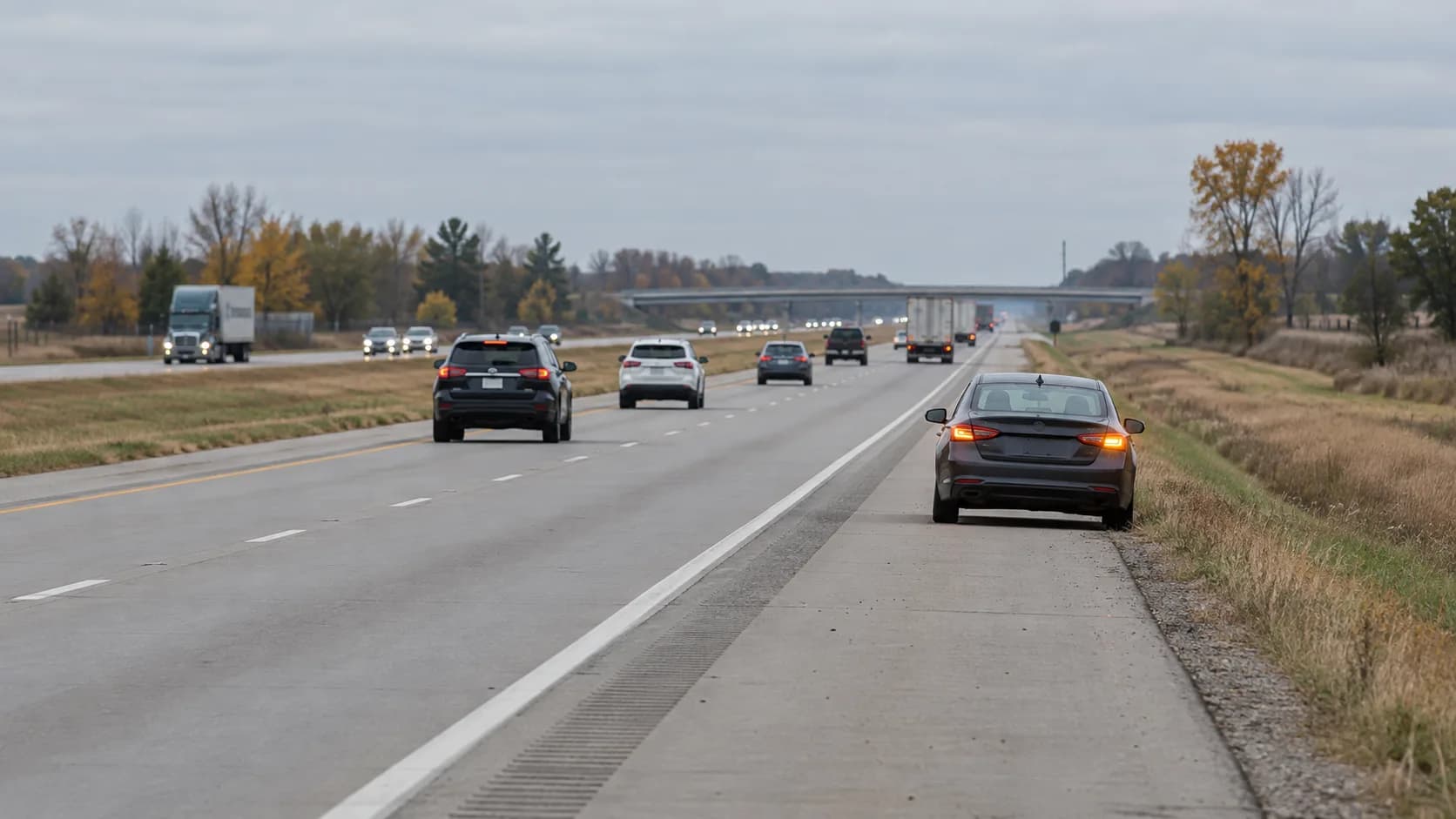
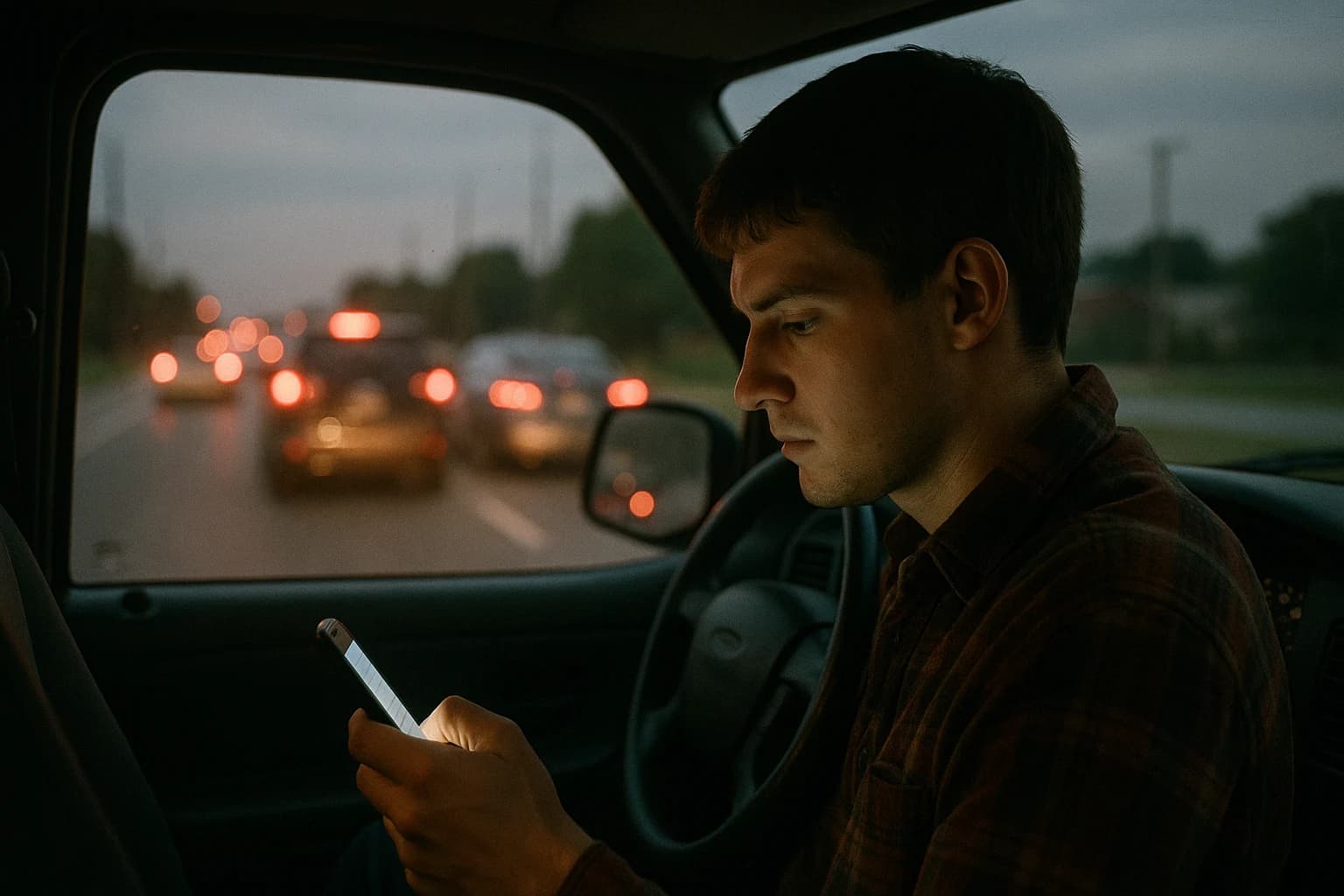
Texting and driving accidents in Indiana follow a predictable pattern. The driver looks down. Traffic conditions change. The crash happens. The driver swears he was paying attention. The phone records, the surveillance video, and the witnesses tell a different story. This article is about how Indiana law handles those cases, what evidence can prove them, and how these claims are evaluated. Our distracted driving accident guide provides a broader overview.
Indiana’s Hands-Free Law and What It Actually Says
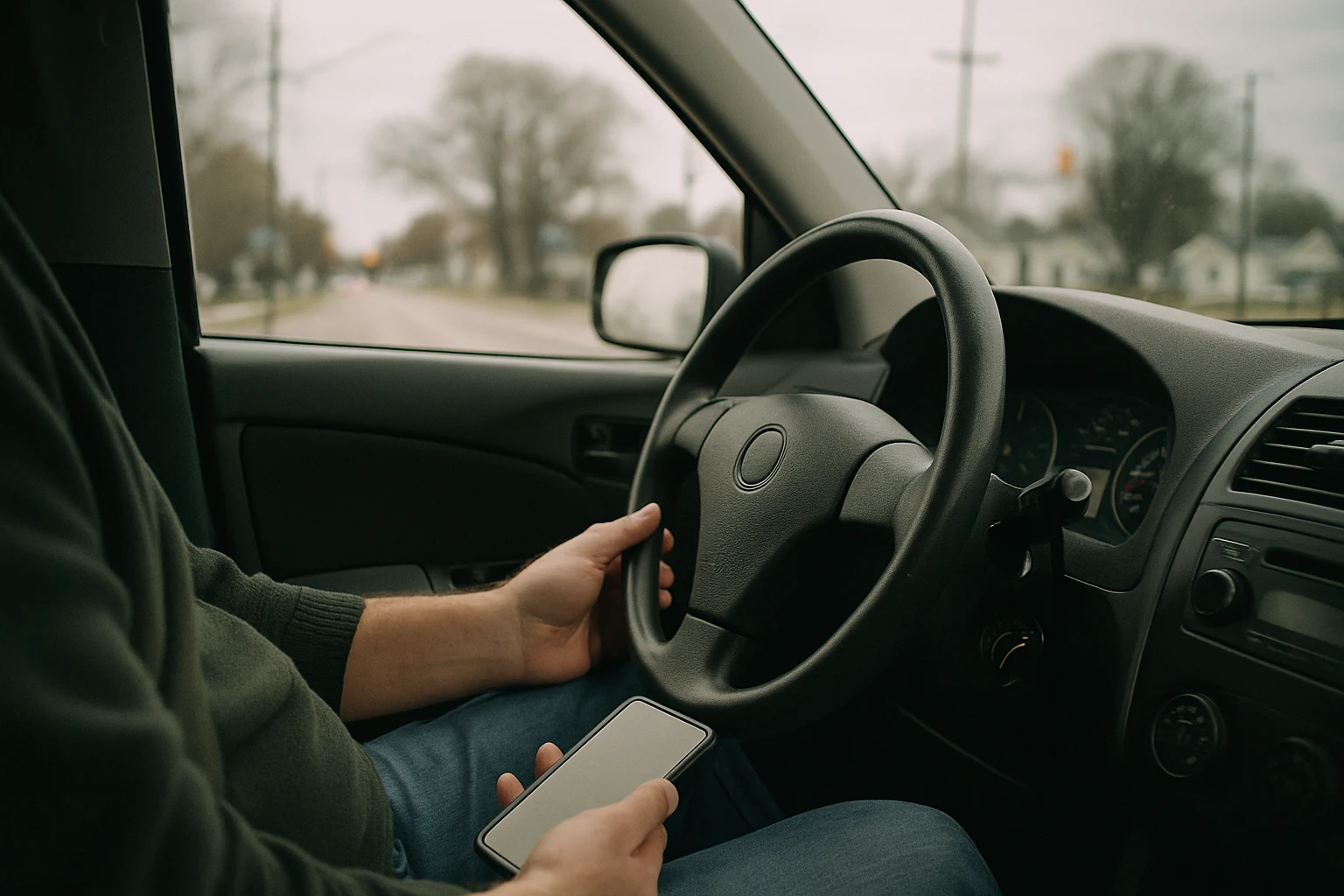
Texting while driving has been a Class C infraction in Indiana since 2011. Effective July 1, 2020, the state went further. Indiana Code 9-21-8-59[2] now makes it illegal to hold any portable electronic device while operating a vehicle, period. Talking, texting, scrolling, navigating, watching, all of it. The only carve-outs are hands-free operation, emergency calls to 911, and use while parked.
The fine for a first offense is up to $500. After two violations within three years, the driver loses license points. None of that money goes to you, the injured driver. The criminal and infraction system runs in parallel to the civil compensation system, and a citation against the at-fault driver is helpful evidence but not a substitute for a personal injury claim.
The crash statistics tell the harder story. The National Highway Traffic Safety Administration reports that distracted driving kills more than 3,000 people each year in the United States and injures over 400,000. Roughly one in five fatal crashes involves a distracted driver. In Indiana, distracted driving accounts for nearly nine percent of all crashes and a disproportionate share of rear-end collisions on state highways like US-30, US-24, and US-27.
Why Texting Is Worse Than Most People Assume
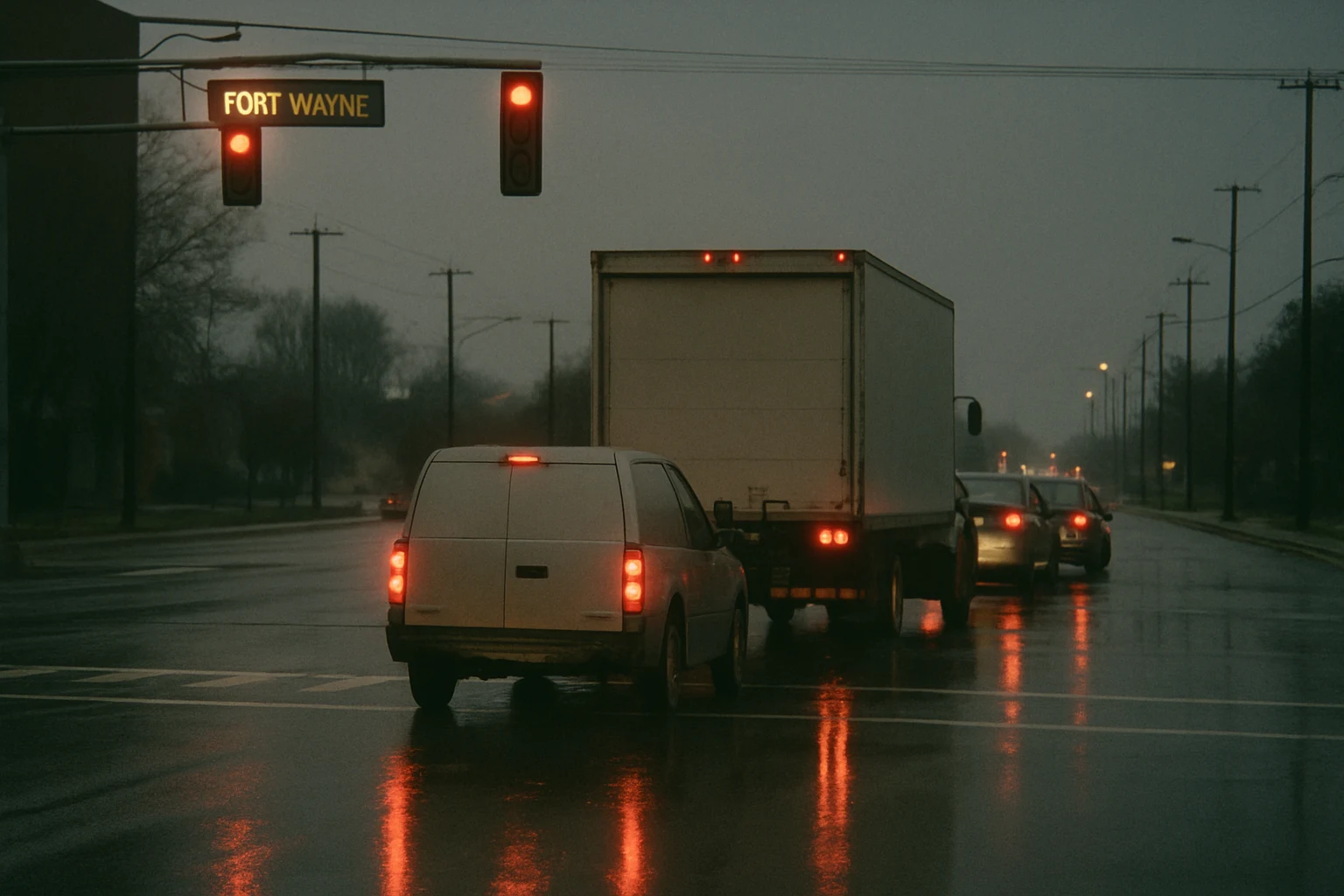
The common claim is “I can text quickly. I am paying attention.” The science says otherwise. Texting impairs a driver in three distinct ways simultaneously:
- Visual distraction. Eyes are on the phone, not the road. The average text takes the eyes off the road for about five seconds. At 55 mph that is the length of a football field traveled blind.
- Manual distraction. At least one hand is on the phone instead of the wheel, eliminating the driver’s ability to take fast defensive action.
- Cognitive distraction. The brain is composing or processing the message instead of monitoring the road. Reaction time slows by 35 percent or more.
Virginia Tech Transportation Institute research found that drivers who text are 23 times more likely to be in a crash than drivers who are not distracted. The risk profile is comparable to driving while legally intoxicated. The difference is that drunk-driving enforcement is decades ahead of phone-distraction enforcement, and the cultural acceptance of texting at the wheel remains catastrophically casual.
The worst part is the predictability of the crash. Texting drivers do not weave or speed; they keep their foot on the gas and drift into stopped traffic. Rear-end collisions and merge-lane sideswipes are the signature. These crashes are also some of the most injury-heavy, because the texting driver almost never brakes before impact.
Proving the Other Driver Was Texting
Indiana follows a fault-based system. To recover, you have to prove the other driver was negligent. Texting at the wheel is per se negligence in Indiana when it can be proven, because the conduct violates a safety statute (Indiana Code 9-21-8-59[2]) designed to prevent exactly the type of crash that occurred. The trick is the proof. These are the kinds of evidence that win these cases.
The driver’s admission
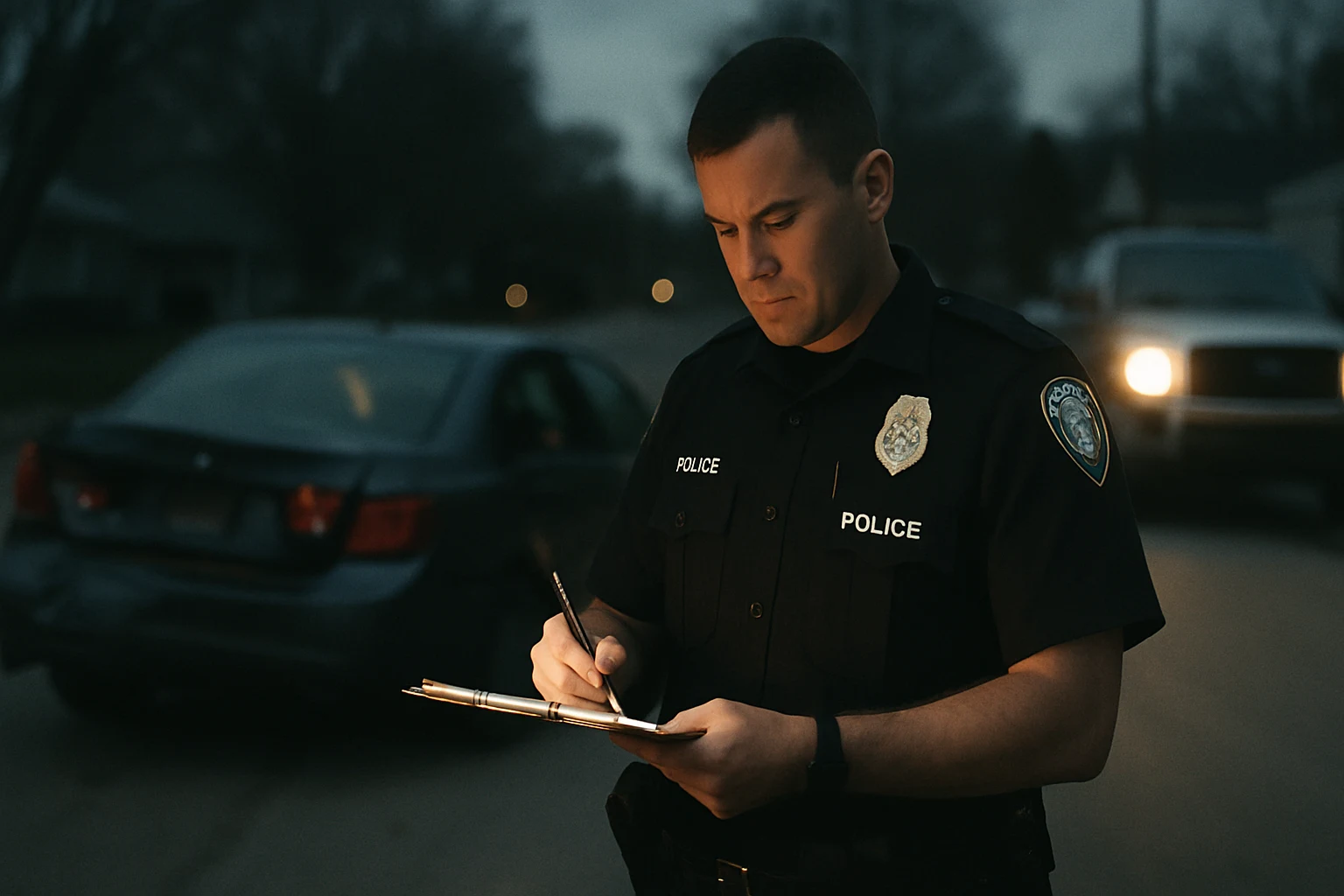
Sometimes the driver simply says it. To the responding officer, to the EMS crew, to the other driver at the scene. “I was just looking down for a second.” The officer writes it in the crash report. The report becomes evidence.
The crash report
Fort Wayne Police Department officers (and Allen County sheriff’s deputies, INDOT, and Indiana State Police on highway crashes) routinely note distraction as a contributing factor. The report is the first piece of the file your attorney pulls.
Witness statements
The driver in the next lane saw the at-fault driver looking at her phone. The pedestrian on the corner saw him scrolling. Statements taken in the days after the crash, while memory is sharp, are far more reliable than statements taken a year later.
Surveillance video
Most Fort Wayne intersections have business cameras pointed at them. Gas stations, fast food drive-throughs, parking lots, traffic signal cameras, doorbell cameras. Video preservation needs to happen within 30 days of the crash because most systems overwrite footage on a 14-to-30 day loop.
Subpoenaed phone records
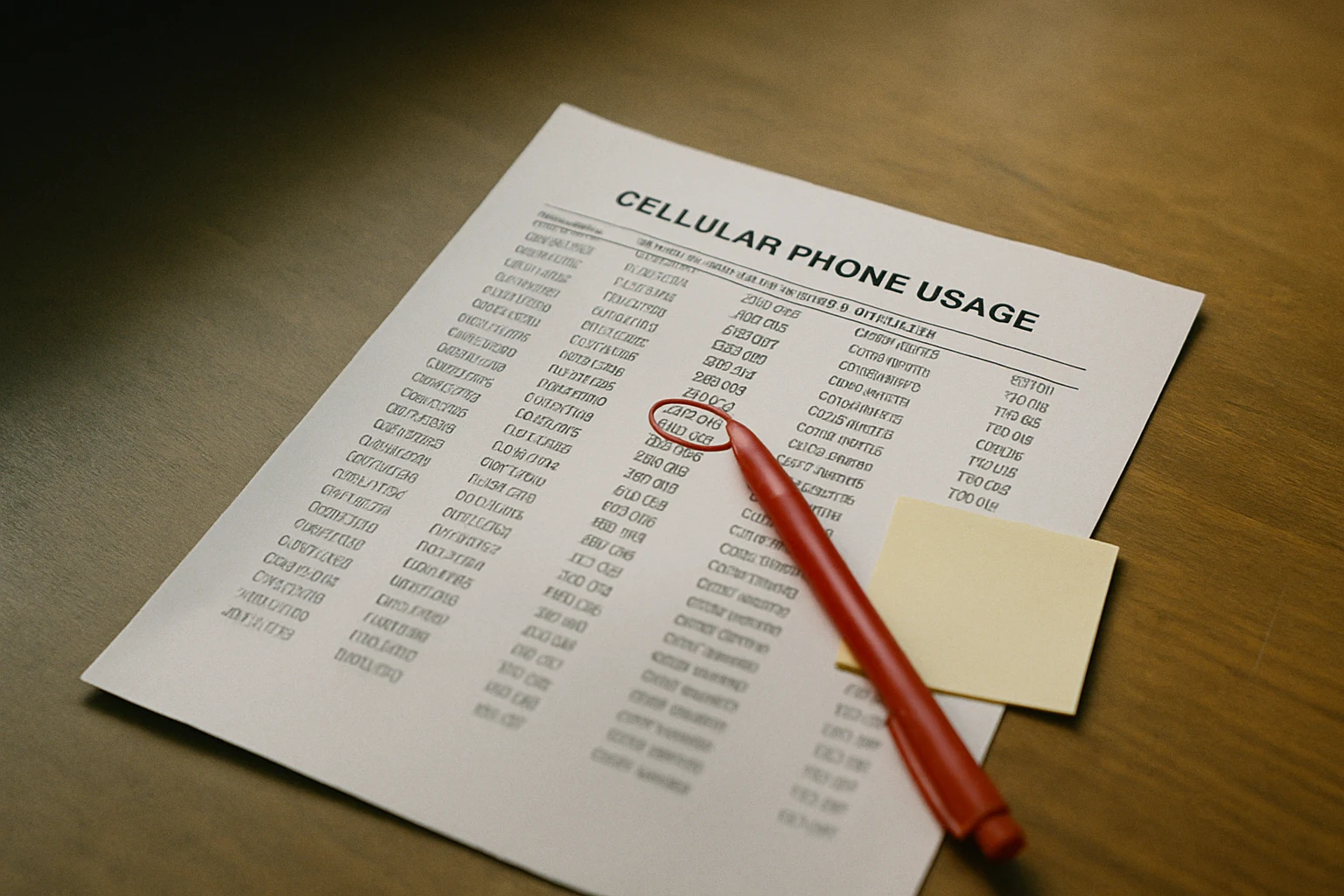
The driver’s carrier (AT&T, Verizon, T-Mobile) maintains records of text-message timestamps and data usage. A subpoena issued by a lawyer in active litigation can pull those records and show exactly when the phone was being used. Records can also be requested through preservation letters before suit is filed.
Vehicle event data recorders
Modern cars contain a “black box” that records throttle, brake, and speed data in the seconds before impact. If the at-fault driver was on the phone, the EDR will often show no braking input. That data is downloadable but only with proper preservation and access.
What Indiana Lets You Recover After a Texting-Driver Crash
Indiana law allows recovery for the full economic and non-economic losses caused by a distracted driver’s negligence. In a typical texting-and-driving claim, that includes:
- Medical expenses: ambulance, emergency room, imaging, surgery, physical therapy, prescriptions, and reasonable future care.
- Lost wages and lost earning capacity: time missed from work and future income reduction if the injury limits the work you can do.
- Pain and suffering: physical pain, sleep disruption, and the limits the injury places on daily life. Not capped in standard auto cases.
- Property damage: vehicle repair or replacement, with a separate two-year statute under IC § 34-11-2-7[3].
- Loss of consortium: spouses can recover for the loss of companionship, intimacy, and shared activities.
- Punitive damages in egregious cases: rare but possible if the at-fault driver was, for example, using the phone while already operating recklessly.
Indiana’s modified comparative fault rule, IC § 34-51-2-6[4], bars recovery if you are more than 50 percent at fault. Defense lawyers in these cases often try to push some fault back onto the plaintiff (you slammed on the brakes, you were too close, you should have moved). Solid evidence of the other driver’s phone use minimizes that argument.
The 30-Day Evidence Window
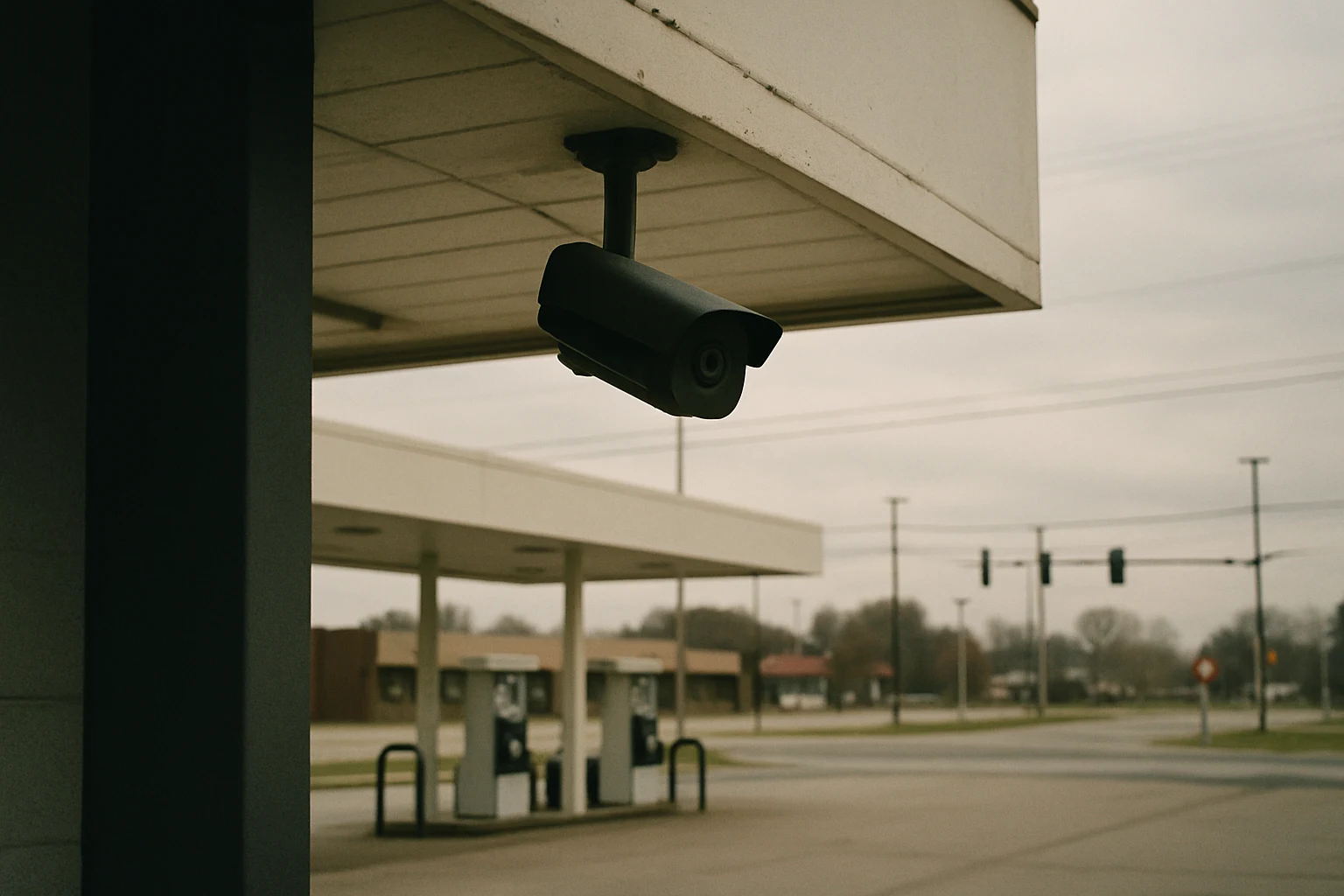
Most of the evidence in a texting-driver case has a short shelf life. Within 30 days of the crash, the following needs to be locked down:
- Phone preservation letter to the at-fault driver’s carrier requesting that records, including text timestamps and data sessions, be preserved pending discovery.
- Surveillance video subpoenas or requests to nearby businesses, intersection cameras, and (where present) doorbell or dashcam owners.
- Vehicle hold on the at-fault driver’s car so the event data recorder can be downloaded before the vehicle is sold or salvaged.
- Witness interviews while memories are still detailed and while contact information is current.
- Crash report retrieval from crashdocs.org[5] for Fort Wayne and Allen County crashes.
An unrepresented claimant rarely knows any of this is time-sensitive. The carrier knows. The carrier counts on the 30 days expiring before a lawyer is brought in.
How Delventhal Law Office Handles Distracted Driving Cases
Distracted driving cases are about locking down the proof early. The driver will deny phone use the moment the responding officer walks away. The carrier will close ranks within days. The evidence that proves the case (phone records, surveillance video, EDR data) decays or disappears on its own schedule, regardless of how strong the injury claim is.
Our approach is to treat every suspected distraction crash as a litigation case from day one. Preservation letters go out within days. Surveillance video is pulled before the 30-day overwrite. The crash vehicle is held until the EDR is downloaded. The driver’s phone carrier is put on written notice that records are subject to discovery.
From there it is a question of stitching the timeline together. If the records show a text sent at 4:17 p.m. and the crash report timestamp is 4:18 p.m., the case has a different posture than one without that data. Carriers respond differently when a file is built that way.
Every case at Delventhal Law Office is handled by Chad directly. Indiana State Bar, admitted 2008. Hundreds of Fort Wayne, Allen County, DeKalb, and Whitley County injury claims. One direct line to your attorney, day or night.
FAQs About Indiana Texting and Driving Accidents
Is texting and driving illegal in Indiana?
Yes. Since July 2020 it is illegal for any driver to hold a portable electronic device while operating a vehicle in Indiana, with narrow exceptions for hands-free operation and 911 calls. The infraction carries a fine of up to $500, and repeat violations affect license points.
Can the police get the driver’s phone records?
Not without a warrant or subpoena in connection with a criminal charge. In a civil personal injury case, your attorney can issue subpoenas to the driver’s wireless carrier to obtain text-message timestamps and data session records. Speed matters: carriers will not retain records indefinitely.
What if the texting driver claims they were using hands-free?
Even hands-free use is a cognitive distraction. More importantly, the phone records and EDR data will show whether the device was being touched. Hands-free claims often fall apart when the records show a text sent or read in the seconds before impact.
Do I still have a case if I was rear-ended at a stoplight?
Almost always yes. Indiana law presumes the rear driver was at fault when a stopped vehicle is struck from behind in normal traffic conditions. Distraction is the most common cause of these crashes. The claim usually centers on injury severity, not fault.
How long do I have to file a claim?
Two years from the date of the crash for personal injury under IC § 34-11-2-4[1]. Two years for property damage under IC § 34-11-2-7[3]. Get evidence preservation started in the first 30 days, not the last 30 days.
Talk to a Fort Wayne Distracted Driving Attorney
Texting drivers cause real injuries to real people on Fort Wayne streets every day. The carriers know it, the police know it, and the courts know it. The only question on a given claim is whether the evidence gets locked down before it decays. That work has to start in weeks, not years.
If you were hit by a distracted driver in Allen County, DeKalb County, Whitley County, or anywhere in Indiana, call Delventhal Law Office before the phone records and surveillance video disappear. The consultation is free and you will be talking to Chad directly. Call (260) 484-6655 or contact us online to schedule a free case evaluation.