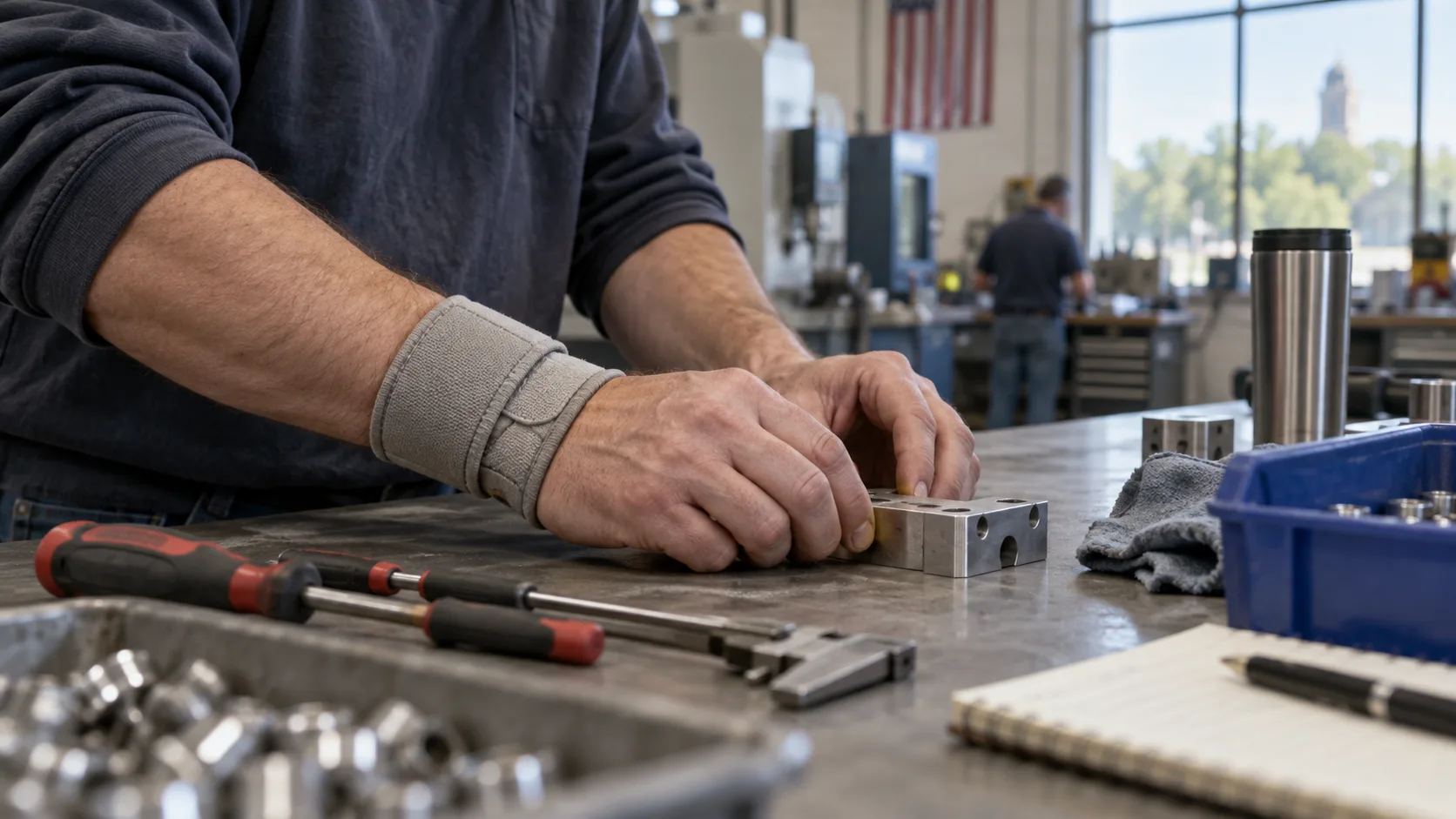
Heat exposure can occur outdoors and in indoor workplaces without adequate climate controls. The Occupational Safety and Health Administration's heat guidance[2] identifies heat stroke as the most serious heat-related illness and tells employers to plan for emergencies, provide training, and use controls such as water, rest, shade, and gradual acclimatization.
Key takeaways
- The federal heat National Emphasis Program was revised on April 10, 2026, but it is an inspection and outreach program, not the proposed heat standard.
- The federal Heat Injury and Illness Prevention standard remains a proposed rule as of September 9, 2026.
- Indiana operates an OSHA-approved State Plan, so IOSHA has jurisdiction over most Indiana workplaces.
- An IOSHA hazard complaint and an employer's severe-incident report are different processes.
- None of those safety processes automatically decides a workers' compensation claim.
- A useful proof file documents the shift, heat conditions, acclimatization, actual access to water and rest, witnesses, reporting, and the timing of care.
Federal heat enforcement and rulemaking status
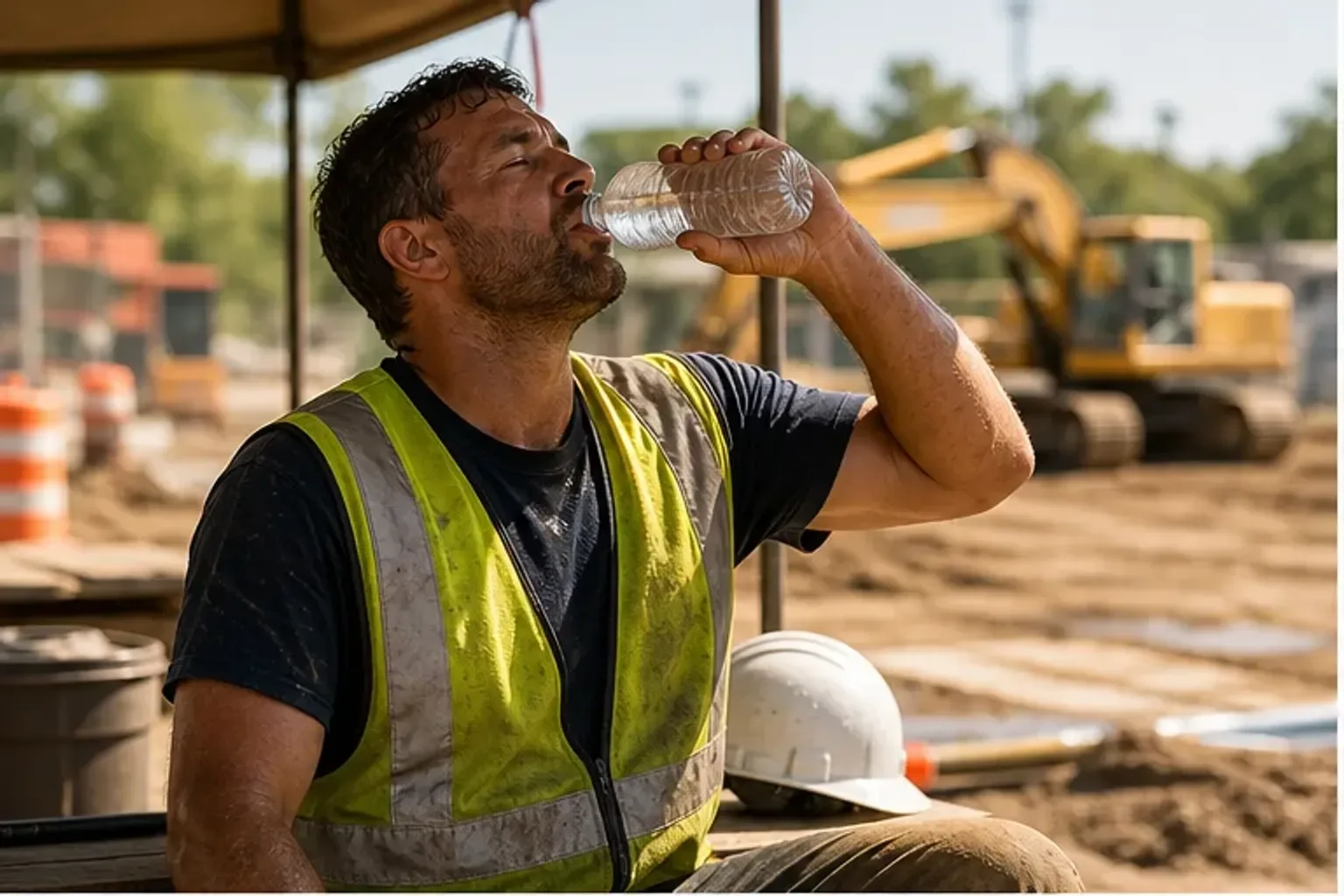
Federal OSHA revised its National Emphasis Program for outdoor and indoor heat hazards on April 10, 2026[3]. OSHA says the revision took effect immediately, directs inspection and outreach resources toward 55 high-risk industries, and will remain in place for five years. OSHA also says inspectors will expand an inspection when they find evidence of heat hazards on heat-priority days and will conduct random heat-focused inspections in high-risk industries when the National Weather Service issues a heat advisory or warning.
The separate Heat Injury and Illness Prevention rulemaking[4] has not reached an effective final standard. OSHA's current-status page says the proposed rule was published on August 30, 2024, the public hearing ended on July 2, 2025, and the post-hearing comment period ended on October 30, 2025. As of September 9, 2026, the agency still labels it a proposed rule. Requirements described in that proposal should not be presented as current final law.
| Federal action | Status on September 9, 2026 | What it does |
|---|---|---|
| Heat National Emphasis Program | Revised program effective April 10, 2026 | Directs federal inspection, outreach, and compliance-assistance priorities |
| Heat Injury and Illness Prevention standard | Proposed rule; no effective final standard identified on OSHA's docket | Proposes requirements that would become enforceable only through a final rule and applicable compliance dates |
What the federal program means in Indiana
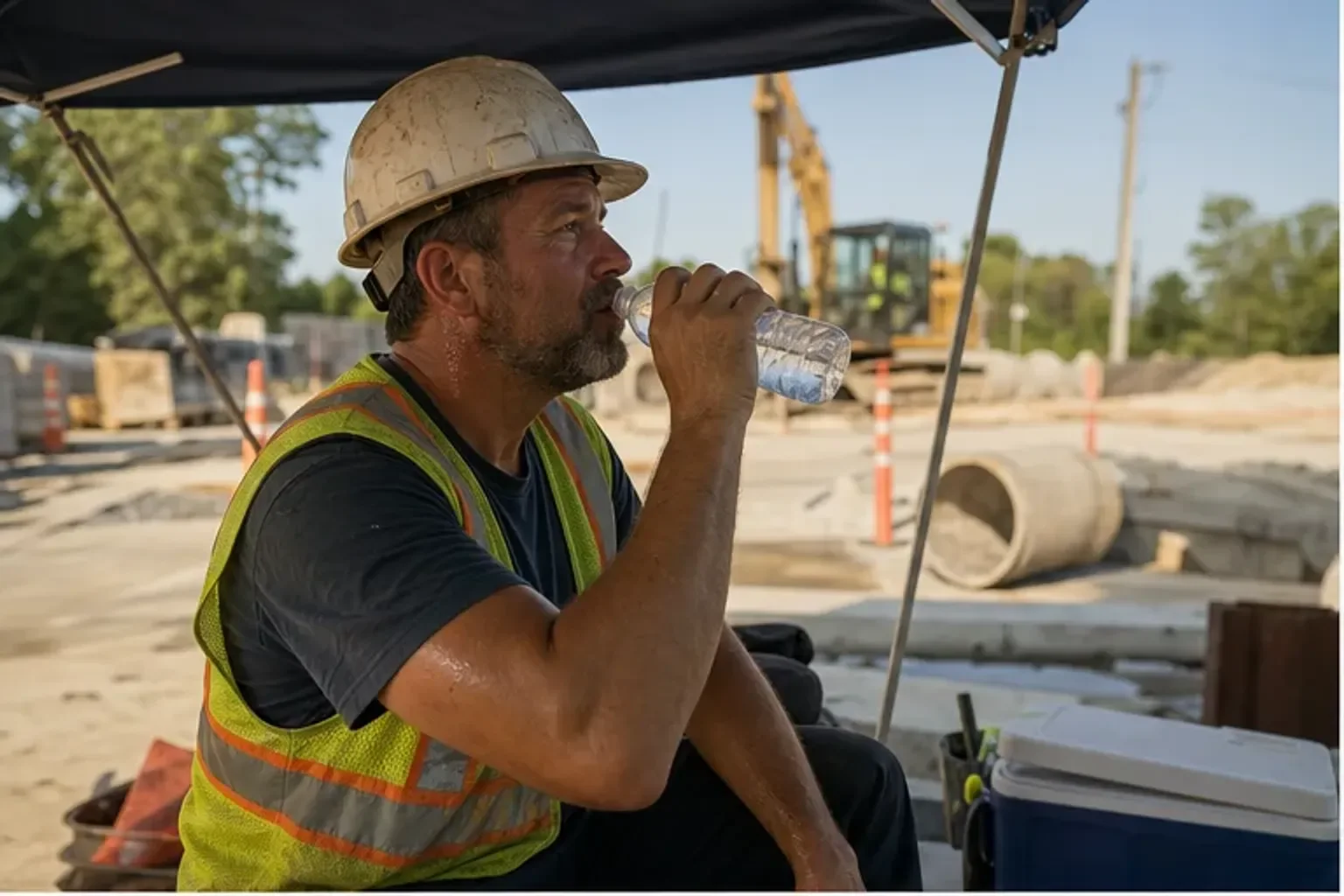
Indiana operates an OSHA-approved State Plan[5]. The Indiana Department of Labor says IOSHA has jurisdiction over most private- and public-sector workplaces in the state and must operate at least as effectively as federal OSHA.
Indiana's emphasis-program page[6] describes national emphasis programs as temporary programs that direct federal OSHA resources. The page separately lists Indiana local emphasis programs and does not list heat among them. For that reason, this article does not represent the federal heat NEP as automatic proof of the inspection program IOSHA will apply to a particular Indiana workplace.
When can Indiana workers' compensation cover heat illness?
Indiana Code § 22-3-2-2[1] provides compensation for a personal injury or death by accident arising out of and in the course of employment, subject to the Workers' Compensation Act. Indiana Code § 22-3-6-1[7] defines “injury” and “personal injury” as an injury by accident arising out of and in the course of employment and addresses disease resulting from an injury.
Applied to heat illness, the statutory question is not simply whether the day was hot or whether a clinician diagnosed heat exhaustion or heat stroke. The claim must prove the required connection to the employment. The Board's disputed-claims guidance[8] says an injured worker seeking benefits at a hearing bears the burden of proving an accidental injury occurred in the course and scope of employment, and that medical evidence is extremely important.
The checklist below is an author-created organizational aid, not a list mandated by the Board.
Safety enforcement versus workers' compensation
IOSHA's role is workplace safety and health enforcement. The Worker's Compensation Board of Indiana[9] describes workers' compensation as an employer-paid accident-insurance program that may provide medical, rehabilitation, and income benefits to a worker injured on the job. Our Indiana workers' compensation practice page explains the broader claim process; this article focuses on heat illness.
The agencies administer different processes: IOSHA addresses workplace-safety enforcement, while the Board administers workers' compensation. Filing an IOSHA hazard complaint is not the same step as reporting a job accident to the employer. The Board tells workers to report a job accident to a boss, foreman, or supervisor immediately.
IOSHA complaint versus accident reporting
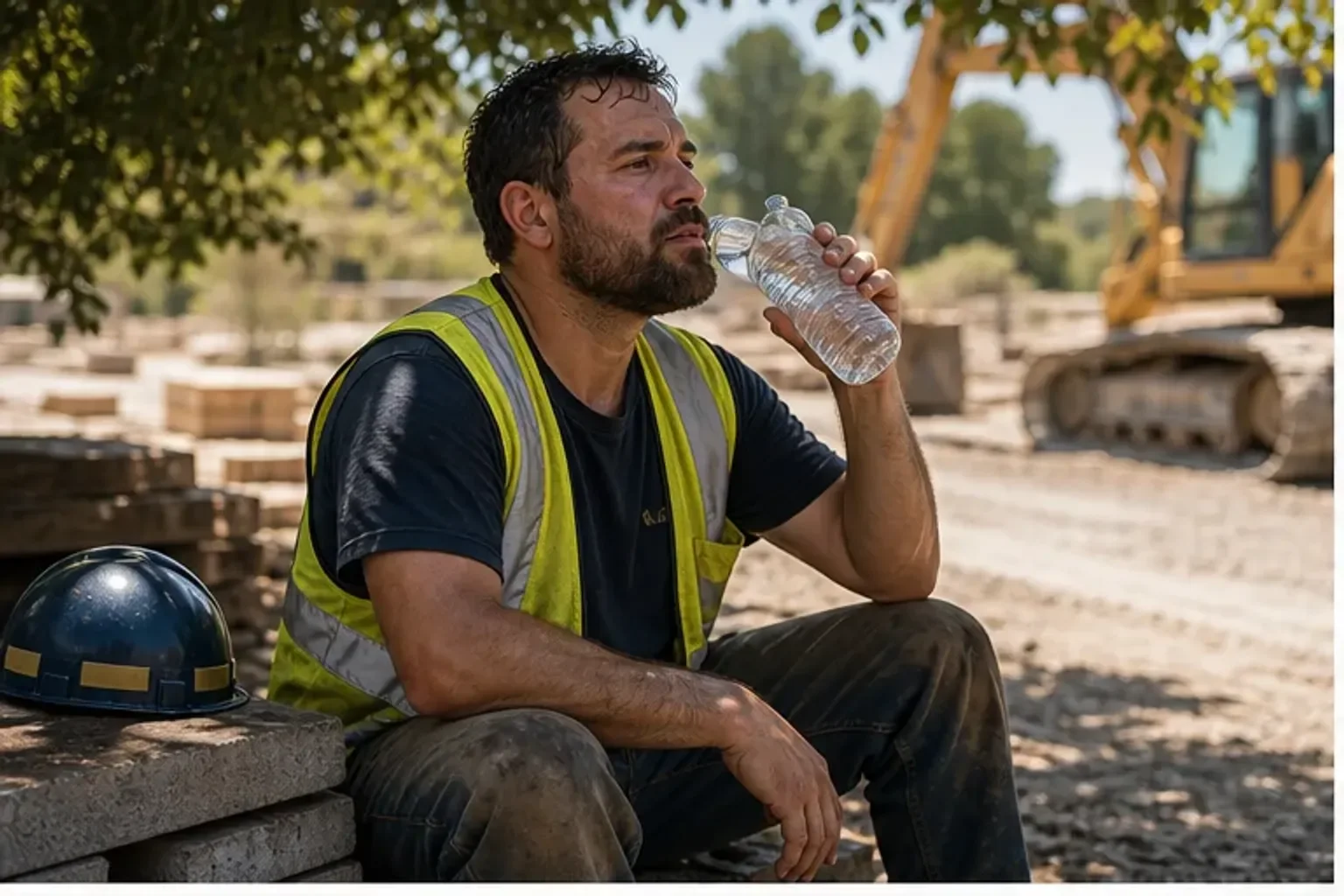
An IOSHA complaint[10] concerns an alleged workplace hazard. IOSHA says a formal complaint must be written and signed by a current employee or employee representative and must allege an imminent danger or a safety-law or standard violation exposing employees to physical harm. IOSHA says a non-formal complaint may be made anonymously by anyone and generally causes the agency to contact the company about the alleged hazards.
That is different from the employer reporting process for specified severe events. The Indiana Department of Labor's accident and fatality reporting page[11] says employers must report work-related fatalities within eight hours. Employers must report work-related in-patient hospitalizations, amputations, and losses of an eye within 24 hours.
A clinic visit or emergency-department evaluation does not necessarily meet the in-patient-hospitalization category. The Indiana recordkeeping page says observation or testing without admission and treatment is not an immediately reportable hospitalization. Whether a specific event is reportable should be checked against current IOSHA instructions.
Neither IOSHA path gives the employer the job-accident notice described by the Board.
Heat-illness proof checklist
This checklist organizes the work and medical timeline. It does not establish that a claim is covered.
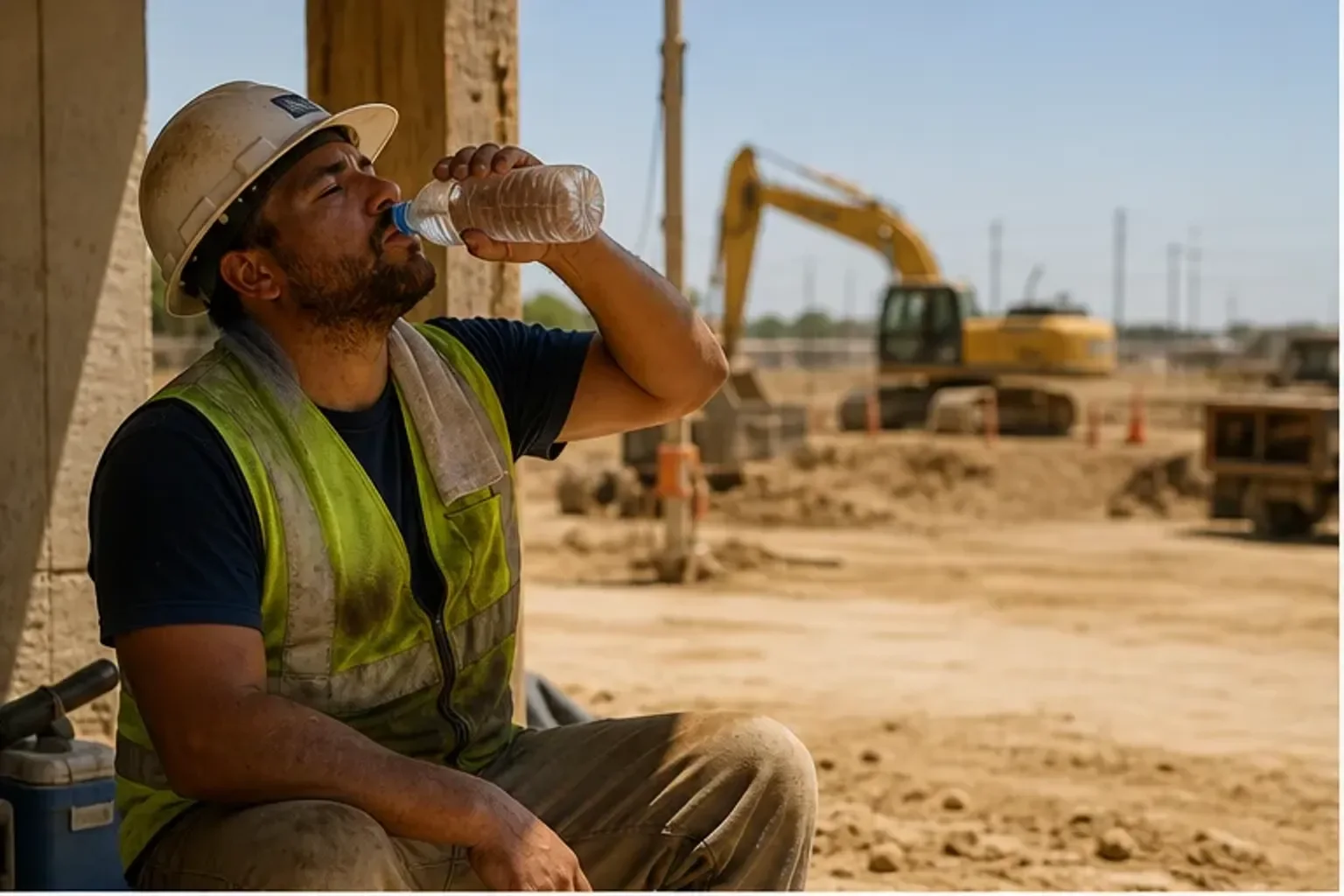
- Schedules: keep timecards, shift schedules, overtime records, dispatch logs, task assignments, and messages showing the hours and work performed.
- Temperatures: save time-specific outdoor weather or heat-index records and any available indoor readings. Note direct sun, humidity, airflow, hot equipment, required clothing, and protective gear.
- Acclimatization: record the worker's start date, return date after time away, recent days in hot work, assignment changes, and whether the workload increased gradually. OSHA explains that gradual exposure helps workers build heat tolerance.
- Water and rest access: identify where water, shade, fans, air conditioning, or cooling areas were located; whether the worker could leave the task to use them; and the actual timing of breaks.
- Witnesses: retain names and contact information for people who observed the work, requests for relief, changes in condition, reporting, or the response.
- Medical timing: record when the worker first felt ill, stopped working, notified a supervisor, contacted emergency services, or reached a health-care provider. Keep the complete records and work-status documents.
A weather screenshot alone cannot show every part of the exposure. Pair it with work records, jobsite facts, witness information, and the care timeline. Keep originals and avoid changing or annotating source documents.
What to do after a heat illness at work
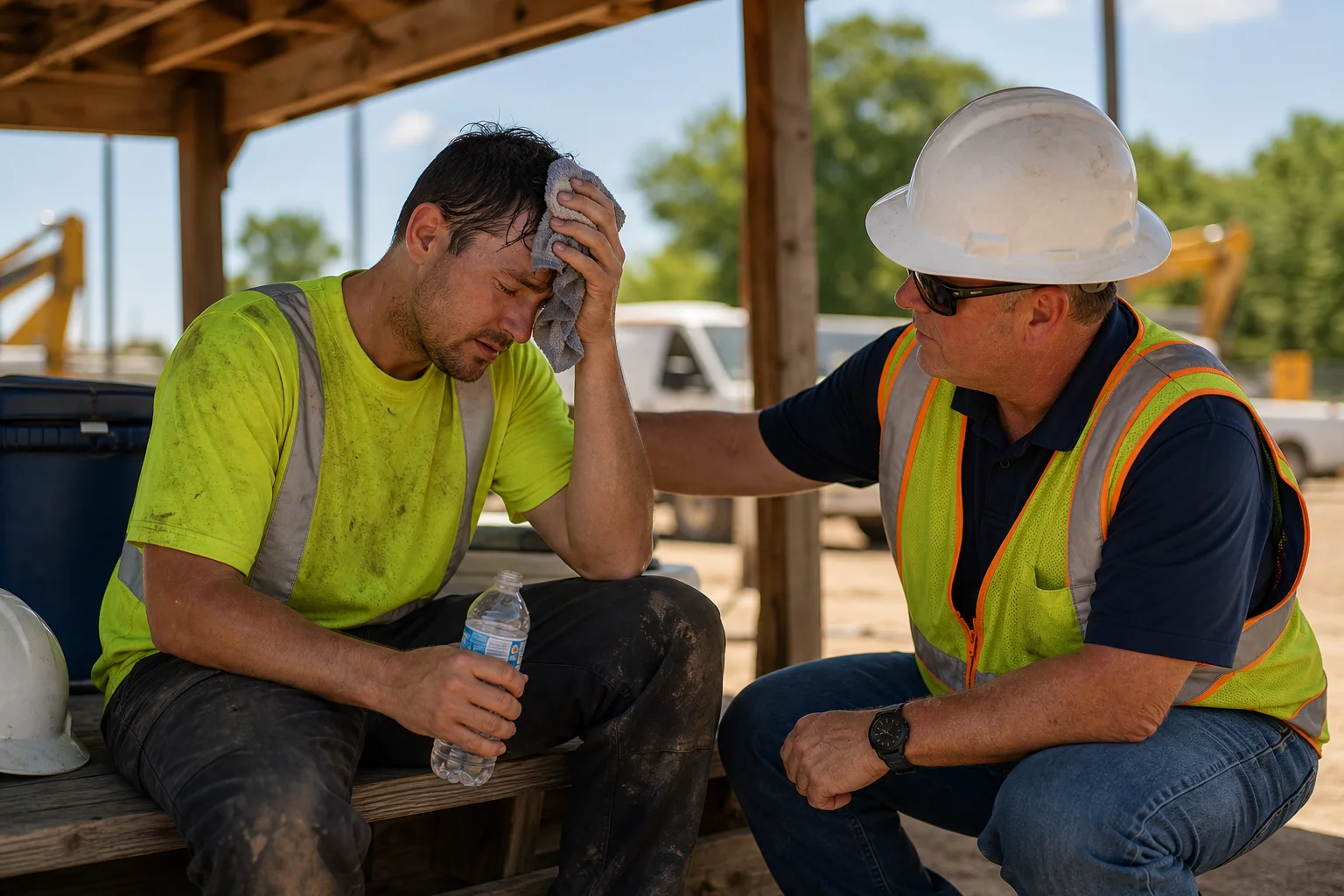
- Address the emergency. OSHA says heat stroke is a medical emergency and directs people to call 911 when a worker shows signs of heat stroke.
- Report the event. The Board tells workers to report a job accident to a boss, foreman, or supervisor immediately.
- Write down the work conditions. Describe the job, location, hours, heat sources, protective clothing, breaks, fluid access, and when the condition changed.
- Preserve the proof file. Save the six record groups above while they are available.
- Use each process for its stated purpose. IOSHA provides safety complaint and severe-event reporting channels; the Board separately tells workers to report job accidents to the employer.

Frequently asked questions
Is OSHA's federal heat rule final?
No. As of September 9, 2026, OSHA identifies the Heat Injury and Illness Prevention standard as a proposed rule. The separate federal heat National Emphasis Program was revised effective April 10, 2026.
Does the federal NEP automatically govern IOSHA inspections?
This article does not make that assumption. Indiana is an OSHA-approved State Plan jurisdiction, and Indiana's own emphasis-program page distinguishes federal national programs from Indiana local programs.
Is an IOSHA complaint the same as an accident report?
No. A complaint alleges a workplace hazard. The separate severe-event process states employer deadlines for fatalities, in-patient hospitalizations, amputations, and eye losses.
Can Indiana workers' compensation cover heat illness?
Potentially, but not automatically. Indiana Code requires an injury by accident arising out of and in the course of employment. Work conditions, timing, and medical evidence matter to whether a particular claim satisfies that standard.
Does IOSHA decide whether workers' compensation covers heat illness?
No. IOSHA administers workplace-safety enforcement. The Worker's Compensation Board of Indiana administers the state's workers' compensation system.
What records should I save?
Preserve schedules, timecards, temperature information, acclimatization history, water and rest access, witness information, notice records, and the timing and content of health-care records.
Bottom line
Keep the federal enforcement program distinct from the still-proposed heat standard, use the appropriate Indiana IOSHA channel, and preserve the work and medical timeline.
If you want the firm to consider an Indiana work-injury matter, you may request a free case evaluation. Do not send confidential information before the firm confirms that it can discuss the matter.
This article provides general information about Indiana law and workplace safety, not legal advice or medical advice.
Sources
- Indiana Code § 22-3-2-2 (iga.in.gov) ↩
- Occupational Safety and Health Administration's heat guidance (osha.gov) ↩
- revised its National Emphasis Program for outdoor and indoor heat hazards on April 10, 2026 (osha.gov) ↩
- Heat Injury and Illness Prevention rulemaking (osha.gov) ↩
- Indiana operates an OSHA-approved State Plan (in.gov) ↩
- emphasis-program page (in.gov) ↩
- Indiana Code § 22-3-6-1 (iga.in.gov) ↩
- disputed-claims guidance (in.gov) ↩
- Worker's Compensation Board of Indiana (in.gov) ↩
- IOSHA complaint (secure.in.gov) ↩
- accident and fatality reporting page (in.gov) ↩